By Pat Remick
Well, since the theme is "summer" I'm going to talk about a new summer television series that premiered last night: "Rizzoli & Isles," based on the two primary characters in the gripping series I adore that's authored by thriller writer Tess Gerritsen.
I suspect I reacted like a lot of Gerritsen's avid readers when I first heard that gorgeous Angie Harmon would portray plain Jane Rizzoli, the no-nonsense, driven Boston homicide detective. My response: Are you kidding me? And forensic pathologist Dr. Maura Isles as a blonde? Say it ain't so. These ARE NOT the people I've imagined in my head for the past seven books.
I did have an opportunity to view last night's episode a couple of weeks ago as part of my relentless quest to enjoy free and interesting entertainment, Husband No. 1 and I traveled an hour away for a premiere event that also featured the author signing "Ice Cold" -- the newest (and No. 8) book in the series.
I should note that the experience wasn't exactly "free." There was the $6 in tolls, $15 to park the car, $13 for drinks while waiting for the doors to open and of course, the book to buy ($18 at a discount). Not counting the food we ate later because we were so hungry after the rest of the crowd mobbed the servers carrying the complimentary hors d'oeuvres, our "free" outing cost $52. But I did get another author photo for my collection, a free t-shirt advertising the show, and assurances from the Tess Gerritsen that she's more than OK with how her characters look and act on the small screen.
I'm not sure I am -- not that anyone's asking.
Gerritsen, by the way, doesn't write the scripts. But as she works on future books in her series, I have to wonder whether Jane will become Angie Harmon and if Dr. Isles will begin to look like Sasha Alexander and start acting as girly as she does in the TV show. Since "Rizzoli & Isles" doesn't exactly mirror the books, will the books begin to resemble the TNT series? At least one past book cover has been redone to show the TV show actresses and Gerritsen's newest novel proclaims on the cover that it's a Rizzoli & Isles mystery.
I also wonder whether any of the episodes could ever be as good -- or as heart-pumping exciting -- as the books, although I will confess to a gasp or two while watching the premiere episode. Haven't you been dismayed at one time or another by how a movie didn't measure up to the book on which it was based? When I get behind in my popular fiction reading and learn a movie will be made from a book, I don't even bother to read it because I don't want to be disappointed. Or I'll read the book but never watch the movie.
However, I did have a different experience after watching the Swedish film version of "The Girl with the Dragon Tattoo." I'd given up the struggle of trying to read the book (too much "information dumping," too many Swedish names, etc.) and I wanted to see the movie because I was curious about all the buzz. The film was so good, and the characters so compelling, that I forgot I was reading subtitles. It left me so intrigued that I picked up the second book in Stieg Larrson's series and intend to read the third. (Warning: the movie does contain very brutal scenes).
Nonetheless, I think even TNT may be a little concerned by how fans of Jane Rizzoli and Maura Isles will react to its interpretation of these characters because it put together the following video featuring Gerritsen discussing how she views the changes. I look forward to hearing what others think about the transition from the pages to the screen.
Showing posts with label The Girl With the Dragon Tattoo. Show all posts
Tuesday, July 13, 2010
Monday, November 09, 2009
FOCUS
by Gina Sestak
What's the book about? That is the question. We focus on honing our elevator pitch and struggle to cram a complex story into a simple one-page synopsis. The underlying wisdom seems to say, "Focus the story. Concentrate on one major plot-line, with one or two subplots. You don't have to include every possible crime known to humanity in one book."
Makes sense, right? Well, maybe.
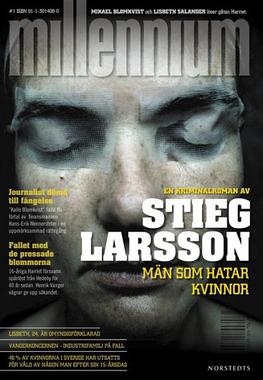
I just finished reading The Girl With the Dragon Tattoo by Stieg Larsson.
On it's face, this book is just another twist on the traditional locked room mystery, although in this case it's a locked island. The amateur detective, disgraced financial journalist Mikael Blomkvist, is hired to find out what happened to a teenaged girl who had disappeared from a small island forty years earlier, at a time when the only bridge was blocked by a fiery truck accident.
Sounds simple enough, but over the course of 500-some pages, we encounter murder, kidnapping, rape, incest, animal mutilation, torture, arson, homicidal maniacs, burglary, theft, child abuse, attempted murder, abuse of power, serial killers, embezzlement, fraud in government contracts, drug dealing, arms dealing, computer hacking, ill-gotten gains in secret bank accounts, identity theft, drowning, intimidation, fraudulent passports, international intrigue, Nazi-collaborators, corrupt politicians, and financial market manipulation. It might be easier to list which crimes aren't in this book but I can't think of any. The story also includes sexual relationships, journalistic ethics, wrongful imprisonment, tattoos, allegations of libel, false information, travel, isolation, disguises, and coping with 35 degree below zero weather. Oh, and I should mention a multitude of characters, including Blumkvist, his lovers, his friends, his co-workers, his nemesis, his employer (an old man whose dozens of family members and employees also participate in the plot), and, of course, the title character, her boss, her mother, and her acquaintances.
Sounds like a mishmash, but somehow Larsson makes it work. There is no point at which the story gets too confusing to follow. So how did he do it?
Memorable characters seem to be one key. Another is Blumkvist's ability to explain complicated matters in an easy-to-follow manner. For example, here is Blumkvist's take on the economy. Although specific to Sweden, where the story is set, it could just as easily apply to the American economy and Wall Street:
"You have to distinguish between two things - the Swedish economy and the Swedish stock market. The Swedish economy is the sum of all the goods and services that are produced in this country every day. . . . The stock exchange is something very different. There is no economy and no production of goods and services. There are only fantasies in which people from one hour to the next decide that this or that company is worth so many billions, more or less. It doesn't have a thing to do with reality or with the Swedish economy."
See what I mean?
So, back to the topic. Have you ever had the urge to include every possible crime in a book? Did you squelch it? If not, how did it work out?
What's the book about? That is the question. We focus on honing our elevator pitch and struggle to cram a complex story into a simple one-page synopsis. The underlying wisdom seems to say, "Focus the story. Concentrate on one major plot-line, with one or two subplots. You don't have to include every possible crime known to humanity in one book."
Makes sense, right? Well, maybe.
I just finished reading The Girl With the Dragon Tattoo by Stieg Larsson.
On it's face, this book is just another twist on the traditional locked room mystery, although in this case it's a locked island. The amateur detective, disgraced financial journalist Mikael Blomkvist, is hired to find out what happened to a teenaged girl who had disappeared from a small island forty years earlier, at a time when the only bridge was blocked by a fiery truck accident.
Sounds simple enough, but over the course of 500-some pages, we encounter murder, kidnapping, rape, incest, animal mutilation, torture, arson, homicidal maniacs, burglary, theft, child abuse, attempted murder, abuse of power, serial killers, embezzlement, fraud in government contracts, drug dealing, arms dealing, computer hacking, ill-gotten gains in secret bank accounts, identity theft, drowning, intimidation, fraudulent passports, international intrigue, Nazi-collaborators, corrupt politicians, and financial market manipulation. It might be easier to list which crimes aren't in this book but I can't think of any. The story also includes sexual relationships, journalistic ethics, wrongful imprisonment, tattoos, allegations of libel, false information, travel, isolation, disguises, and coping with 35 degree below zero weather. Oh, and I should mention a multitude of characters, including Blumkvist, his lovers, his friends, his co-workers, his nemesis, his employer (an old man whose dozens of family members and employees also participate in the plot), and, of course, the title character, her boss, her mother, and her acquaintances.
Sounds like a mishmash, but somehow Larsson makes it work. There is no point at which the story gets too confusing to follow. So how did he do it?
Memorable characters seem to be one key. Another is Blumkvist's ability to explain complicated matters in an easy-to-follow manner. For example, here is Blumkvist's take on the economy. Although specific to Sweden, where the story is set, it could just as easily apply to the American economy and Wall Street:
"You have to distinguish between two things - the Swedish economy and the Swedish stock market. The Swedish economy is the sum of all the goods and services that are produced in this country every day. . . . The stock exchange is something very different. There is no economy and no production of goods and services. There are only fantasies in which people from one hour to the next decide that this or that company is worth so many billions, more or less. It doesn't have a thing to do with reality or with the Swedish economy."
See what I mean?
So, back to the topic. Have you ever had the urge to include every possible crime in a book? Did you squelch it? If not, how did it work out?
Subscribe to:
Posts (Atom)