Wednesday, June 11, 2008

Citizens' Police Academy: Graduation!

By Annette Dashofy


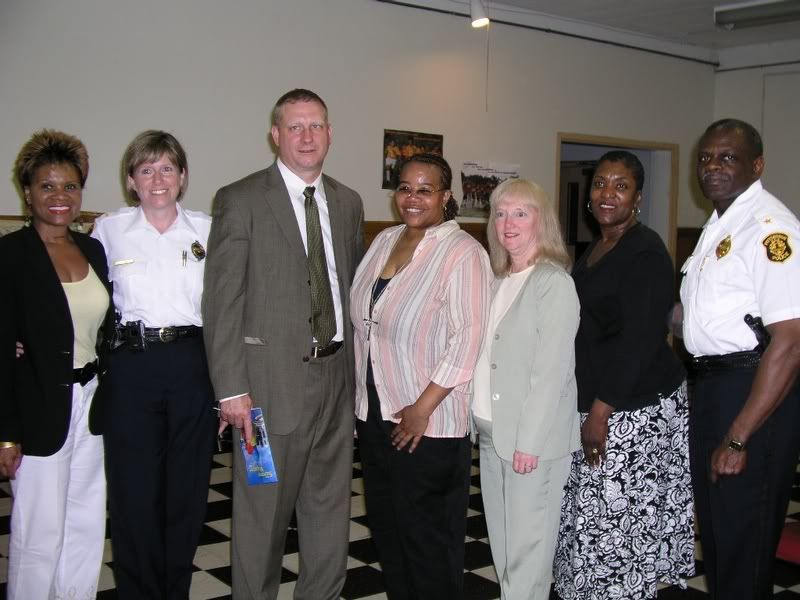
After fifteen weeks of Citizens’ Police Academy, it’s over. We graduated this week and are now Citizens’ Police Academy alumni.

The ceremony was quite nice. Not the pomp and circumstance of some graduations, which is a good thing. We were allowed to bring guests, so my hubby tagged along. (He heard there would be food). Others brought spouses, significant others, children, or siblings. Some of us wore our “official” CPA shirts, others dressed up a bit.

The ceremony opened with speeches from several of the police bureau’s finest, including Chief Nate Harper.


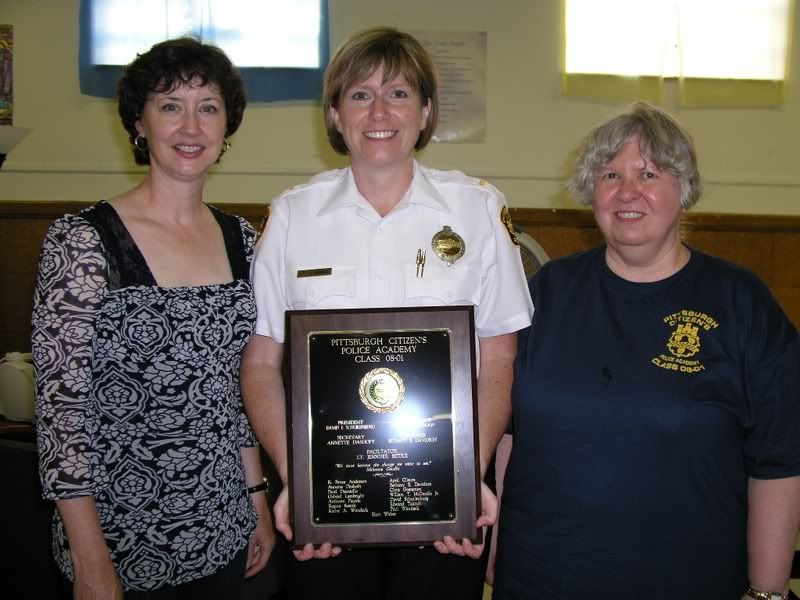
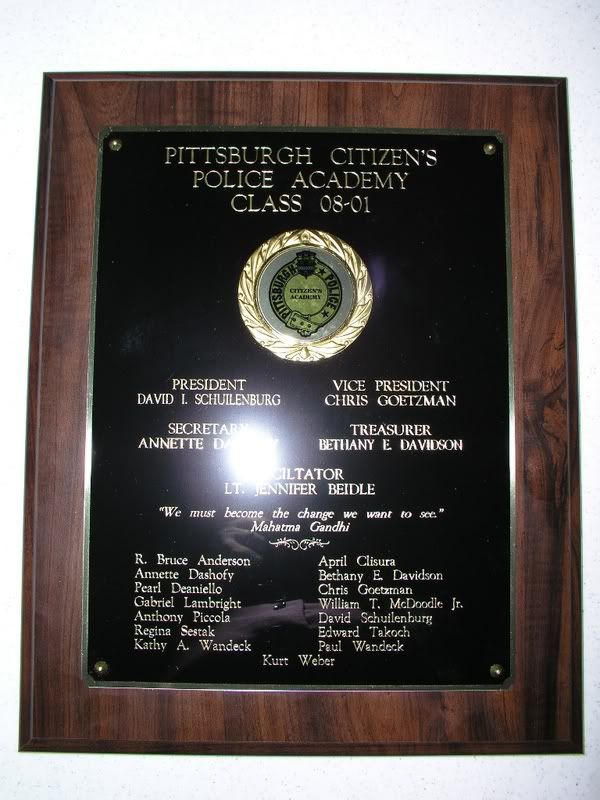
Our class had a plaque made and we presented it to the chief.


Then, we received our certificates of completion, suitable for framing.

All that was left was to dig into the food and socialize one last time.

None of us wanted to think about that last part. When the next class begins in September, we have an opportunity to take those weeks we missed, so we were comparing which weeks we might encounter one another again during a make-up. Heck, I think I may just drop in on occasion to ask some questions that I didn’t think of until AFTER a class.

I want to take this opportunity to thank everyone involved in Pittsburgh Bureau of Police Citizens’ Academy ESPECIALLY Lieutenant Jennifer Beidle who has put together an incredible curriculum. I’ve said it before, I’ll say it one more time…if you have a chance to participate in a CPA, grab it.

On the way home, my hubby expressed amazement at the sincere interest the chief showed in our class. I reminded him of what Chief Harper had said in his speech. The police department doesn’t have money to buy advertising. That’s what we are. He wants us to go out into the community and drum up support for the officers who work such a dangerous job every day and who must make life altering decisions in a split second. What you see on TV, be it crime fiction or on the news, is NOT the whole story. We’ve been given the opportunity to see what they face, maybe not from the inside, but from a front row seat. We now have a better idea of the things they face and the obstacles they must endure.

It has been fun. And it has been eye-opening educational. I think I will be a better writer for the experience. I know I’ll be a better citizen.

I’ll also miss the classes, my classmates, and Lieutenant Beidle.

But as Chief Harper pointed out, we still have our ride-alongs to do, so it isn’t over yet!


(Working Stiffs' CPA Graduates Annette and Gina flanking Lieutenant Jennifer Beidle)

Tuesday, June 10, 2008

The Show Must Go On

by Kathryn Miller Haines

Something awful* happened to me the other day. It’s the fourth time it’s happened in the last three years and its frequency isn’t making it any easier to deal with.

My day job, helmed by the best boss in the world, told me to take off as much time as I needed. Unfortunately, my theater company couldn’t do the same. In fact, each time this has happened I’ve had to commemorate the Awful Thing by doing a show within 24 hours.

We have understudies, but they’re not exactly on call 24/7 and so if they’re not available we’re stuck. As a result cast members have performed with broken hearts, laryngitis, pinkeye, pneumonia, and any number of colds and flus (and yes, people -- we perform around food). It’s the nature of the business. Theatre is one of the few jobs were you can’t call in sick.

Besides, it’s my company (or half mine anyway) and if we were to cancel a show because of me, that would mean four other people weren’t getting paid and the audience, which in many instances has been planning this event for months in advance, is disappointed or worse: litigious.

There have been times when we’ve done shows when we knew the audience was dealing with their own Awful Thing. We performed on Sept. 12, 2001, for a consulting firm that had lost two people in the twin towers. We’ve been approached by people after shows who wanted to tell us that this is the first time they’ve been out since they lost their child or spouse, or just found out their cancer had reoccurred. It’s always great to hear that you’ve given someone a respite from whatever pain they’re suffering by doing a silly little show. In fact, I think it’s the main reason why I’m still doing it after all these years.

It’s weird to be on the other side of the Awful Thing though. If we’re doing our job well, the audience never knows when we’re suffering, never suspects that minutes before we walked on stage we were brushing away tears or downing a Vicodin and praying it kicked in before the big dance number. And they’re no kinder for their ignorance (I’ve been heckled hours after the Awful Thing happened and desperately wanted to grab the nut and scream, “do you have any idea what happened to me today?!”). But then that’s not the audience’s job. They’re not there to be sympathetic to a suffering actor. They’re there to be entertained.

It sounds weird, but performing has become part of my healing process. Putting on a costume and pinning on a bad wig allows me to be someone else for a while and forget whatever it is I’m going through. I’m not Kathy the girl experiencing the Awful Thing, but Shirley, a 1920’s whore whose greatest tragedy is when she has to make change for a client (quite an embarrassment when you’re only charging ten cents to begin with). Emotionally I get to disconnect and lose myself in the ritual of performance. It’s nice being part of a world, however temporarily, where you know exactly what everyone is going to say and do next.

I’m trying to make writing function in the same way. In the past, I always let the Awful Thing serve as an excuse to stop writing for a while, which inevitably made returning to a project difficult not only because of the delay, but because the project became emblematic of the time before the Awful Thing happened. But I’ve realized that diving into a project is an extremely effective diversion from whatever I’m dealing with. It allows me the same temporary escape as performing and provides an outlet for emotions that desperately need a release.

So what about you? How do your own Awful Things affect your creative process?


P.s. it’s 17 days until the launch of The Winter of Her Discontent at Mystery Lovers Bookshop! If you’re in the area, please join us from 7-9:00 PM on Friday, June 27th.

[*in case you’re curious and inclined to skip ahead, I’m not going to explain what my awful thing is. I think we all have terrible things in our lives that we can plug in and equivocate to my experience.]

Monday, June 09, 2008

GRADUATION DAY

by Gina Sestak

For the past several months, Annette has been posting every week about the Pittsburgh Bureau of Police, Citizen Police Academy (CPA) which both of us have been attending. [I am not the fellow student who volunteered Annette to shake hands with the Bomb Squad's robot. Honest!] At long last, the time has come for us to graduate. Tonight there will be a ceremony, then this year's first session of the CPA will be over. All except the ride along.

The what? you may ask. Everyone who's seen that episode of Raymond knows dangerous things can happen on a ride along. Don't worry, though. We signed releases. Your tax dollars will be safe.

I'm going to miss the weekly classes. Where else can you handle an assault weapon, search for hidden explosives, watch a K-9 in action, or visit a crime lab without having to pass a test or take a job? The police personnel themselves were also an eye opener. I mean, some of these guys, if you saw them coming toward you, you would tuck your purse securely under your arm and cross to the far side of the street! Maybe it's just the dreadlocks and the neck tattoos. But all -- every single one of them -- was an expert in his or her field, able to speak knowledgeably about national statistics and cutting edge science as well as their own local areas of expertise. Pittsburgh police are real professionals.

So here's your chance -- you can help catch dangerous criminals and graffiti artists: http://www.city.pittsburgh.pa.us/police/html/most_wanted.html

Or, you can take the fall CPA class. Come on. I dare you.

Friday, June 06, 2008

Developing Characters

by Wilfred Bereswill

First of all, my thanks to Jennie Bentley for asking if I’d be interested in guest blogging for her while she is out gallivanting around the European countryside, no doubt in search of her long lost Swedish Stripper, Freddy.

Speaking of Freddy, while Jennie is without internet access, I’d like to address the rumor that I may be Jennie’s Freddy. A while ago, she tagged me to post 6 truths about myself. I’ve been a bit remiss in answering that post, so real quickly here are my truths:

1. I’ve been to a strip club.

2. I won a sexy legs contest.

3. I’ve hung upside down from a pole.

4. I’ve undressed in front of a group.

5. I danced in a dress in front of over 400 people to the tune of “Feel Like A Woman” while on a cruise.

6. I won a beauty contest.

I hope that clears things up.

I have another confession to make. I’m an engineer, a true left brainer. By the way, do any of my truths seem in character for the stereotypical engineer? Well, most of us left brainers are better at plotting than character development. When I first took on the task of writing, I believed that plot alone could drive a novel. I no longer believe that. Even when my publisher first evaluated my manuscript, the feedback suggested I do a little more to develop the characters. So, like the maniac researcher I am, I learned all I could about developing characters.

A writer creates characters and then lives with them for a while. In some cases, months or even years. You'd think we'd get to know them well. And then someone asks a question that throws you for a complete loop.

Let me explain. I've been working on A Reason For Dying since the end of 2004 - 3+ years. The characters in the novel seem like acquaintances, some of them seem like family. Over the course of time, you get to know these fictitious folk. You know what they look like, what they act like, what they like to eat, even how they make out (that’s “make love” for all you ladies out there). As a writer, you absolutely need to know everything about your characters. After all, you are controlling their world, making their decisions, setting the course of their actions. They need to be, well, their own person. They need to be consistent. Otherwise they won’t come alive on paper.

When I first started writing, I never would have believed that I would be hearing my characters in my head or dominating my dreams. But it happens. Just like a mother seems to know what her newborn child wants, an author should know what their characters want and what they will do to get it. I took the advice of other authors and prepared backgrounds on my major characters. I know plenty about my protagonist Laura Daniels that isn’t revealed in the 1st novel. Some of it I use in the second novel, but a lot of it will likely never to be written about, ever. But it’s that stuff that defines her character and makes her act like Laura Daniels and not Wilfred Bereswill. God help her if she acted like me.

By the way, she looks a lot like Evangeline Lilly in Lost, only her hair is lighter.

Some of my characters are so well defined, my wife, who is invaluable to me as a critique reader, knows when they do something out of place and she let’s me know it. She also gets a little jealous when I spend too much time with Laura.

Here’s a real life example: Your 15 year old daughter who has never in her life done yard work, comes up to you and says, “Dad, if you show me how to start the lawnmower, I’ll mow the lawn.” Or your wonderful wife insists that you go out and buy that fifty-eight inch LCD flat panel, 1080p television with a new 7.1 surround sound receiver and Blu-Ray disc player. The hair on the back of your neck stands up with alarms and whistles sounding and your mind immediately stops thinking about whatever it was thinking about. Something is amiss. Something is terribly wrong with the universe.

It’s the same thing when your character does something completely out of sync. The reader is immediately taken out of the story.

So there I was, content that I really knew my characters and then somebody asked me some interesting questions about Laura Daniels...

What is the arc of her "hero's journey" story — what internal demons is she facing as she confronts these external terrorists?

Who's on her side, and who's going to take her by surprise?

What are her greatest strengths and weaknesses?

What does she personally stand to lose?

And what's at stake in the larger picture — what does the world stand to lose if she doesn't succeed?

These are questions I was asked when I sought help on writing the back cover copy. These are questions an experienced writer asks if they need to know about your characters. I was able to respond, but I had to really think about them first, which surprised me.

So, how well do you know your characters? What methods do you use to develop your characters? Does your significant other get jealous of you spending all that time with them?

I feel a need to clear up a few of my truths. The pole I hung upside down was on the swing set in my back yard and I undressed in the locker room after gym class. The rest is up to you all to figure out. A guy has to keep some secrets.


Is the natural gas you use to heat your home and cook your food really safe?

Is it possible that viruses ravaged prehistoric life millions of years ago and lie dormant in oil and gas reserves, waiting to be released once again to lay waste to yet another species?

It has happened before.

Is it about to happen again?

A REASON FOR DYING

Debuts Summer 2008

Hilliard and Harris


Thursday, June 05, 2008

Seems Like a Long Time

by Joyce Tremel

It seems like such a long time since I posted anything here. Well, anything I've written myself, anyway. Seems like all I do is post guest blogs. That's a good thing, though. I love having visitors, even virtual ones. And it gave me the time to update my own blog and actually (gasp!) write something for it. For anyone so inclined, go to The Blotter (like the new name?) and read about my recent carpenter bee problem.

By now, everyone who reads the Pittsburgh papers has heard about our corpse in the creek this week. (The Corpse in the Creek would make a good book title wouldn't it?) You should have seen how fast the station cleared out when that call came in. No apparent foul play involved, though--just an accidental fall.

That's the most excitement we've at work for months.

I've come to think of the month of May as "citation hell." May is when the department does most of their traffic blitzes. The grant money they obtain to do Click It or Ticket or the Smooth Operator program (anyone else think of the song when they see that?) that pays the officers' overtime to work the details expires after a certain length of time. If they don't use it, they lose the grant. In other words, the guys get paid overtime and I get carpal tunnel syndrome entering over two hundred citations into the computer. Doesn't sound quite fair, does it? Right now, I have 145 citations sitting on my desk.

It also seems like a long time since the Penguins won the Stanley Cup, but it just wasn't to be this year. You done good, guys. Next year--Let's Go Pens!


Wednesday, June 04, 2008

Citizens' Police Academy: Final Class

By Annette Dashofy

This week was our final Citizens’ Police Academy class. I don’t think it has sunk in yet that our group’s time together is almost over. We’re a diverse bunch with a variety of motives for taking the course, but we’ve all bonded over the experience.

Our last class was another two-parter. For the first hour, we listened to Sgt. Keith Nemeth and Detective Sheila Jeffries talk about the Office of Municipal Investigations (OMI). This department investigates complaints against Pittsburgh city employees and handles each investigation as if it were a homicide. They are fact finders. They do not recommend discipline. That is ultimately up to Chief Nate Harper.

On an average, OMI investigates 300-500 cases per year with the bulk of those cases being police department related.

Here’s an example of how it works. Mrs. Jones files a complaint stating that Officer Smith called her foul name and then hit her in the nose. Investigators would look at photos taken of Mrs. Jones after the incident to see if there was indeed evidence of injury. They would also search for and interview third party witnesses. These witnesses need to be impartial. In other words, if Mrs. Jones’ son vouches that the officer hit his mother in the nose, he might be saying what his mother WANTS him to say. Or if Officer Smith’s partner says, no, that it never happened, he might be standing up for his partner. So OMI would continue to seek out some other witness. If no other witness can be found and the preponderance of evidence neither supports nor disavows the claims, the case may be left as “unresolved.” Such cases remain in the database for the officer’s entire career.

OMI also looks at patterns of complaints. They may learn that Mrs. Jones has filed similar complaints against Officers Starsky and Hutch in past years, too. OR they may learn that Officer Smith has had previous complaints about calling suspects names and punching them in the nose. All this factors into their report.

Cases ultimately fall into one of five catagories: Sustained, unresolved, exonerated, unfounded, or closed. Only about 5 to 10 percent of all the cases end up as sustained and some of those are technical violations. For example, our Officer Smith has used OC spray on a suspect from a distance closer than three feet during a struggle. In such a case, he did indeed violate procedure, but it was justified.

Remember, OMI does not recommend discipline. They only file the report. Chief Harper then determines what should be done, be it retraining, punishment, or firing.

The second half of this week’s class dealt with Pittsburgh’s newest division: THE GRAFFITI SQUAD. Consisting of three detectives (Frank Rende, Alfonzo Sloane, and Dan Sullivan, all of whom spoke to our class), this group has only been inexistence since November 2006. Since then they have made 38 arrests while blazing new territory in the investigation of graffiti.

Only about 10 % of this graffiti is gang related. It’s vandalism. New ordinances have recently been implemented in Pittsburgh to make life harder on the “taggers.” You must be 18 or older to buy paint or markers in the city and if you buy it and give it to a juvenile, it’s legally the same as giving them a beer. Local judges are cracking down. For instance, take the case of Danny Montano. This graffiti tagger has been held in jail for seven months already and will likely serve a lot more time. He is scheduled to be sentenced on July 24. You can bet a lot of these graffiti artists are watching this case.

Our three graffiti-busting detectives obviously love their jobs. They haven’t lost a case yet, mainly because they collect an overwhelming amount of evidence. They now have a graffiti database where they store photographs of various tags. So while a tagger might be busted in one municipality for one tag, the graffiti squad marches out photographs of forty more from other communities. Most of those arrested plea out or confess.

And they’ve never had a warrant contested, although they admit, they know it will happen.

Bottom line: graffiti artists are not welcome in Pittsburgh. While we were once known as a Mecca for these taggers, the welcome mat has been rolled up. Detectives Frank, Al, and Dan are on the job.

Advice for those of you who are Pittsburgh residents: if you are the victim of graffiti, call 9-1-1. That is the start of the process. These detectives, with the help of some very hard line judges, are determined to clean up the city and send these artists packing.

Next week: GRADUATION

Tuesday, June 03, 2008

Be The Right Club, Today!

By Martha Reed

A rare and wonderful thing happened to me on Friday – my short story PASTURES OF HEAVEN was accepted by Mysterical-e for their Summer issue. This was a bit of a surprise; I really like POH, but it is a little odd, not my usual style, and I wasn’t sure it would ever get placed. Which only goes to show that there’s a home for everything if you research the marketplace and keep trying.

When I sat down to my Mac on Friday night and opened my email, I saw the reply from Mysterical-e and found myself performing a new-to-me ritual before I opened the message. It might even have been a little prayer. I paused, my fingers hovering inches over the touchpad and said: “Be the right club, today!” Then I closed my eyes and imagined an acceptance before I opened my eyes to actually read their words. Lucky for me, this time the word was ‘Yes’ and I yelped so loudly I’m sure my neighbors on Fourth Street heard me. The yelp was followed by my version of a boogie dance that should probably remain closed to viewing for reasons of public safety – the vision of me jumping around victorious would probably scar young children.

I also wondered, the more I thought about it, where I pulled the phrase ‘Be the right club, today!’? I remember watching some golf on TV, and I went online to look it up, and there is was: Hal Sutton, 17th hole, The Players Championship 2000. Hal had a one stroke lead on Tiger Woods (imagine that pressure) and when Hal hit a shot and the ball sailed toward the green he commanded: “Be the right club, today!” (emphasis on today, Hal’s from Alabama). Now, I understand completely what Hal was trying to do; it was the same thing I tried to do with my story: he was focusing his will on the outcome to achieve the positive outcome he wanted – and he was focused enough to disregard the many outside factors (including Tiger Woods standing next to him) that he had no control over.

Baseball players are a superstitious lot, too, but this new ritual of mine made me wonder: how about writers? Does anyone out there have a superstition and/or ritual they feel compelled to follow or perform before writing, submitting, or opening that dread reply?

Usually, we plan, and execute, and do our best, and then we sit back to let events take their natural course. But every once in awhile – and is it just during competition? – we try to will a positive end result like it’s some kind of magical thinking. I’ve done it; last Friday was the perfect example. I didn’t want it; I willed it, and on Friday I felt it, and it felt like I was tapping into an energy grid where a positive outcome was already pre-determined in my favor. Was this a gamblers high? Willing that acceptance didn’t feel arbitrary or capricious; it felt powerful and compelling. Has anyone else experience this?

Monday, June 02, 2008

Ground Control to Rocket Scientist and Nurse Betty

by Brenda Roger

Several years ago I had a chick party on a Monday afternoon. It was a truly lovely party and fun was had by all. We ate girly food from glass snack sets from the 1950s, and drank cosmos in the middle of Monday afternoon. Even the weather was fabulous.

Several days after the party I received a lovely note raving about the party and asking that I apologize to my neighbors. Hmmm. The neighbors, henceforth to be know as Rocket Scientist and Nurse Betty, left a nasty note on my guest’s car about her having parked to close to their mailbox. I guess they didn’t receive their mail that day because of it, and were upset that they had to go a whole twenty-four hours before they could get the catalogues from which they order their unfortunate Capri pants and oh-so-snappy bike shorts.

My blood was boiling. It was necessary to respond in a way that would make my feelings clear to them. I had suffered long enough. Here is the letter that I wrote back, in a blind rage from years of their idiocy:

Dear Rocket Scientist and Nurse Betty:

Ah, the irony! Imagine my surprise when I received a thank you note from one of my luncheon guests that also contained the enclosed, with an apology to you!

You see the source of the irony is that for the three and a half years that we have lived here, we have been repeatedly disturbed by your complete lack of consideration for those around you. When you live around other people you are inconvenienced by them on occasion, or on a regular basis, as the case may be.

Let me give you some examples. Sometimes, you have to scrub urine from the neighbor’s cat off of your basement door in 30-degree weather, because, despite the fact that you have no cat, your basement smells like cat pee. You may be forced to give up vegetable gardening entirely because you do not wish to eat produce from a cat toilet. Dead rodent removal may become a regular part of your gardening routine. Also, you may have to listen to your neighbor’s dog bark (more like a shrieking sound) for up to five hours while trying to paint the dining room, recuperate from a pounding migraine or sleep past six o’clock in the morning. This happens with such regularity that I wish I kept a log of these occasions that I could enclose with this letter. In addition, sometimes, the people around you leave their yard strewn with toys, garden tools and various assorted other belongings that you must simply endure as part of your “view”. You may have all of your tulips consumed by deer who are only in your yard because of the excess of rodent feeders in the yard next door. Also, because of the rodent feeders, you may spend thousands of dollars on a deck and patio, which is actually a bird toilet where you can sit and listen to the previously mentioned barking.

When you live with total disregard for the feelings and comfort of those around you, you are not really in a position to complain to or to embarrass those who have been repeatedly inconvenienced and disturbed.

Because I actually consider those around me, I will sincerely apologize for any inconvenience you may have experienced as a result of my guest parking in front of your mailbox. In the future, I will ask my guests to avoid parking in front of the house with the screeching sound coming from the back yard.

I do not expect the situation ever to arise again, but if it does, I do not expect that any guest to my home will ever again be left feeling as if they owe you an apology. In the future, you may complain to me directly.

Sincerely,

Brenda Roger


They are every bit as inconsiderate as they ever were, but now I feel much better.

Did I ever mention before that my nickname as a child was “poison lips?”

Have you ever had to write a zinger of a letter? Do tell.

Saturday, May 31, 2008

Interview With Hannibal Jones

Hello, I’m Austin Camacho and I have the rare privilege of being your guest blogger today. I have four novels in print about my Washington DC-based, African American private detective, Hannibal Jones (my agent is shopping number 5.)

My hostess said I should write something that introduces me to you, but honestly, I don’t think you care a fig about my life. You want to know about the detective who has to deal with the twisted, corkscrew mystery plots I drop him into. So I decided to interview him. Here’s how our conversation went.

________________________________________________________________

Austin Camacho: Thank you for speaking with me today.

Hannibal Jones: I had a choice?

A.C.: You are listed as a private investigator but your card describes you as a troubleshooter. How would you describe what you do, and why is it different from what most P.I.’s do?

Hannibal Jones: Most private investigators do employment vetting, matrimonial and divorce work, insurance claims and that kind of stuff. My work is more focused. My clientele is individuals, not corporations. I work with people who are in trouble and don’t know where to get help.

IA: You do bodyguard work.

HJ: Sometimes.

IA: And solve mysteries like any detective.

HJ: On occasion.

IA: And if a person has been threatened?

HJ: Look, I do whatever’s necessary to help somebody who’s gotten themselves into a jam. I don’t think much about what that might be, going in.

IA: What is your professional background?

HJ: As soon as I was old enough I moved to the States and joined the New York City police force.

IA: You weren’t born here?

HJ: No. I was raised in Germany. My dad was an Army MP. Mama was a German national. We lost Dad in Vietnam. Anyway, I came to the U.S. to be a cop and I was going to bring Mama over as soon as I was settled but she passed.

IA: While you were away.

HJ: (pause.) Yes. While I was away.

IA: I’m sorry. So, you became a policeman…

HJ: Three years on the force to make detective J.G. Three more as a detective. Then I passed the Secret Service entry exam and spent seven years as a special agent for the Treasury Department, in the protective service.

IA: But after seven years, you resigned.

HJ: Yeah, well, stuff happened. In the protective service they expect you to not only protect your principal’s life, but his reputation too. I didn’t think my duty included covering up a politician’s stupid actions. My boss disagreed.

IA: Any politician in particular?

HJ: Not going to go there.

IA: A national figure? Executive branch or…

HJ: I’m not going to go there.

IA: All right. So you clashed with your supervisor. For that you resigned?

HJ: Yeah. Well, after I knocked him on his ass the service was good enough to let me resign. They were actually pretty nice about it. Could have stopped me from getting the P.I license, you know.

IA: So why this whole troubleshooter concept?


HJ: I guess in a way I did it for Mama. She always wanted me to follow my dad’s example. He was always there for people, always looking out for the little guy. Here in Washington, we got an overabundance of little guys that need looking out for.

IA: How do you get clients?

HJ: Mostly word of mouth. I did a couple of jobs pro bono - kept a couple of kids from being approached by drug dealers. After that people started to find me when they had problems.

IA: So your neighbors are your clients?

HJ: My clients are people with problems bigger than they are. Naturally that happens a lot to people with no money. But I do get referrals from old Secret Service contacts, and sometimes from Cindy Santiago, the lawyer who’s my, um, friend.

IA: So you have entrees into a higher financial stratum, but the well-to-do don’t come to Anacostia. Why have your office here?

HJ: This building used to be a crack house. The owner hired me to clear the bad element out of here. In the process I kind of bonded with the neighborhood. I felt at home here, and I knew if I stayed, the bad element wouldn’t be back. I guess the owner knew it too. He made me a very attractive offer to stay.

IA: Why not join a larger detective agency?

HJ: I like deciding who I’ll take as a client, and what kind of job I’ll do. I won’t do matrimonial stuff, or spy on people. But I do personal protection, missing persons, sometimes get hired to prove an accused person innocent. I’ll chase a bad element away like I did here, negotiate with loan sharks. Basically, if you have to deal with the bad guys and don’t want the police involved, I’ll usually handle it.

IA: You carry a pistol. What do you think of gun control laws?

HJ: Good gun control means being able to hit the target. Anybody who wants a gun can get one, so restrictive laws only keep people who obey the law unarmed and unable to defend themselves.

IA: But isn’t it too dangerous for everyone to be able to have a gun?

HJ: Based on statistics, it’s too dangerous for everyone to be able to have a car. Maybe guns should be more like cars. You get a license to carry at 18, after passing a mandatory training course.

IA: Interesting. How would you describe your relationship with the police?

HJ: I’d call it mutual grudging respect. I don’t mess with them. They don’t mess with me.

IA: How would you describe your personal relationship with Cindy Santiago?

HJ: I would describe it as personal.

IA: What have you learned doing this job?

HJ: I’ve learned that most people are sheep. They’re not looking for trouble and they’ll do the right thing if you let them. A few people are wolves. They prey on the sheep. They need to be shut out or put down hard.

IA: And you? Where do you fit in?

HJ: Me? I guess I’m the sheepdog.

Austin S. Camacho is the author of four detective novels in the Hannibal Jones series - Blood and Bone, Collateral Damage, The Troubleshooter, and Damaged Goods. He is active in several writers’ organizations including Sisters in Crime, and teaches writing at Anne Arundel Community College. After a career as a military news reporter on the American Forces Network, Camacho is now a public affairs specialist for the Defense Department. Camacho lives in Springfield, Virginia with his lovely wife Denise and Princess the Wonder Cat.

Friday, May 30, 2008

Precision Shooting: Physics, Geometry, and Weather

by Andrew Peterson

When a target shooter, hunter, or sniper pulls the trigger, a lot of elements and factors are drawn together in a amazing way. Physics. Geometry. Weather. But the most important element is the human element — the skill of the person behind the gun.

To understand what’s really happening, let’s break it down into those three elements first. Physics, geometry, and weather. I’ll have to be brief. To cover the subject in detail would involve a novel length article, and my knowledge of the subject is limited. There’s an entire scientific industry devoted to the study of ballistics.

Let’s start with physics and the “fire triangle.” We all know a miniature explosion takes place to “fire” a bullet. To get fire, we need three things. Heat, oxygen, and fuel. If any one of those components is missing, there’s no fire. You can have a tremendous amount of heat and fuel, but without oxygen, you won’t have fire. That’s why explosives are used to extinguish oil well fires. The explosion creates a very brief vacuum in the air, removing the oxygen. With no oxygen, the oil fire dies. Most vegetation and structure fires are extinguished by removing the heat. Take away the heat, no fire. The fuel and oxygen are still present, but the heat is gone. A carbon dioxide extinguisher removes two elements of the fire triangle, both heat and oxygen.

What does this have to do with shooting? You might be wondering how a bullet works. At first glance, it looks as though a critical component is missing. Oxygen. If a bullet is like a sealed jar, where does the oxygen come from? How does the miniature explosion occur if there’s little or no oxygen inside the bullet. The answer is simple. The oxygen is contained within the gunpowder itself, in chemical form. After being struck by the firing pin, the little round primer at the base of a bullet completes the triangle by supplying the interior of the cartridge with heat.

The resulting explosion drives the bullet through the barrel of the gun. The pressure is tremendous. It takes a lot of force to overcome the friction of pushing a bullet through a steel barrel. I once had to remove a stuck bullet after a misfire. It took a steel rod and a lot of labored hammering to dislodge it.

The geometry of precision shooting is perhaps the most interesting. At medium to short distances, gravity is the biggest factor affecting a bullet’s trajectory. Picture a concept in your mind. You’re holding a rifle and pulling the trigger. If it were possible to drop the rifle at the precise instant the bullet left the end of the barrel, the bullet and the rifle would hit the ground at the same time. Why? Because once the bullet is free of the barrel, gravity begins to pull it toward the ground. It doesn’t matter if the bullet is traveling downrange at 2,500 feet per second, the bullet is still “free falling” as surely as if it were dropped from your fingertips.

So to hit a target at a long distance, you have to shoot at a “theoretical” point above the target. Let’s use an easier example. A football game. The quarterback throws the ball to a receiver 30 yards away. If he aimed directly at the receiver, the ball would hit the ground before arriving. Without thinking about it, he aims 20 feet above the receiver’s head, but because gravity pulls on the ball once it leaves his hand, it ends up in the receiver’s grasp. The same principal applies to shooting, the bullet’s arc through the air is just much longer and flatter. Also, when a quarterback throws the ball, he’s not looking at the theoretical spot above the receiver’s head, he’s focused on the receiver.

A rifle sight works the same way. When using an adjustable iron sight or optical scope, you’re always focused on the target — the direct line of sight. If you raise the rear site by half an inch, you also have to raise the front sight by half an inch to maintain the “line of sight” But since the front sight is fixed to the barrel and isn’t adjustable, you tilt the end of the rifle up to maintain your line of sight to the target. The barrel is now pointing at a “theoretical” point above the target. Like the football, the bullet will now travel in an arc to the target.

We’ve looked at physics and geometry, what about weather? Wind is the primary weather concern and it works similarly to gravity. Wind can have a significant affect on a bullet’s trajectory at long distances, especially at 1,000 yards and beyond. Wind works a lot like gravity. Once the bullet leaves the barrel, wind begins to push the bullet left or right, and some cases, when you’re shooting across a canyon, it can push a bullet up or down too.

If you have a crosswind blowing from right to left, you’ll need to move the adjustable rear sight to the right to compensate for wind. But once again, in order to maintain the “direct line of sight” to the target, you’ll also have to move the fixed front sight by half an inch to the right. Even though you still see the target directly ahead, the barrel of the rifle is now pointing at a theoretical point to the right of the target. Once the bullet leaves the barrel, the wind will act on the bullet and push it back toward the left. Make sense? So, at extreme long distances, you’re aiming at a point above and to the right of your target. Once the bullet’s free of the barrel, gravity and wind will then move the bullet along is desired trajectory. Think of the quarterback example again, if he has to throw the football with a strong crosswind present, he’ll compensate for the wind, by aiming slightly into the wind.

The same principals apply to pistol shooting as well. Because the ballistic speeds are generally subsonic, gravity and wind play a more significant role on the trajectory.

This is where the last element comes in. The human element. There’s no substitute for practice. The old expression, “how do you get to Carnegie Hall?” applies. Without exception, you’ll have to fire countless thousands of rounds in many differing weather conditions to be come a master marksman. Shooting a target at 100 yards in optimal conditions is child’s play compared to shooting the same target at 1,000 yards. The difficulty isn’t proportional to distance. It’s not 10 times harder, it’s 100 times harder. Predicting the wind correction is by far the most challenging aspect of long distance shooting, and it only comes from experience.

As an example, at 1,000 yards, you might have wind blowing right-to-left close to you, but at the target, it might be blowing left-to-right. Which wind is more important? The answer is, the wind at the target. Why? Because the bullet is moving slower at the target. Air friction has slowed the bullet down. If a bullet leaves the barrel at 2,500 feet per second, it may only be traveling at 1,800 feet per second at the end. A slower bullet is affected more by wind than a faster bullet.

It’s one thing to be lying perfectly still in ideal, comfortable shooting conditions. Add a few environmental conditions into the mix and it becomes a much more challenging situation. Rain. Snow. Humidity. Forests. Deserts. Jungles. Mountains. Each environment has it’s own set of problems and variables to overcome, and no two missions are ever the same. Each will be unique and the shooter will have to adapt to each.

Now, let’s add another layer of stress and difficulty to the fray. Throw in unfamiliar “enemy territory.” Not only is a sniper dealing with everything we just talked about, but he’s probably surrounded by enemy soldiers hell bent on hunting him down and killing him, or worse. Needless to say, a sniper’s best tool is his ability to be invisible, both before, and after the shot. Stealth is a sniper’s best friend. Marine Corps snipers are arguably the best sharpshooters in the world.


In my debut novel, First to Kill, which launches in September, my main character, Nathan McBride, is former Marine Corps sniper with 57 kills under his belt. The climax of my story involves a intense, long range sniper duel between Nathan and a highly skilled opponent, a former Army Ranger.


More information about First to Kill by Andrew Peterson, can be found at AndrewPeterson.com
Thursday, May 29, 2008

Summer Dreams...

by Toni McGee Causey

As I write this, there is a mosquito in this room, trying to pack me off for lunch. The buzzing is so pronounced, I’d have sworn the Goodyear Blimp was coming in for a landing, but I am not quite fast enough to see the danged thing and get to it to kill it before she jumps to the other side of the room. I could swear he’s over there saying, “Neener neener neener.” I’m sure he has his friends perched right outside the back door waiting, because as soon as I step outside, three billion of the damned critters will point toward me and the sky will darken and Moses will wonder who’s taking his schtick, and it’s ME, the WALKING DESSERT. Geez. It’s summer already. How on earth did that happen?

And in spite of how fast the summers seem to be arriving, I still look forward to this time of year with the longing of a school kid in the middle of finals. For the last three years, though, it has meant being in the throes of the best part of writing—working on the next book. For the last two years, it’s also meant actually getting to visit a bookstore and seeing a book out. (I once stood and stared so long, a customer who’d been browsing said, “Honey, it won’t bite.”) First it was Bobbie Faye’s Very (very, very, very) Bad Day (and when I sold it, there were SIX “verys” in that parenthetical. I may have lost my mind a little. I am having a hard enough time typing that sucker out every time I need to, can you imagine THREE MORE? “Hi, Ms. Causey, you just won the Carpal Tunnel First Place Ribbon if you can lift your hands to accept it, and it should like nice right there next to the WHAT THE HELL WERE YOU THINKING? statue.”)


The new one, out this week, is Bobbie Faye’s (kinda, sorta, not exactly) Family Jewels, and I swear to you, the next series will have one word titles. The sad thing is, I did this to myself.

But wonderfully, the summer is still about books. Reading is, I believe, my first love, and in elementary school, the summers meant no more getting up at the butt-crack of dawn. It meant no more massive school projects late at night (er, 3 a.m. because I am an overachiever as the procrastination).

The weird thing was… I started anticipating, and dreading, the books. Anticipating because it was HEAVEN and I could read until my eyes fell out my head (which was a serious possibility, I read so much). But it also meant that when school rolled back around and we had to do that dreaded “what did you do for your summer vacation?” essay, I was going to have nothing. Nada. Except that I read books.

I could literally go weeks without setting foot outside. My dad would often drag me to the door and say profound things like, “This is the back yard, and don’t be afraid of that blue thing up there, that’s the sky, it won’t fall on you.” Honestly, I’m surprised he didn’t toss a book out there in the middle of the yard to watch me freak out, run to it and then slam the door behind me just to prove to me that I wouldn’t die in the sunlight. [And right now, my dad is reading this, thinking, “Damn, I should have done that.”] I’m pretty sure the only reason he and my mom agreed to let me have a car as a teenager was because I could not read and drive at the same time, and to get in the car was, by definition, “outside of the house.” (My mom and dad tried to take me camping once. Referred to by our family as “That Camping Trip” and referred to by me as “Hell.” I refused to pee. At all. Three days, people, and I wouldn’t go. Not behind a bush, a tree, or with any sort of enticements. I think they cut the trip short because they didn’t want to have to explain to Social Services why their child exploded.) When Lois Greiman mentioned at RT that she and her son had been purposefully camping across an entire state or two and actually hiking, my inner book geek went, “iiiiiiiiiieeeeeeeeeeee” and nearly fell over dead. (Strangely, I played softball and we ended up having a winning team; I’m not quite sure how my dad managed to convince me that outside was okay enough long enough to play a sport. I consider this one of those wonders of the universe.)

I knew, though, that the end of summer was coming, and I had nothing to report for the “what I did for my summer vacation” essay, and it would really start to bother me. After the first couple of years of reporting that I’d read books, (and I don’t think “annoying the crap out of my little brother counted as a reportable activity), I sensed the teachers (and the kids) were thinking I was somehow… not an extrovert. Maybe even… a geek. The eye-rolling would commence and the teasing, and somewhere along about the third or fourth year of having to do one of those stupid reports, I couldn’t take it. I couldn’t say the same thing all over again, so I made up a story about my summer. Just completely fabricated the whole thing, acting as if it was real, and turned it in.

I’m not entirely sure how the English teacher knew that I hadn’t visited Morocco and slayed a couple of dragons, but geez, she was wily and she knew. And she gave me an A+. She also gave me that pursed-lipped angled-over-the-glasses glint, but I didn’t realize it was because she was on to me. I thought it was just because of the twist at the end where I’d saved a couple of street kids. (I thought that was a nice touch, for a ten year old.) That’s when I realized, though, that my summer vacation was wherever my imagination took me. Books and dreams.

It doesn’t get much better than that.

So how about you? If you had the ability to have a long summer vacation, even you people who like to go outside and do stuff, what would you do? Where would you go? What would you dream?

Toni McGee Causey lives in Baton Rouge, Louisiana. She and her husband, Carl, are licensed general contractors and, in order to support her writing and reading addiction, run their own civil construction company. You can visit Bobbie Faye and Toni (and view videos, read excerpts and participate in contests) at www.tonimcgeecausey.com

Toni will be giving away a signed copy of Bobbie Faye's Very (very, very, very) Bad Day and a $15 B&N gift certificate. Leave a comment to enter the contest!

Wednesday, May 28, 2008

Pittsburghese N @

By Annette Dashofy

(No Citizens’ Police Academy this week, due to Memorial Day. Sorry.)

About twenty years ago, I attended a dinner theatre’s production of Don Brockett's Forbidden Pittsburgh. Rarely before or since have I laughed so hard. One of my favorite bits dealt with our rather unique dialect around these parts.

Most days, I forget about our local accent, but my recent trip to Virginia brought a variety of speech patterns to my attention. Surprisingly, not as much southern-fried conversation as you might think. That close to our nation’s capital, you get a mix of everyone from everywhere.

Including Pittsburgh.

Then I had a friend (I won’t name names, but you know who you are) make the pronouncement that she doesn’t speak with a Pittsburgh accent. In her next sentence, she proceeded to tell me something about her haus. No. No Pittsburgh accent there. Heh heh.

For those of you who are unfamiliar with Pittsburghese, let me give you a crash course. We live in hauses. A small rodent is a maus. Before the collapse of the industry, many of our locals worked in still mills and we continue to cheer on the Pittsburgh Stillers. Some of us live in EaSliberty (East Liberty for the uninformed). Others live on the SouSide (South Side). A few even live dauntaun (down town). And any of yunz who haven’t been to Primanti’s just don’t know how to eat a sammich. Speaking of which, you might get asked, y’eat yet? Translation: did you eat yet? If you ate at home, you’ll have to worsh the dishes.

Basically, Pittsburghers only use the front of their mouths to speak. It’s like the backs of our tongues are paralyzed.

Side note: this winter I watched the movie Fargo a couple of times and realized I could do that dialect simply by speaking as if my jaw were frozen (which in the bitter north, it probably would be). Yah. You betcha.

In all honesty, I don’t think I have much of a Pittsburgh accent. It’s been watered down by having so much family from West Virginia. I don’t recall ever saying yunz. Now y’all…that’s a different matter. I did, however grow up worshing clothes and living in Worshington County, but I have since trained that out of my speech. We have a crick (creek) out back, but I’m not sure if that’s Pittsburghese of just countrified.

There is one word from my childhood that I’ve never heard spoken by anyone outside of my West Virginia family. Hoopy. As in a West Virginia hoopy. I did find this definition online, but it’s not the same thing. A West Virginia hoopy is something like a hillbilly or redneck, but not quite that backwoods. All of my dad’s family were hoopies. I’ve heard it used in a derogatory sense by folks who looked down on country folks, but used with pride by self-proclaimed hoopies.

So there you have my little essay on words, accents N' @. And if you have to ask what N' @ means, you obviously aren’t from Pittsburgh. Even our news reporters have started using it.

(And that)

Tuesday, May 27, 2008

Fear and the Loss of Imagination

by Mike Crawmer

Two recent news stories got me thinking about childhood, parents, and imagination.

The first story told how the residents of a small Vermont town are battling the new owner of a farm. The 62-year-old owner plans to build a house—his family’s third—on the farm, but first he intends to remove a centuries-old cemetery from the property. His reasoning: He doesn’t want his three children—all under the age of 6—to be exposed to the "sadness of life" inherent in an old burying ground.

In the second story—part of a series on childhood obesity—the mother of an overweight 10-year-old talked about how excited she was when a new family moved in down the street. The family included a boy her son’s age, a new playmate, she thought, someone her son could play with outside. However, in the 11 months since that family moved in, the new kid on the block has not been seen outside his house after school. Not once.

Dreadful graveyards. Addictive TVs. Mesmerizing video games. Fearful parents. Closed doors. Drawn curtains. Manifestations of fear, the biggest killer of imagination.

I consider myself lucky, in the imagination department. I grew up on a farm. At night I’d fall asleep in a big old stone house that creaked and groaned to the shenanigans of its resident ghosts (or so I imagined). Summers I escaped the ghosts, sleeping on a cot in the lawn under a canopy of twinkling stars, picking out with my fingers Pegasus and Cassiopeia and the Big and Little Dippers and wondering where the shooting stars came from and where they went.

Hidden in the woods behind the house was a large mesa-like pile of stones. It was probably formed when the fields were cleared a century and a half earlier for planting. But to us kids it was the foundation of an ancient Indian temple, now home to snakes and the skeletons of sacrificial captives.

In the barn we played hide-and-seek among the cliffs and tunnels we created out of bales of hay and straw. I quit playing that game the day I came upon two eyes staring back at me in an otherwise dark tunnel. It could’ve been a large rodent or my imagination, running on overdrive as I worried that the jerry-rigged bales would collapse and crush me.

My favorite spot for letting my imagination run free was the old cemetery on the hilltop. Several generations of the original owners, a family named “Strong,” resided there. (I was too young to appreciate the irony of the name Strong gracing so many tombstones. Death defeats even the Strong-est among us, you might say.)

The weedy plot was enclosed by a dilapidated split-rail fence. The oldest stone—a hand-chiseled, blackened rock—featured only a date: 1799. Small tombstones marked the premature resting places of children taken by diseases, accidents, and, I was sure, snake bites. The newest monument was dated 1905. A few stones had fallen or been pushed over. All the graves were easy to spot--as their contents decayed, the ground collapsed inward, forming shallow indentations. I imagined all the jewels and gold rings buried beneath my feet, but I was too lazy to do the digging required to retrieve them.

I’m forever grateful to my parents for letting us live as kids. It saddens me to read stories like the two cited earlier. All children should have the chance to discover the power and joy (and occasional fright) of their imaginations. I mean, who’s going to write the stories in the future if the kids of today are robbed of opportunities to imagine the weird, the wonderful, the impossible and the strange?

Monday, May 26, 2008

A DAY TO REMEMBER

by Gina Sestak

It's hard to post on Memorial Day without getting political, but you already know where I stand on the war from my past posts. Still, I can't bring myself to simply tout the pleasures of picnics. This is as serious holiday.

Memorial Day began unofficially after the Civil War as Decoration Day, a time to put flowers on the graves of fallen soldiers.

There is nothing wrong with honoring the dead but, to me, it makes more sense to focus on the living. Not all casualties of war die in combat. As many as 18 veterans commit suicide every day.

So, if you want to be patriotic, forego buying that "USA #1" t-shirt made in China and do something useful. Hug a veteran today.

Saturday, May 24, 2008

by Joyce Tremel

What is this world coming to?

From Thursday's Pittsburgh Post-Gazette:

Sweet-tooth robbers hit Downtown chocolate shop
Thursday, May 22, 2008

Two men who claimed to have guns robbed the Betsy Ann Chocolates shop at 500 William Penn Place, Downtown, just before 4 p.m. today.

The robbers got $125 from the cash register and a $40 gold-colored box of chocolate truffles that caught their attention as they fled, police said.

Detective Jay Johnson said there were no customers and only one employee in the store at the time. The men indicated they had guns but did not show them.

They demanded that the clerk give them the contents of the register and his wallet, the detective said.

They gave the clerk back his wallet when they saw it had no cash in it, Detective Johnson said. The men ran off in opposite directions.


Now, the money is one thing, but things have gone too far when thieves get away with a box of chocolate truffles.

Friday, May 23, 2008

Illness Sweeps in...

by,
Kathie Shoop

I want to start by saying how much I enjoyed CJ's post--that she ended up getting a lot of the information she needed purely by accident. That is wonderful when things turn out that way.

I don't have much of a post today. Being a person who has Multiple Sclerosis, I deal with feeling crappy nearly every day. I'm used to it, my standards for feeling great are so low that what was an average day for me ten years ago would be fantastic these days. So, two nights ago, when I woke with what has turned into a diabolical stomach flu, I was stunned at how sick a person could get.

The "can't get up and move part," I'm used to. I've simply learned to A. lay down for a while when I feel like that from either my injections or the disease itself and B. muddle through it because I'm not going to die afterall.

But, yesterday, added to that kind of lethargy was the most painful stomach ache I've ever had. For twenty-four hours, my stomach felt as though a laser was burning through it. I couldn't walk more than a few steps and laying there didn't do much either. I took several baths--the bouyancy somehow helps with stomach aches--but nothing helped. And, I was reminded yet again, just how bad things can get for people and that overall, I'm doing well on a daily basis.

Now that the stomach ache is gone and only the dizziness remains, I feel like I could run a marathon...now I just have to figure out how to keep my children from getting it.

How about you guys? Have you had any relatively short (it lasted--the horrible parts--for 24 hours) but awful, make you think you actually might die flu-like illnesses?

Thursday, May 22, 2008

Adventures in Research--Pittsburgh Style

by CJ Lyons

Hi, all you Working Stiffs!!! Thanks, Joyce, for inviting me back to one of my favorite blog spots!

In case you guys don't remember me, I'm CJ Lyons, a pediatric ER doc who did her internship and residency at Children's Hospital of Pittsburgh, and who grew up in central PA.

My first novel, LIFELINES, was released in March and I was lucky enough to come to Pittsburgh for the Romantic Times Booklovers Convention in April. It was pure serendipity that the convention (one of the largest gathering of book lovers in the nation) just happened to be the month after LIFELINES came out, just happened to be in Pittsburgh, the same town LIFELINES is set in, and just happened to occur right when I needed to do some Pittsburgh based research for the second book, WARNING SIGNS.


With all those coincidences piling up, I was ready for anything to happen during my trip to Pittsburgh. At least I thought I was. Until I heard a few days beforehand that my aunt (who lives in Altoona) was going to need some pretty serious surgery—guess where? Presby. Guess when? The week I'd already scheduled to be here.

Scraping all plans for research, I begin commuting from the downtown Hilton up to Presby (bringing back lovely memories of riding those same buses when I was an intern and my car was in the shop). And I realized that along the way, I was doing research—getting a feel for the rhythms of the city, the different neighborhoods (like what's with the new signs telling you you're in Downtown, Uptown, West Oakland, etc? If you don't know where you are, you probably shouldn't be gawking at a sign to tell you!), the architecture, the views….

And then wandering around Presby—no id, no badge, but I went anywhere I wanted—reacquainting myself with a big, sprawling medical center and how easy it is tohide--er, I mean get lost, yeah, right, who would want to hide in a hospital….

I also had arranged a visit back to Childrens—new again to me, but ready to move on to bigger and better things with its new campus (coincidentally at the site of my fictional Angels of Mercy Medical Center—but hey, I was there first! Well, actually St. Francis was, but who's counting?) when I escorted the wonderful Heather Graham and her troupe of Slushpile Players over to perform for the kids.

The conference over, my aunt well on her way to recovery, I headed back downtown for my last night in Pittsburgh, when, getting off the bus I run into the too-fantastic-for-words Hank Phillippi Ryan (winner of the Agatha for her first book, Prime Time). Hank is looking a bit lost and said she just needed to get out of the hotel but had no idea where to go, so I took her across the Clemente Bridge to the riverwalk.

And this is where it gets weird. You see I have this scene in the second book that deals with a jumper from a bridge. And in that scene I included some of the River Rescue guys and one of their boats.

Guess who happened to be out on the water that Sunday afternoon?

Hank, who is an investigative reporter, sweet-talked our way onto their boathouse and the guys spent an hour with me, let me on the boat, answered my questions (I'd gotten most everything right in my draft, yeah!!), showed me their equipment, and were just the nicest you can imagine!

Turns out one of the medics and I both flew with the old Stat Angels, so we swapped tales about the good ole days over the skies of Pittsburgh. They couldn't believe I'd left the life of an ER doc to write full time (some days I can't believe it either) but they all said they wished they had the guts to do it and were very supportive.

So, despite canceling all my planned research (I still need to get back to Pittsburgh and corner some police officers and see the morgue—aren't they moving to a new facility? Anyone know?) I still ended up getting exactly what I needed—and I didn't even know it.

Ah, the mysteries of the universe….Pittsburgh style!

Thanks for reading!

CJ, whose one regret is that she never made it to Gullifty's for dessert….

As a pediatric ER doc, CJ Lyons has lived the life she writes about. CJ loves sharing the secret life of an urban trauma center with readers. She also loves breaking the rules; her debut medical suspense novel, LIFELINES, is cross-genre to the extreme, combining women's fiction with medical suspense with thriller pacing with romantic elements and is told from the point of view of the women of Angels of Mercy's Medical Center. Publisher's Weekly proclaimed LIFELINES (Berkley, March 2008), "a spot-on debut….a breathtakingly fast-paced medical thriller" and Romantic Times made it a Top Pick. Contact her at http://www.cjlyons.net.

Wednesday, May 21, 2008

Citizens' Police Academy: Field Trip to the Crime Lab

By Annette Dashofy

This week’s instructors opened the class with a question: How much of what you see on the CSI shows do you think is real? I, of course, having studied Lee Lofland’s book, knew the answer was “almost nothing.” In fact, cases are lost because people expect things to be like what they see on TV. They have a name for it: “The CSI effect.”

In Pittsburgh, the guys who go out and collect evidence are called the Mobile Crime Unit. While they collect all kinds of evidence, Pittsburgh Crime Lab only processes fingerprints. Blood, DNA, or ballistic evidence is sent to the Allegheny Crime Lab or the State Police Crime Lab for processing. Unlike TV when DNA results come back in ten minutes, the truth is it takes eight weeks to get results. And then the report doesn’t come back to the Mobile Crime Unit. Instead, it goes to the detectives on the case and THEY make the arrest. MCU guys don’t do that stuff.


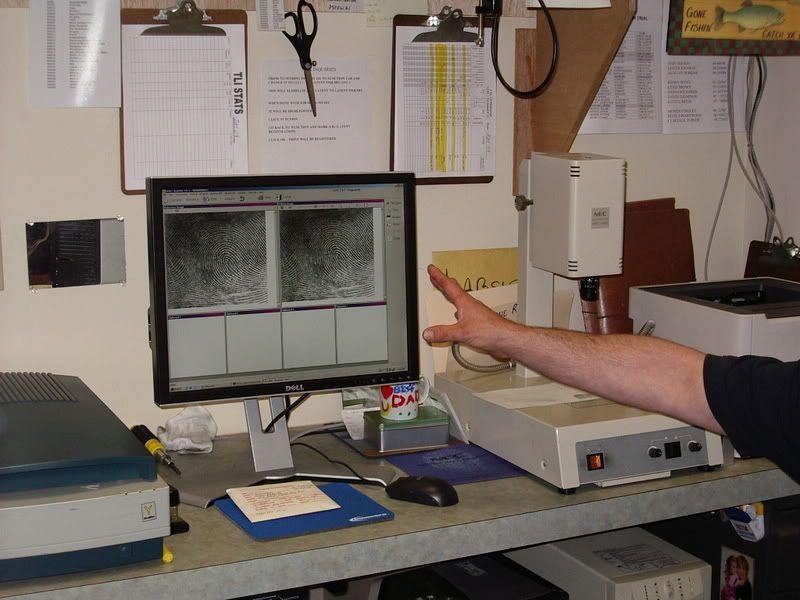
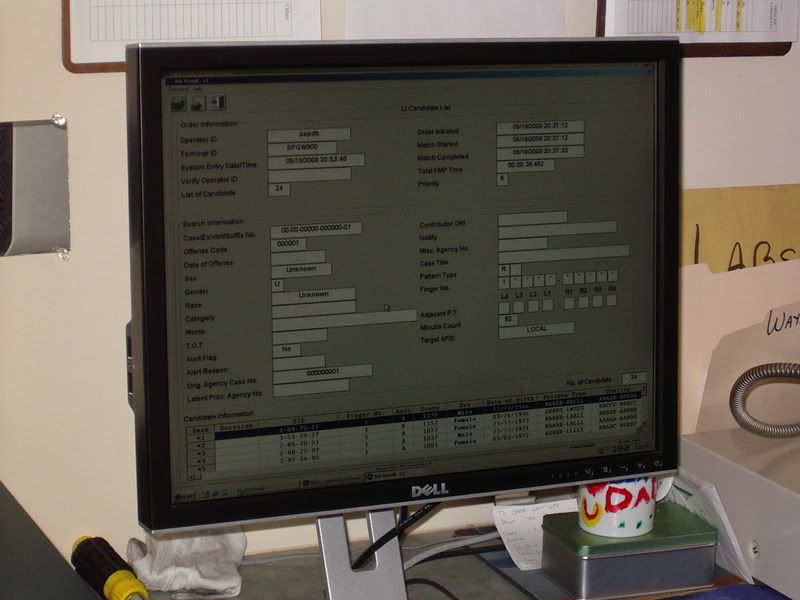
On TV, when a fingerprint is sent to AFIS, the results come back with a photo and address of the person matching the print. In reality, while results may or may NOT come back quickly, what the crime lab gets is a list of potential matches and all they get are numbers.


They look up the name belonging to the numbers on another computer. And a human eye is required to make the definitive match.

Different detectives have different specialties. So it takes more than one or two detectives to process a crime scene.

In Pittsburgh, all members of the MCU are police officers. In Allegheny County, crime scene people are civilians and work as part of the Medical Examiners office, not the county police.

A few more fallacies you will see on television:

Video surveillance footage does NOT get clearer when you zoom in. It actually is very difficult to identify a license plate, the color of the car, or the identity of anyone on the tape.

Only 7% of firearms are found to have usable fingerprints on them. In fact, lifting fingerprints isn’t nearly as easy as they make it look on CSI. A smooth, shiny, clean surface is needed to get a clear print. Drawer handles won’t usually work. Too small. Textured surfaces won’t work either. And door knobs have just too many prints to be helpful.

While DNA can be gotten from just about anything, it’s not cheap, costing $6,000 to $7,000 per test. Fingerprint analysis only costs the officer’s time.

Speaking of DNA, the question was posed to us, which is better: DNA or fingerprints? Think about this…identical twins share the same DNA, however, they would have different fingerprints.

When swabbing for DNA, the detective would swab twice. First with a swab dampened with deionized water. Then a second, DRY swab would be used on the same spot. The water brings up more DNA. Gloves would be changed before moving to another spot. The samples would be labeled BS1 (Blood Sample 1) for the first and BS2 for the second and so on. A sample would be taken nearby as a control sample (CS1) to identify contaminants.

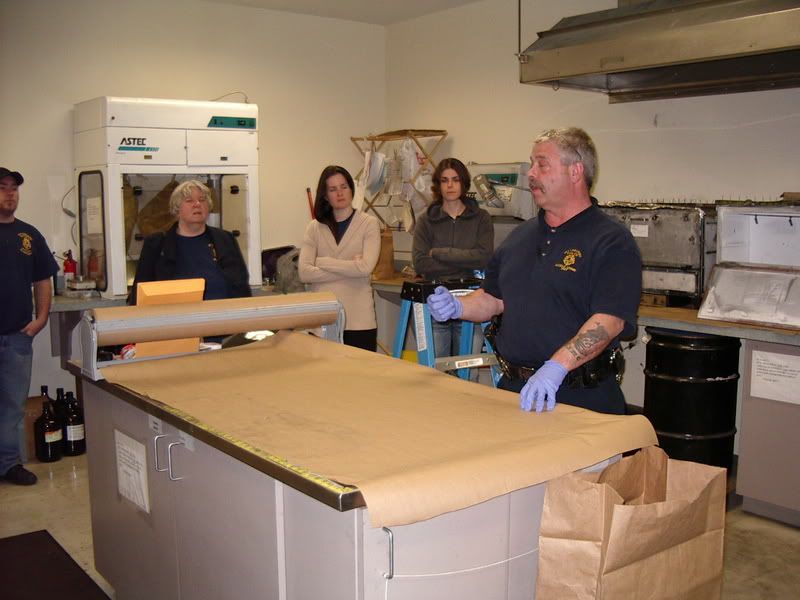
We got a chance to tour the Crime Lab, which isn’t nearly as high-tech and shiny as those on CSI.


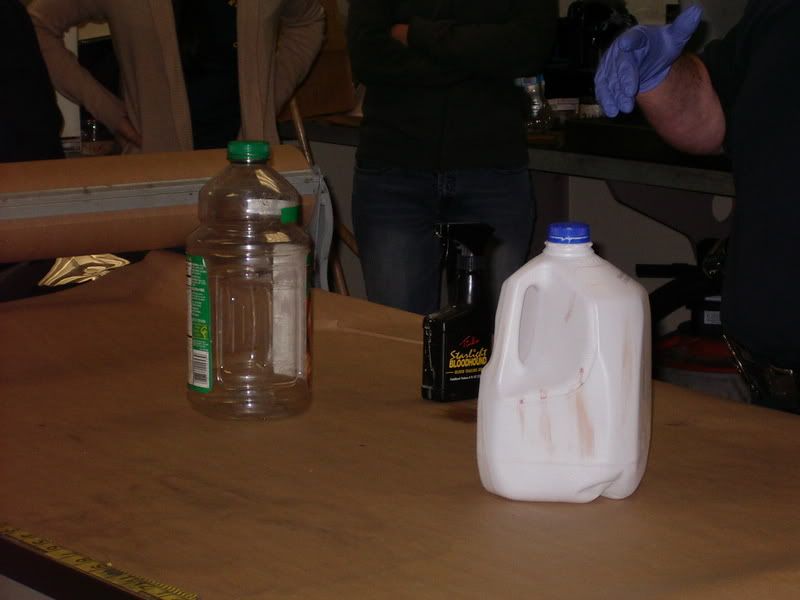
We were given a demonstration of Luminol, sprayed on a jug smeared with visible blood and a plastic bottle with nothing visibly evident on it.

The first attempt failed when nothing happened. Lesson? Luminol has a short shelf life. There are different types of the stuff and the particular kind being used had to mixed and used within hours. A fresh batch revealed luminescence on both jugs when the lights were turned out.

Note: it doesn’t glow very long. It doesn’t have to. Once the presence of blood is revealed, the detectives would simply collect the sample. And Luminol really does show the presence of blood even after attempts to clean up the crime scene.

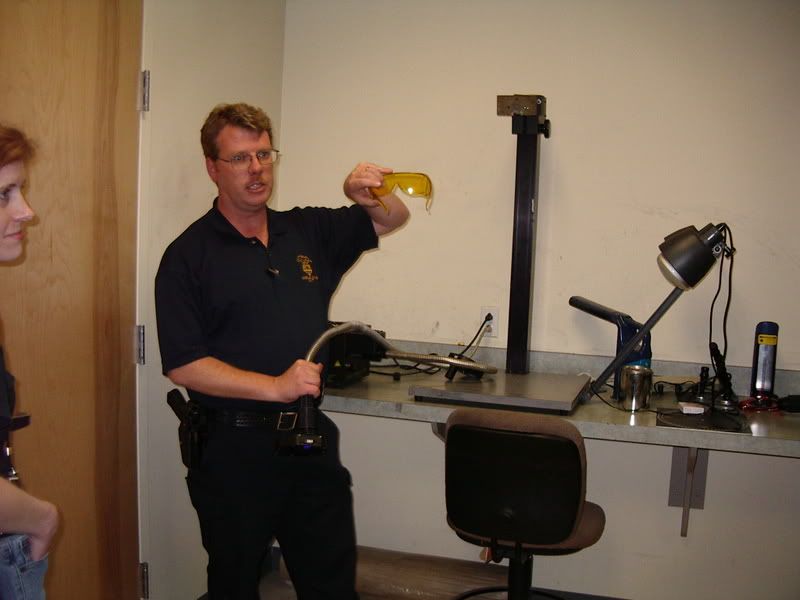
A demonstration of an alternative light source that shows different materials unnoticed by the human eye also proved fascinating. Different colored goggles or camera filters are needed to see different substances.


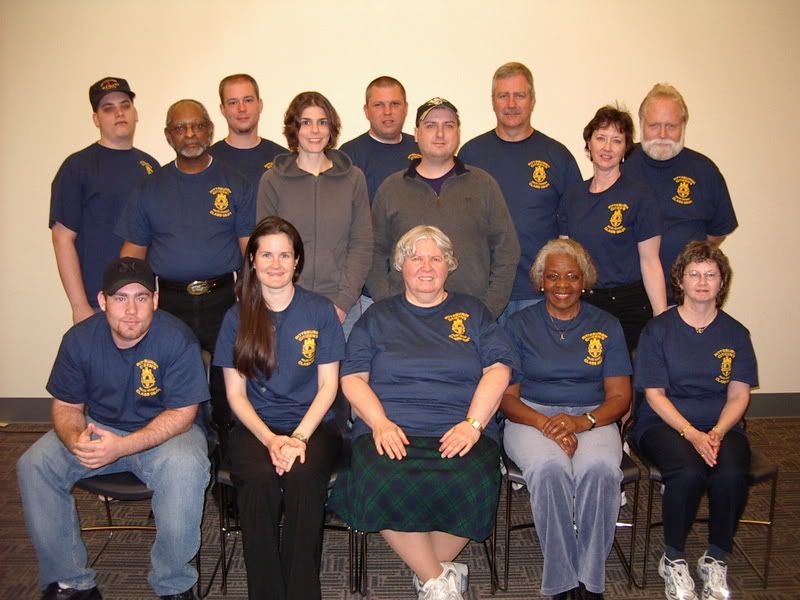
We wrapped up our visit to Police Headquarters and the Crime Lab with a class photo.

That’s me in the back row, second from the right. Fellow Working Stiff Gina is sitting front and center.

Our stint in Citizens’ Police Academy is winding down. We have off next week (Memorial Day) and only have one more real class before our graduation. I’m feeling a huge sense of regret to see it ending.

What WILL I blog about???

Tuesday, May 20, 2008

Drop Dead Sexy

By Martha Reed

I warn everyone that I meet that I come with a disclaimer: I am a writer, and I will use everything you give me. Tell me the funny story about your grandmother’s thumb, or the odd thing about your dog, and somehow, somewhere, I will find a use for it. I mine human foible; it’s what makes my characters human. When I’m asked if my writing is autobiographic I reply: well, yes, sort of. None of my characters are actually based on any one person, but give me a funny line or goofy situation and you might end up in my next story.

Here’s the perfect example. I have two characters, John Jarad, and Sarah Hawthorne. In my story, they haven’t met yet. John’s a police lieutenant and he’s just broken off his engagement to a local girl. He’s not interested in meeting anyone else just now, thank you very much. Sarah has also broken her engagement and she’s run away to Nantucket to bury herself in work. As the omniscient author, I - of course - arrange for them to meet nicely at the end of Chapter Eight. Except for a snag: they’re still not interested. Yikes! How do I resolve this?

The answer came to me on the street today. If you live in Pittsburgh, you’ve been chilled, damp, and probably knee-deep in mud for the last three days. As I was heading back to the office I saw a twenty-something woman walking toward me with her bare arms wrapped tightly around her body – she was in a light spring dress and severely underdressed for the weather. Directly in front of me, a twenty-something man met up with her – it became obvious they were meeting for lunch – and in the smoothest, drop dead sexy move I’ve seen a years he took off his jacket and draped it around her shoulders. Pure Cary Grant. It was obvious she wasn’t expecting his gesture – who does that anymore? But she was clearly delighted – her face lit up. I could even see that she was thinking: He likes me! And I thought: Ah-ha! That’s how I get John and Sarah together, because underneath it all John is a gentleman, and he would offer Sarah his coat if she looked chilly, and she would wake up to the fact that this gesture was thoughtful and his jacket was warm and smelled of quality aftershave, and she would take a look at this great cool guy and they would get together, and hey, I’m saved!

Which brings me to the question I want to ask other writers: when you find yourself at a crossroad, a hurdle in your plotline, do you go ‘find’ a solution or do you wait for one to show up?

If it’s a matter of research, I do go find the solution, but I’ve noticed that when I hit a snag about a character’s motivation that if I just give it a little time and keep my eyes open, a nifty human response-based example will usually fall into my lap. The next question is did I see the interaction on the street today because it was meant to happen like serendipity? Or did I only notice it because I was looking for it? And have you seen any drop dead sexy moves lately?