by Lisa Curry
At my in-laws’ the Saturday before last, my husband headed to the attic in search of old Hardy Boys mysteries, which our firstborn, Griffin, has been reading like crazy of late. He only found one, plus Mark Twain’s Adventures of Huckleberry Finn.
Griffin, age 11, dove right into The Mystery of the Haunted Fort, but I snatched up the dusty old copy of Huck Finn.
“Sean,” I said to my 9-year-old, “we have to read this book together. I love this book. You’ll love this book. Huck Finn is like the original Junie B. Jones.”
(For those of you without grade-school-age children, Junie B. Jones is title character and first-person narrator of a series of books by Barbara Park, my hands-down favorite of all the children’s books I’ve read with the boys.)
Sean and I snuggled into Grandma’s recliner and started to read:
You don’t know about me, without you have read a book by the name of “The Adventures of Tom Sawyer,” but that ain’t no matter. That book was made by Mr. Mark Twain, and he told the truth, mainly.
We were rockin’ and rollin’, taking turns reading the pages, until we hit the fifth page of the book, which was my turn to read.
Miss Watson’s big nigger, named Jim…
My eyeballs about popped out of their sockets, and I snapped the book shut.
“Hey! Why’d you do that?” Sean asked.
I think I read Huck Finn when I was about 12 or 13. I remembered that I loved it and why, but apparently I hadn’t remembered everything about it. I couldn’t bring myself to read any more of it – to say that word aloud – to my child.
But it was a good book. A great book. It was definitely not a racist book. Quite the opposite, from what I recalled. And what did refusing to read it make me – some kind of Nazi book burner?
I opened the book again. “Okay, Sean, listen. This is a very bad word. We NEVER say this word. But this book was written something like 125 years ago, and it’s set even before that, and things were different then. So we’re going to read it, but we’re not ever going to use this word other than when we’re reading this book. Got it?”
Sean nodded, so I read on, cringing as I read the n-word over and over and over again.
A few minutes later, Sean tapped me on the arm and whispered, “Mommy, who are the niggers?”
Oh my. The poor child had never heard the word before – and thank God for that – but if he didn’t even know what the word meant, he could hardly be expected to follow the story, let alone get the point.
I closed the book again. “You know, we probably need to talk about some stuff before we read any more of Huck Finn.”
So we talked. About slavery and the Civil War and the Civil Rights Movement. We talked about what it meant that 40 years after Martin Luther King Jr. made his “I Have a Dream” speech at the Lincoln Memorial – which we’ve watched together on U-Tube – we had a black man running for President of the United States. When we were done talking, we went back to Huck.
Over the next few days, I kept thinking I couldn’t be the only person in the modern world who loved Huck Finn but had a hard time reading it aloud to a child. So I did a little web-surfing and found out I was right.
Some high schools have just plain old removed Huck Finn from their English curriculum. And I can’t blame them, because I have a hard enough time reading the n-word to my own child in the privacy of my own home. My heart quails at the thought of reading it in a classroom full of both white and black children.
But a high school in Cherry Hill, New Jersey, didn’t cop out. Instead, they formed a multicultural task force to study the issue, which resulted in the development of both a Villanova University workshop for English teachers who wish to teach Huck Finn and a whole accompanying curriculum that focuses on black history and racism in America to teach along with it. You can read about it here.
Banning the book would be a lot easier, of course, but it occurs to me that a class like the one they teach in Cherry Hill could change a child’s life in a more profound way than simply understanding the literary significance of a single novel. Even if it is the novel about which Ernest Hemingway said, “All modern American literature comes from one book by Mark Twain called Huckleberry Finn. …All American writing comes from that. There was nothing before. There has been nothing as good since.”
A class like that could make a child a better person forever. I think Mark Twain would be pleased.
Here and now, Barack Obama is President-Elect. Sean and I are still reading Huck Finn.
Like Huck, we’re all “lightin’ out for the Territory ahead…”
God bless America.
Friday, November 14, 2008


Thursday, November 13, 2008
I Want One Too!

by Joyce
By now, everyone knows the economy isn't the greatest at the moment. The stock market is way down, 401ks are in the toilet, and unemployment is up--but give me a break already!
The recent gazillion-bazillion dollar (or whatever the figure was) bailout of the finance industry was bad enough, but now politicians are talking about bailing out the auto industry. This is the same industry, who has for years, thumbed their noses at car buyers by manufacturing vehicles that, to be kind, weren't quite what they should be.
Since the 1970s or maybe even earlier, consumers cried out for better vehicles. Vehicles that didn't rust after a couple of years. Vehicles that ran for more than 50,000 miles. Vehicles that got more than 15 miles per gallon. Instead of listening to the car buying public, domestic automakers kept doing things they way they always had. Improvements in safety, mileage, etc., were usually only done because the government forced them into it. I'm sure they figured people would keep buying whatever they put on the market.
But they were wrong.
Consumers got fed up and started buying better quality cars made by companies like Toyota, Honda, and Nissan. When the domestic automakers realized these customers weren't coming back, they started doing something about it. While domestic vehicles are much better than they used to be, they should have been good all along. It should not take losing sales to make a product better.
I don't think the government handing the big corporations big dollars will do anything to help them. In the long run, no matter how much money the government throws at these companies, there will always be competition. And they haven't learned to be competitive in today's marketplace. No amount of money can teach someone that.
It might actually be a good thing for these companies to file for bankruptcy and restructure. No one bailed out the airline industry, and the last time I looked, there are still planes in the air.
I've come up with a plan, however. So far, the government has bailed out the mortgage and banking industries, and would like to do the same for the automakers. I say it's time for writers to ask for a bailout. After all, who makes less money than writers? (Okay, maybe clerks at Walmart, but even they make more than I do.) And don't you think our product is much better than a hunk of steel and plastic? Not to mention the fact that mystery writers pretty much know every way there is to kill somebody. Can we put that in our proposal to Congress?
The publishing industry has been crying the blues for awhile now. They need a bailout too! And what about bookstore owners? Especially the independent ones? Bailout, I say!
I think we're on to something here. Okay, who's with me on this? Is there anyone else you can think of who needs a bailout?
Wednesday, November 12, 2008
Odd Jobs
By Annette Dashofy
I’ve always been lured by the occasion odd job. Maybe it goes back to being a kid picking up some spare spending money by doing a little work for Grandpap on the farm. These days, my designated odd job usually takes the form of critter sitting.
However, this weekend, I picked up another odd job. I became a proctor for the City of Pittsburgh. The opportunity arose in the form of a bulk email that went out to all graduates of the Citizens’ Police Academy asking if anyone would be interested in serving as a proctor for the police recruits’ written exam. Payment was involved and since I’m still waiting for that elusive book contract, other sources of income are always welcome. Besides, anything that takes me inside the workings of the police sounds like a good chance to do some research.
I emailed back that I was interested.
After calling to confirm my interest, the Proctor Coordinator mailed me a packet of information and instructions. Eight pages of instructions, to be precise. Page One began with “The following instructions are very important. Be sure you read and know these instructions thoroughly before reporting to the Convention Center.”
What was I getting myself into?
But I dutifully spent Friday night studying the pages.
Saturday morning, attired in the comfortable clothes recommended in the instructions and my trusty New Balance sneakers (suitable for five hours of walking on concrete floors), I drove into the city, successfully avoiding the massive construction projects that were going on this weekend.
When I arrived at the testing room on the second level of the David Lawrence Convention Center, I was asked to fill out some paperwork and then I received a blue apron and a name badge. Considering the stern nature of the instructions I’d been studying, I was surprised and relieved at how friendly everyone was. My supervisor and I finished setting out the testing materials with enough time to spare for me to locate key points of interest: The snack room and the restrooms.
At 9:30AM we all gathered at one end of the hall for our orientation. Basically, it was a review of the instructions and procedures. We were told that they had no idea how many would actually show up for the test although roughly 1,300 had applied. When the recruits entered, they would be directed to the rear of the room to fill up those rows first. My row was in a section near the front. It was possible there wouldn’t be enough recruits to fill our section. In that case, we would be “extras.”
Just before 10AM, we were ordered to stand by our rows. “Battle stations,” I whispered to the fellow who headed the row next to mine. Our supervisor pronounced us ready. The doors opened the sea of recruits marched in.
They were a cross-section of society. Many more men than women, but they were large (some very large) and small (dare I say SKINNY), young (one girl looked to me to be about 12, but that may say more about my age than hers) and old (well, older than I expected, some appearing to be well into their 40s). Note: Hey! I’m 49. I’m not saying 40s are old, but for a police recruit…yeah.
There were a few that looked and dressed like good choices to go undercover in the gang unit. A couple of guys were clean-cut to the max and wore suits and ties. Bucking for captain, perhaps?
The rows in the rear filled in. The rows on the sides, too. But the tide of recruits dwindled to a trickle and ended before they reached the three front sections, including mine.
Several supervisors and the cop who was the main recruiter all powwowed, counting filled tables. It seems there was a betting pool going on about how many would show. I did not hear who won. We ended up with a few more than 720. And I ended up as an extra.
My first task was clearing my tables of testing supplies and turning the booklets and blank answer sheets back in to the supply table. Then my supervisor handed me a stack of surveys the recruits had just filled out. Several of us sat down and tallied the results to indicate where they had learned of the test and how they had been recruited. The results were interesting. The largest number by far came from the city’s website. Many more had been told about the test by city employees and family or friends. Quite a few read about it in the Post Gazette. Nice to know folks still get information from the newspaper.
With that chore completed, I spent the rest of the time circulating the room, filling in for other proctors so they could take a break, or just being an extra set of eyes. This gave me a chance to get a closer look at some of the varieties of people who have dreams of becoming a cop.
There was the skinny kid with short flame-red hair. He wore long sleeves, but had some impressive tats on his hands and fingers. One girl wore red boots, red belt, and a sharp black and red outfit complete with plenty of bling. A very large fellow wore a head-to-toe brown velour sweat suit. I walked behind one seated test-taker who, I can only assume, was a plumber. After that, I avoided that row.
One of the guys from my Citizens’ Police Academy class was there, taking the test. He was so intent and focused, I didn’t dare disturb him to say “hi.”
In fact, I saw quite a lot of nerves in that room. Bouncing feet seem to be the most popular indicator of stress during a test. But some guys appeared ready to rip hair from their heads. I concluded I was much happier being there, doing what I was doing than if I were doing what they were doing.
There was three hours allotted for the test. Some finished in just over one. A handful took the entire time permitted.
So what’s next for these eager recruits? Those who pass this test will then take a physical test. Of those who pass both, maybe the top 200 will be called up when the next police academy class commences. From those, 25 or 30 will actually make it to becoming a police officer.
Sounds like pretty good odds compared to what we deal with when trying to get published.
As for me and my new odd job… I have signed up to proctor for another test next month for potential fire fighter recruits.
I’ve always been lured by the occasion odd job. Maybe it goes back to being a kid picking up some spare spending money by doing a little work for Grandpap on the farm. These days, my designated odd job usually takes the form of critter sitting.
However, this weekend, I picked up another odd job. I became a proctor for the City of Pittsburgh. The opportunity arose in the form of a bulk email that went out to all graduates of the Citizens’ Police Academy asking if anyone would be interested in serving as a proctor for the police recruits’ written exam. Payment was involved and since I’m still waiting for that elusive book contract, other sources of income are always welcome. Besides, anything that takes me inside the workings of the police sounds like a good chance to do some research.
I emailed back that I was interested.
After calling to confirm my interest, the Proctor Coordinator mailed me a packet of information and instructions. Eight pages of instructions, to be precise. Page One began with “The following instructions are very important. Be sure you read and know these instructions thoroughly before reporting to the Convention Center.”
What was I getting myself into?
But I dutifully spent Friday night studying the pages.
Saturday morning, attired in the comfortable clothes recommended in the instructions and my trusty New Balance sneakers (suitable for five hours of walking on concrete floors), I drove into the city, successfully avoiding the massive construction projects that were going on this weekend.
When I arrived at the testing room on the second level of the David Lawrence Convention Center, I was asked to fill out some paperwork and then I received a blue apron and a name badge. Considering the stern nature of the instructions I’d been studying, I was surprised and relieved at how friendly everyone was. My supervisor and I finished setting out the testing materials with enough time to spare for me to locate key points of interest: The snack room and the restrooms.
At 9:30AM we all gathered at one end of the hall for our orientation. Basically, it was a review of the instructions and procedures. We were told that they had no idea how many would actually show up for the test although roughly 1,300 had applied. When the recruits entered, they would be directed to the rear of the room to fill up those rows first. My row was in a section near the front. It was possible there wouldn’t be enough recruits to fill our section. In that case, we would be “extras.”
Just before 10AM, we were ordered to stand by our rows. “Battle stations,” I whispered to the fellow who headed the row next to mine. Our supervisor pronounced us ready. The doors opened the sea of recruits marched in.
They were a cross-section of society. Many more men than women, but they were large (some very large) and small (dare I say SKINNY), young (one girl looked to me to be about 12, but that may say more about my age than hers) and old (well, older than I expected, some appearing to be well into their 40s). Note: Hey! I’m 49. I’m not saying 40s are old, but for a police recruit…yeah.
There were a few that looked and dressed like good choices to go undercover in the gang unit. A couple of guys were clean-cut to the max and wore suits and ties. Bucking for captain, perhaps?
The rows in the rear filled in. The rows on the sides, too. But the tide of recruits dwindled to a trickle and ended before they reached the three front sections, including mine.
Several supervisors and the cop who was the main recruiter all powwowed, counting filled tables. It seems there was a betting pool going on about how many would show. I did not hear who won. We ended up with a few more than 720. And I ended up as an extra.
My first task was clearing my tables of testing supplies and turning the booklets and blank answer sheets back in to the supply table. Then my supervisor handed me a stack of surveys the recruits had just filled out. Several of us sat down and tallied the results to indicate where they had learned of the test and how they had been recruited. The results were interesting. The largest number by far came from the city’s website. Many more had been told about the test by city employees and family or friends. Quite a few read about it in the Post Gazette. Nice to know folks still get information from the newspaper.
With that chore completed, I spent the rest of the time circulating the room, filling in for other proctors so they could take a break, or just being an extra set of eyes. This gave me a chance to get a closer look at some of the varieties of people who have dreams of becoming a cop.
There was the skinny kid with short flame-red hair. He wore long sleeves, but had some impressive tats on his hands and fingers. One girl wore red boots, red belt, and a sharp black and red outfit complete with plenty of bling. A very large fellow wore a head-to-toe brown velour sweat suit. I walked behind one seated test-taker who, I can only assume, was a plumber. After that, I avoided that row.
One of the guys from my Citizens’ Police Academy class was there, taking the test. He was so intent and focused, I didn’t dare disturb him to say “hi.”
In fact, I saw quite a lot of nerves in that room. Bouncing feet seem to be the most popular indicator of stress during a test. But some guys appeared ready to rip hair from their heads. I concluded I was much happier being there, doing what I was doing than if I were doing what they were doing.
There was three hours allotted for the test. Some finished in just over one. A handful took the entire time permitted.
So what’s next for these eager recruits? Those who pass this test will then take a physical test. Of those who pass both, maybe the top 200 will be called up when the next police academy class commences. From those, 25 or 30 will actually make it to becoming a police officer.
Sounds like pretty good odds compared to what we deal with when trying to get published.
As for me and my new odd job… I have signed up to proctor for another test next month for potential fire fighter recruits.
Tuesday, November 11, 2008
Harvest Time
By Martha Reed

I love Fall because it’s time for the harvest. It’s a great time of year to take stock of what got accomplished over the last year, what did or didn’t happen, and then set up a plan for the coming year to either move myself in the right direction or to take a look at what didn’t get accomplished and figure out a new approach to get it done.
Fall helps me reset my priorities. For instance, I’m only half way through my manuscript, so I’m moving it to the top of the priority list for 2009, letting nothing else get in the way of accomplishing that task. Of course, unforeseen things will happen, but I’ve learned that if I keep a constant steady pressure on the top item, moving it back up to the top whenever it gets bumped off, by the end of the year it’s been accomplished.
I had three priorities for 2008: 1) organize a family reunion; 2) master the officer requirements for the local Sisters in Crime chapter and 3) help orchestrate the sale of a house. I took a look at each item last Fall, gave each item a sufficient amount of thought and planning and applied the pressure. A year later, all three items are done.
The ‘lose twenty pounds’ issue does keep falling off the list but I am still working on it. Dieting didn’t work completely but ‘eating with nutrition in mind’ has helped a bit plus I’ve added yoga and chiropractic maintenance to the mix. We’ll see if that helps; it certainly can’t hurt and I will keep the steady pressure on and craft a different combination until I find the one that works.
Last Fall I also decided to prioritize finding a new position at my day job. Truth be told I needed to earn more money – I need to start funding a Roth IRA and my health insurance premium doubled – and I couldn’t accomplish either of those at my current level. Using the same step-by-step process, I identified a new target job, formulated an approach, took extra training, volunteered for standing committees, even wrote business articles for the quarterly newsletter – anything to help raise my corporate profile. The good news is HR called me a week ago and made an offer and I start my new position on Monday.
In writing about this topic I’m not trying to show what I’ve accomplished; I’m trying to show how accomplishments can be acquired. Some folks I know blithely go through life waiting for their next lucky break. Luck is all well and good but I save it for the lottery and the casinos. I’ve learned that focused direct intent and lots of hard work will get you where you want to go plus the end results are more consistent. Maybe this is because I’m a bull-headed Taurus but all I know is, it works!
I invite you to try this approach for 2009. Make a list and identify two or three items you want to harvest next year. Post the list in a prominent place like over your coffeemaker. Each day, reconsider your items and think of what you can do that day to move them forward. If that item just won’t happen, it won’t happen, so move to the next item on your list and keep the pressure on. A year from now, take stock of your results. I think you’ll be amazed at what you can do when you put your mind to it.

I love Fall because it’s time for the harvest. It’s a great time of year to take stock of what got accomplished over the last year, what did or didn’t happen, and then set up a plan for the coming year to either move myself in the right direction or to take a look at what didn’t get accomplished and figure out a new approach to get it done.
Fall helps me reset my priorities. For instance, I’m only half way through my manuscript, so I’m moving it to the top of the priority list for 2009, letting nothing else get in the way of accomplishing that task. Of course, unforeseen things will happen, but I’ve learned that if I keep a constant steady pressure on the top item, moving it back up to the top whenever it gets bumped off, by the end of the year it’s been accomplished.
I had three priorities for 2008: 1) organize a family reunion; 2) master the officer requirements for the local Sisters in Crime chapter and 3) help orchestrate the sale of a house. I took a look at each item last Fall, gave each item a sufficient amount of thought and planning and applied the pressure. A year later, all three items are done.
The ‘lose twenty pounds’ issue does keep falling off the list but I am still working on it. Dieting didn’t work completely but ‘eating with nutrition in mind’ has helped a bit plus I’ve added yoga and chiropractic maintenance to the mix. We’ll see if that helps; it certainly can’t hurt and I will keep the steady pressure on and craft a different combination until I find the one that works.
Last Fall I also decided to prioritize finding a new position at my day job. Truth be told I needed to earn more money – I need to start funding a Roth IRA and my health insurance premium doubled – and I couldn’t accomplish either of those at my current level. Using the same step-by-step process, I identified a new target job, formulated an approach, took extra training, volunteered for standing committees, even wrote business articles for the quarterly newsletter – anything to help raise my corporate profile. The good news is HR called me a week ago and made an offer and I start my new position on Monday.
In writing about this topic I’m not trying to show what I’ve accomplished; I’m trying to show how accomplishments can be acquired. Some folks I know blithely go through life waiting for their next lucky break. Luck is all well and good but I save it for the lottery and the casinos. I’ve learned that focused direct intent and lots of hard work will get you where you want to go plus the end results are more consistent. Maybe this is because I’m a bull-headed Taurus but all I know is, it works!
I invite you to try this approach for 2009. Make a list and identify two or three items you want to harvest next year. Post the list in a prominent place like over your coffeemaker. Each day, reconsider your items and think of what you can do that day to move them forward. If that item just won’t happen, it won’t happen, so move to the next item on your list and keep the pressure on. A year from now, take stock of your results. I think you’ll be amazed at what you can do when you put your mind to it.
Monday, November 10, 2008
GIANTS IN THE EARTH

by Gina Sestak

Once upon a time, I participated in weekly meetings of a meditation group. One type of meditation we practiced involved crystals. If this is starting to sound kind of new-agey to you, just wait until I get to the part about the vibes!
Crystals are amazing structures. They are not alive -- at least, not in the way most of us envision life -- and yet they grow. Unlike many other substances, crystals have a clear vibrational tone, making them an ideal tool for fine-tuning your awareness.
The meditation group would sit quietly and focus -- without words or intellect -- upon the feeling of a crystal or array of crystals. We didn't limit ourselves to clear quartz crystals, but experimented with various types, including various gemstones. The most intense experience, we found, occurred with lithium crystals. [Shades of Star Trek!]
I was reminded of these meditations by this month's edition of National Geographic, which features an article on caves of giant crystals in Mexico. These crystals are humungous, large enough to make human beings crawling over them appear to be the size of ants.
I wonder what the vibes are like in that cave.
Friday, November 07, 2008
D-DAY!!!!
By Jennie Bentley
OK, so I’m gonna take the easy way out this week. It’s been kind of crazy around here, between the book release on Tuesday, the couple of guest blogs I’ve been doing—there’s one on Fresh Fiction today, if anyone wants to stop by and say hello—getting going on book 3, and all the other stuff that’s been going on. When you’re reading this, I’m either on my way to, in the middle of, on my way home from, or sitting in front of the TV watching, my first TV interview. It’s airing/aired on Nashville’s Channel 4 at 12:30 Central time today, and as I’m writing this, I’m terribly nervous, although I’m trying not to think about it.
So “Fatal Fixer-Upper” hit the stores on Tuesday morning, and DH and I hit the stores on Tuesday morning, too, to make sure it was there. Here are a couple of pictures: 


Ahem.
My editor at Berkley sent me the back cover copy for DIY#2, which will be coming out in August. This is it:
Avery Baker was once a New York designer, but inheriting her aunt’s old Maine cottage has led her down a new career path in home renovation. Finding a property’s hidden potential has rewards and challenges—especially when a mystery surfaces behind the walls...
Home renovation is never easy, especially when the home's inhabitants are dead. Avery’s hunky boyfriend and business partner, Derek Ellis, wants to flip a seriously stigmatized ranch house where murder occurred two decades ago. It’s a good thing Avery has more faith in her boyfriend than in ghosts.
Their renovations are quickly interrupted when a presence is felt--and it’s not happy with the new alterations. Could it really be that the property is possessed? If they’re going to flip this house, all the outdated fixtures—including the supernatural squatters—must be disposed of, or else this project will haunt them forever…
I’m pretty happy with it. Now all we have to do is find a good title, since the book can’t go to print being called DIY#2. I came up with “Haunted House Homicide” (shades of Scooby-Doo). My agent likes “Bones in the Basement” (shades of Nancy Drew). Berkley suggested “A Skeleton in the Crawlspace” (gives away too much of the story, I think) or “Spooked and Spackled.” I love the last one, but I’m open to suggestions. If you have any, feel free to share.
Meanwhile, I’m starting DIY#3, which actually does have a title. “Home for the Homicide,” courtesy of my ITW debut buddy, the brilliant Kelli Stanley. It’s December in Waterfield, and Avery and Derek are turning an old carriage house into a romantic retreat for two, before Kate’s and Wayne’s wedding on New Year’s Eve. But then Kate’s ex shows up, and ends up dead. I haven’t figured out who killed him yet, or why, but I’m working on it. I have four months—three and three weeks now—to get it done and turned in to my editor. No problem...
So that’s what’s been going on with me this week. What about you?
OK, so I’m gonna take the easy way out this week. It’s been kind of crazy around here, between the book release on Tuesday, the couple of guest blogs I’ve been doing—there’s one on Fresh Fiction today, if anyone wants to stop by and say hello—getting going on book 3, and all the other stuff that’s been going on. When you’re reading this, I’m either on my way to, in the middle of, on my way home from, or sitting in front of the TV watching, my first TV interview. It’s airing/aired on Nashville’s Channel 4 at 12:30 Central time today, and as I’m writing this, I’m terribly nervous, although I’m trying not to think about it.
So “Fatal Fixer-Upper” hit the stores on Tuesday morning, and DH and I hit the stores on Tuesday morning, too, to make sure it was there. Here are a couple of pictures:


Me with the display at Barnes & Noble—someone really needs to invent a way to remove double chins from pictures, the same way you can remove red-eye—me with the marvellous Erika, and me with the shelf at Borders. The whole idea behind picking a pseudonym in the B’s was to get high up on the shelves, so people wouldn’t have to stoop to find the book, but I guess there are so many of us with the same idea that “Fatal Fixer-Upper” still ended up on the bottom. The books were there, though, which is the important thing.
I have two new reviews this week: this one in the Nashville Scene, calling my book “harmless fun” with “prose that is nothing if not accessible,” which I take to mean so simple a first-grader can read it, and this one in the Cozy Library, that’s so beautiful and complimentary it brought tears to my eyes.
Ahem.
My editor at Berkley sent me the back cover copy for DIY#2, which will be coming out in August. This is it:
Avery Baker was once a New York designer, but inheriting her aunt’s old Maine cottage has led her down a new career path in home renovation. Finding a property’s hidden potential has rewards and challenges—especially when a mystery surfaces behind the walls...
Home renovation is never easy, especially when the home's inhabitants are dead. Avery’s hunky boyfriend and business partner, Derek Ellis, wants to flip a seriously stigmatized ranch house where murder occurred two decades ago. It’s a good thing Avery has more faith in her boyfriend than in ghosts.
Their renovations are quickly interrupted when a presence is felt--and it’s not happy with the new alterations. Could it really be that the property is possessed? If they’re going to flip this house, all the outdated fixtures—including the supernatural squatters—must be disposed of, or else this project will haunt them forever…
I’m pretty happy with it. Now all we have to do is find a good title, since the book can’t go to print being called DIY#2. I came up with “Haunted House Homicide” (shades of Scooby-Doo). My agent likes “Bones in the Basement” (shades of Nancy Drew). Berkley suggested “A Skeleton in the Crawlspace” (gives away too much of the story, I think) or “Spooked and Spackled.” I love the last one, but I’m open to suggestions. If you have any, feel free to share.
Meanwhile, I’m starting DIY#3, which actually does have a title. “Home for the Homicide,” courtesy of my ITW debut buddy, the brilliant Kelli Stanley. It’s December in Waterfield, and Avery and Derek are turning an old carriage house into a romantic retreat for two, before Kate’s and Wayne’s wedding on New Year’s Eve. But then Kate’s ex shows up, and ends up dead. I haven’t figured out who killed him yet, or why, but I’m working on it. I have four months—three and three weeks now—to get it done and turned in to my editor. No problem...
So that’s what’s been going on with me this week. What about you?
Thursday, November 06, 2008
What Are You Reading?
by Joyce
Since I'm not prolific enough to come up with two posts in the same week and still come anywhere near my goal of writing 1000 words per day (most days I don't reach it anyway, but that's another story), I'm posing a question today.
What are you reading?
I just finished our very own Jennie Bentley's Fatal Fixer-Upper and I really enjoyed it. Avery is a great character--inquisitive, chatty, and smart. And Derek was the handyman every girl dreams about--yummy.
Before that, I read Big City, Bad Blood by Sean Chercover (talk about two books on the opposite ends of the spectrum!). It was a good read, especially if you like gritty PI novels. Although I do have to say the protagonist gets beat up an awful lot. If he gets hit in the head anymore, he's going to end up with permanent brain damage.
So, read any good books (or bad books) lately?
Since I'm not prolific enough to come up with two posts in the same week and still come anywhere near my goal of writing 1000 words per day (most days I don't reach it anyway, but that's another story), I'm posing a question today.
What are you reading?
I just finished our very own Jennie Bentley's Fatal Fixer-Upper and I really enjoyed it. Avery is a great character--inquisitive, chatty, and smart. And Derek was the handyman every girl dreams about--yummy.
Before that, I read Big City, Bad Blood by Sean Chercover (talk about two books on the opposite ends of the spectrum!). It was a good read, especially if you like gritty PI novels. Although I do have to say the protagonist gets beat up an awful lot. If he gets hit in the head anymore, he's going to end up with permanent brain damage.
So, read any good books (or bad books) lately?
Wednesday, November 05, 2008
Colorful Characters
by Annette Dashofy
I suspect we all know at least one. And I don’t necessarily mean crazy Uncle Louie. I mean those “colorful characters” you see around your town. The ones that when you ask someone else about them, describing them with a few key words, the other person immediately says, “Oh. THAT guy.”
Years ago, when I was working in a kiosk in the local mall, there was a young guy who walked around town with his hands holding an invisible steering wheel. He made car sounds as he “drove” on foot. Needless to say, he was mentally challenged. Everyone knew him as Tommy the Car. Some people eyed him with suspicion and distain. But mostly, everyone watched out for him. And when circumstances demanded that he move into a more institutional setting, we all missed him.
He was a colorful character. No one knew his last name, but everyone knew Tommy the Car.
There’s an old man I pass several times a week. He hitchhikes from one small town to another small town and back almost daily. I’ve never picked him up, but apparently others do. And if you mention the guy who hitchhikes on a certain road, folks who travel that road know who you mean.
I have a bit of a fixation lately on a local colorful character. It’s the crime writer in me who is fascinated with this guy. He hangs out at one of my favorite coffee shops and I’ve spotted him elsewhere. He’s hard to miss. The guy could have been a pro linebacker for all I know. I’ve discretely asked several people about him. All I have to do is give a quick description of his height and his hair and the response is, “Oh. THAT guy.” But I haven’t had much luck getting details beyond that. I admit, I had created quite a story for the guy in my head. Scenarios ranged from rich and eccentric to homeless with an interesting wardrobe. But the comments I’ve received about him include words like “weird” and “notorious.” There was mention of “trouble with the police.”
That last one adds fuel to my curiosity. It also scares the bejeezus out of me. As if being the size of a small sequoia isn’t intimidating enough. Now I make great efforts to NOT establish eye contact. Let’s face it. I may write crime fiction, but I am an unequivocal chicken. I’m curious, but I am well aware of how that worked out for the cat.
So I continue to ask a few cautious questions in whispered tones when this particular colorful character is nowhere around. I’ll let you know if I find out anything. Maybe. Perhaps he reads blogs. Note I haven’t mentioned much detail of his clothing or appearance beyond his size. There’s a good reason for that. He scares me.
But inquiring minds want to know.
Now, tell me about your local colorful characters, past or present. I know everyone has to have known at least one.
I suspect we all know at least one. And I don’t necessarily mean crazy Uncle Louie. I mean those “colorful characters” you see around your town. The ones that when you ask someone else about them, describing them with a few key words, the other person immediately says, “Oh. THAT guy.”
Years ago, when I was working in a kiosk in the local mall, there was a young guy who walked around town with his hands holding an invisible steering wheel. He made car sounds as he “drove” on foot. Needless to say, he was mentally challenged. Everyone knew him as Tommy the Car. Some people eyed him with suspicion and distain. But mostly, everyone watched out for him. And when circumstances demanded that he move into a more institutional setting, we all missed him.
He was a colorful character. No one knew his last name, but everyone knew Tommy the Car.
There’s an old man I pass several times a week. He hitchhikes from one small town to another small town and back almost daily. I’ve never picked him up, but apparently others do. And if you mention the guy who hitchhikes on a certain road, folks who travel that road know who you mean.
I have a bit of a fixation lately on a local colorful character. It’s the crime writer in me who is fascinated with this guy. He hangs out at one of my favorite coffee shops and I’ve spotted him elsewhere. He’s hard to miss. The guy could have been a pro linebacker for all I know. I’ve discretely asked several people about him. All I have to do is give a quick description of his height and his hair and the response is, “Oh. THAT guy.” But I haven’t had much luck getting details beyond that. I admit, I had created quite a story for the guy in my head. Scenarios ranged from rich and eccentric to homeless with an interesting wardrobe. But the comments I’ve received about him include words like “weird” and “notorious.” There was mention of “trouble with the police.”
That last one adds fuel to my curiosity. It also scares the bejeezus out of me. As if being the size of a small sequoia isn’t intimidating enough. Now I make great efforts to NOT establish eye contact. Let’s face it. I may write crime fiction, but I am an unequivocal chicken. I’m curious, but I am well aware of how that worked out for the cat.
So I continue to ask a few cautious questions in whispered tones when this particular colorful character is nowhere around. I’ll let you know if I find out anything. Maybe. Perhaps he reads blogs. Note I haven’t mentioned much detail of his clothing or appearance beyond his size. There’s a good reason for that. He scares me.
But inquiring minds want to know.
Now, tell me about your local colorful characters, past or present. I know everyone has to have known at least one.
Tuesday, November 04, 2008
A Small Town Gets Conned
by Joyce
On 60 Minutes Sunday night, there was a fascinating piece about a man who conned a rural police department into thinking he was a federal agent.
The town of Gerald, Missouri has approximately 1200 residents and a four man police department. When Bill Jakob arrived in town one day brandishing a badge and business cards with the Justice Department logo, no one thought twice about accepting his assistance. He told Police Chief Ryan McCrary that he was from the "Multi-Jurisdictional Narcotics Task Force" and was sent to assist the department with the growing problem of methamphetamine labs that had sprung up in the area. The one phone call anyone made to check on Jakob was to a number he provided, and the call was answered by a woman whom authorities now believe was his wife.
Jakob began rounding up drug suspects using whatever means necessary. Residents state that he always used excessive force, brandished a shotgun and never had a warrant. While Jakob contends he got most suspects to confess, he did so without bothering with Miranda rights. When one suspect asked for a lawyer, Jakob refused.
When complaints about Jakob's tactics began surfacing, reporter Linda Trest of the Gasconade County Republican did a background check, something which the police department never bothered to do. A check of public records revealed that Jakob had a record. In 1994 he plead guilty and paid a fine for having sex with an underage girl. In 2003 he and his wife filed for bankruptcy. In 2007, a jury ruled that he pay $600,000 to the family of a 6 year old boy that Jakob hit with his pickup truck (Later overturned and settled for $50,000).
After this hit the papers, the chief and two officers were fired. No charges were filed on the 20 people arrested by Jakob. Some of these people are now suing the town, the mayor, and the police department. One of those suing is an elderly woman who was involuntarily committed to a mental institution when she refused to cooperate.
Jakob has pleaded guilty to charges of impersonating a federal officer and will most likely spend several years in prison. He still insists he was only trying to help.
Here is the entire interview, if anyone is interested.
On 60 Minutes Sunday night, there was a fascinating piece about a man who conned a rural police department into thinking he was a federal agent.
The town of Gerald, Missouri has approximately 1200 residents and a four man police department. When Bill Jakob arrived in town one day brandishing a badge and business cards with the Justice Department logo, no one thought twice about accepting his assistance. He told Police Chief Ryan McCrary that he was from the "Multi-Jurisdictional Narcotics Task Force" and was sent to assist the department with the growing problem of methamphetamine labs that had sprung up in the area. The one phone call anyone made to check on Jakob was to a number he provided, and the call was answered by a woman whom authorities now believe was his wife.
Jakob began rounding up drug suspects using whatever means necessary. Residents state that he always used excessive force, brandished a shotgun and never had a warrant. While Jakob contends he got most suspects to confess, he did so without bothering with Miranda rights. When one suspect asked for a lawyer, Jakob refused.
When complaints about Jakob's tactics began surfacing, reporter Linda Trest of the Gasconade County Republican did a background check, something which the police department never bothered to do. A check of public records revealed that Jakob had a record. In 1994 he plead guilty and paid a fine for having sex with an underage girl. In 2003 he and his wife filed for bankruptcy. In 2007, a jury ruled that he pay $600,000 to the family of a 6 year old boy that Jakob hit with his pickup truck (Later overturned and settled for $50,000).
After this hit the papers, the chief and two officers were fired. No charges were filed on the 20 people arrested by Jakob. Some of these people are now suing the town, the mayor, and the police department. One of those suing is an elderly woman who was involuntarily committed to a mental institution when she refused to cooperate.
Jakob has pleaded guilty to charges of impersonating a federal officer and will most likely spend several years in prison. He still insists he was only trying to help.
Here is the entire interview, if anyone is interested.
Sunday, November 02, 2008
The Devil Is In The Details
by Wilfred Bereswill
Do details in a novel bog you down or do they bring your writing alive? Obviously that’s a question of taste, I think. Some people love it, some... not so much. I had the pleasure of attending my second conference as an author a few weeks ago. The conference? Magna Cum Murder sponsored by Ball State University in Muncie, Indiana. First off, kudos to Kathryn Kennison, one of the loveliest ladies I’ve met and a wonderful organizer. Also kudos to Jim Huang, owner of The Mystery Company in Carmel, Indiana and program organizer. I am confident that next year’s Bouchercon is in good hands with Jim at the helm.
So, I had a lot of time to sit and discuss issues with readers and writers and one of the things we discussed was the level of detail in novels. On the first day of the conference, a group of ladies invited me to it with them and discuss a few things. One of them was detail. And while some liked details and others didn’t, one thing was certain; if you’re going to put in details, get it right.
I prefer some level of detail in my work. I think that details, if inserted correctly bring familiarization to a piece. I’m also not against a certain amount of brand names if done to further the plot or define a character. I believe that the line; “He swung the door to the battered Pinto open, kicking the empty bottle of Wild Turkey as stumbled out to the pavement.” As opposed to the line: “He sat the snifter of Hennessey’s on the bar and called for the valet to retrieve his Porsche.” These are two very different men and using details, we can give you a sense of them in a few words, without slowing down the plot. But the details have to be right.
No one should confuse this:

For this, even in it's best days.

Case in point. I’m perfectly fine with the writer who uses the line, “She pulled out a gun and shot him.” However, if you add detail, get it right. “She pulled out her Glock, flicked the safety off and shot him.” A greater level of detail, but WRONG! I’m throwing this book against the wall.
So, I’m at the Magna conference, listening to a wonderful speaker. She reads an excerpt of her work and everyone is enraptured. Her words flow beautifully... and shades of Emeril, BAM! She loses me and I completely stop listening. What brought me right out of that happy journey that the author was transporting me through? A detail I knew was wrong. She talked about a situation where her young blind brother, a child, climbs into an old 1949 Ford. As he explores the car with his touch, he runs his hands along the steering column and finds the keys in the ignition. WHAT?
My dad had a 1951 Ford Crown Victoria.


The ignition switch was in the dashboard, not on the steering column. In fact, if I remember correctly, it was on the left-hand side of the steering wheel. Okay, maybe there was a ’49 Ford with a steering column/ignition interlock system, but I don’t think so. Regardless, she threw in a detail that pulled me right out of that wonderful story. In the grand scheme of things, it didn’t matter where the ignition was, but in this case, she lost a reader/listener. Judging by the crowd, I was the only one that caught it, but the story was an inspirational one and the details didn’t matter like they do in a mystery, where people are looking hard at the details to solve the crime.
So, how about you? Are you a detail hound like me? Have you ever read a book where a detail took you out of the story?
Do details in a novel bog you down or do they bring your writing alive? Obviously that’s a question of taste, I think. Some people love it, some... not so much. I had the pleasure of attending my second conference as an author a few weeks ago. The conference? Magna Cum Murder sponsored by Ball State University in Muncie, Indiana. First off, kudos to Kathryn Kennison, one of the loveliest ladies I’ve met and a wonderful organizer. Also kudos to Jim Huang, owner of The Mystery Company in Carmel, Indiana and program organizer. I am confident that next year’s Bouchercon is in good hands with Jim at the helm.
So, I had a lot of time to sit and discuss issues with readers and writers and one of the things we discussed was the level of detail in novels. On the first day of the conference, a group of ladies invited me to it with them and discuss a few things. One of them was detail. And while some liked details and others didn’t, one thing was certain; if you’re going to put in details, get it right.
I prefer some level of detail in my work. I think that details, if inserted correctly bring familiarization to a piece. I’m also not against a certain amount of brand names if done to further the plot or define a character. I believe that the line; “He swung the door to the battered Pinto open, kicking the empty bottle of Wild Turkey as stumbled out to the pavement.” As opposed to the line: “He sat the snifter of Hennessey’s on the bar and called for the valet to retrieve his Porsche.” These are two very different men and using details, we can give you a sense of them in a few words, without slowing down the plot. But the details have to be right.
No one should confuse this:

For this, even in it's best days.

Case in point. I’m perfectly fine with the writer who uses the line, “She pulled out a gun and shot him.” However, if you add detail, get it right. “She pulled out her Glock, flicked the safety off and shot him.” A greater level of detail, but WRONG! I’m throwing this book against the wall.
So, I’m at the Magna conference, listening to a wonderful speaker. She reads an excerpt of her work and everyone is enraptured. Her words flow beautifully... and shades of Emeril, BAM! She loses me and I completely stop listening. What brought me right out of that happy journey that the author was transporting me through? A detail I knew was wrong. She talked about a situation where her young blind brother, a child, climbs into an old 1949 Ford. As he explores the car with his touch, he runs his hands along the steering column and finds the keys in the ignition. WHAT?
My dad had a 1951 Ford Crown Victoria.


The ignition switch was in the dashboard, not on the steering column. In fact, if I remember correctly, it was on the left-hand side of the steering wheel. Okay, maybe there was a ’49 Ford with a steering column/ignition interlock system, but I don’t think so. Regardless, she threw in a detail that pulled me right out of that wonderful story. In the grand scheme of things, it didn’t matter where the ignition was, but in this case, she lost a reader/listener. Judging by the crowd, I was the only one that caught it, but the story was an inspirational one and the details didn’t matter like they do in a mystery, where people are looking hard at the details to solve the crime.
So, how about you? Are you a detail hound like me? Have you ever read a book where a detail took you out of the story?
Friday, October 31, 2008
Halloooowwweeeeen!
Well, it’s here. Do you love it? I was never a fan. Not as a kid or an adult. As a kid I always felt pressure to have a better costume than I did. I know, woe is me.
Anyone who grew up in the seventies or before has suffered at the hands of parents who didn’t give a damn what the cool costume was a given year. And I know, that means we were forced into situations where creativeness could develop, etc. etc. But sometimes it was just pure embarrassment when for some reason your creativity did not show itself.
As an adult, I never understood the appeal of grown-ups dressing up in costume. I know, I know, boring. I am, that’s true. My husband and I did our best to devise non-costumes when we were invited to parties. Our favorite was to go as Pitt fans as many a party fell on football Saturday.
But, I have to say, now that I have kids, I’m seeing the spooky holiday through a different lens.
I’ve not poisoned my children with my negative attitude toward the creepy, dark fun of Halloween.
They’ve coaxed, no pushed me into decorating inside and out, and it’s been fun to see them plan costumes. My favorite they’ve worn so far were good old fashioned ghosts, fashioned from sheets. As I watch them traipse down the sidewalk, out into the street tonight, dressed as a black cat and a combination skeleton/vampire who boasts a Clone Wars firearm, I’ll wonder how they’ll remember Halloween, whether someday they’ll dread it. And, I sincerely hope they always think it’s fun, that they always find fun in everything they do.
How about you? What are your best/worst Halloween memories?
Anyone who grew up in the seventies or before has suffered at the hands of parents who didn’t give a damn what the cool costume was a given year. And I know, that means we were forced into situations where creativeness could develop, etc. etc. But sometimes it was just pure embarrassment when for some reason your creativity did not show itself.
As an adult, I never understood the appeal of grown-ups dressing up in costume. I know, I know, boring. I am, that’s true. My husband and I did our best to devise non-costumes when we were invited to parties. Our favorite was to go as Pitt fans as many a party fell on football Saturday.
But, I have to say, now that I have kids, I’m seeing the spooky holiday through a different lens.
I’ve not poisoned my children with my negative attitude toward the creepy, dark fun of Halloween.
They’ve coaxed, no pushed me into decorating inside and out, and it’s been fun to see them plan costumes. My favorite they’ve worn so far were good old fashioned ghosts, fashioned from sheets. As I watch them traipse down the sidewalk, out into the street tonight, dressed as a black cat and a combination skeleton/vampire who boasts a Clone Wars firearm, I’ll wonder how they’ll remember Halloween, whether someday they’ll dread it. And, I sincerely hope they always think it’s fun, that they always find fun in everything they do.
How about you? What are your best/worst Halloween memories?
Thursday, October 30, 2008
Virtual Crime
by Joyce
I should probably quit reading newspapers, but then I’d never have any blog topics. I read an article last week that stated a woman in Japan was arrested for virtually killing her husband. She didn’t kill her real husband, she killed his online gaming personality. My first thought was, huh? I read further and found out that she was arrested for illegally accessing the man’s computer and stealing his password. Wait—it gets better (or worse, depending on how you look at it). They weren’t married in real life—only in the game. When her virtual husband divorced her virtual self, she killed him.
This just sounds so bizarre to me. I know there are all kinds of virtual gaming sites out there, but I didn’t realize people took it so seriously. I did some more research and found out that there’s a game called Second Life which has over six million registered users. Real businesses are even getting involved. IBM has set up a virtual office. Reuters has opened a virtual agency, and former presidential candidate John Edwards even had a virtual campaign headquarters.
Not too long ago, police in Belgium investigated a virtual rape that allegedly occurred in the game. Police in Germany investigated an incident where a virtual adult had sex with a virtual child. Although no real act took place, the incident violated Germany’s child pornography laws. Although these are virtual crimes, players take the events so seriously that they are suffering from real trauma. One woman whose character was attacked in the virtual world suffered from real life post traumatic stress disorder.
Crimes such as theft are more common. Virtual thieves are making off with virtual money and property. On occasion, real crimes such as stealing credit card or social security numbers occur and authorities take these very seriously. The FBI has been called on several occasions (they’ve even created their own characters and checked out the site).
This all made me wonder if this virtual world is really any different than the worlds we create in our books. Haven’t we all heard of readers who take books so seriously they believe the characters are real? That’s our goal, isn’t it—to create virtual worlds for readers to enter to escape from real life for awhile?
What do you think of these virtual games? Have you ever played one? Or do you prefer your virtual world in the pages of a book?
I should probably quit reading newspapers, but then I’d never have any blog topics. I read an article last week that stated a woman in Japan was arrested for virtually killing her husband. She didn’t kill her real husband, she killed his online gaming personality. My first thought was, huh? I read further and found out that she was arrested for illegally accessing the man’s computer and stealing his password. Wait—it gets better (or worse, depending on how you look at it). They weren’t married in real life—only in the game. When her virtual husband divorced her virtual self, she killed him.
This just sounds so bizarre to me. I know there are all kinds of virtual gaming sites out there, but I didn’t realize people took it so seriously. I did some more research and found out that there’s a game called Second Life which has over six million registered users. Real businesses are even getting involved. IBM has set up a virtual office. Reuters has opened a virtual agency, and former presidential candidate John Edwards even had a virtual campaign headquarters.
Not too long ago, police in Belgium investigated a virtual rape that allegedly occurred in the game. Police in Germany investigated an incident where a virtual adult had sex with a virtual child. Although no real act took place, the incident violated Germany’s child pornography laws. Although these are virtual crimes, players take the events so seriously that they are suffering from real trauma. One woman whose character was attacked in the virtual world suffered from real life post traumatic stress disorder.
Crimes such as theft are more common. Virtual thieves are making off with virtual money and property. On occasion, real crimes such as stealing credit card or social security numbers occur and authorities take these very seriously. The FBI has been called on several occasions (they’ve even created their own characters and checked out the site).
This all made me wonder if this virtual world is really any different than the worlds we create in our books. Haven’t we all heard of readers who take books so seriously they believe the characters are real? That’s our goal, isn’t it—to create virtual worlds for readers to enter to escape from real life for awhile?
What do you think of these virtual games? Have you ever played one? Or do you prefer your virtual world in the pages of a book?
Wednesday, October 29, 2008
The Making of a Writers Conference
By Annette Dashofy
As the first snowflakes fall in Pennsylvania, I’m already nervously anticipating next spring. Specifically, mid May.
As everyone probably knows already, I am coordinator of the 2009 Pennwriters Conference. I still can’t say with any degree of certainty whether I’d have accepted the job had I known how much work it was going to be. And it isn’t so much the work. It’s the rejection. I’m a writer. I’m used to rejection. But I can accumulate enough of it with my manuscripts. Do I really need more of it from agents and editors that I invite to attend the conference?
Apparently, YES.
But I’m starting to breathe a little. The line-up looks good. So far. There is still much to be done. However, I thought since I had no idea what was really involved, unless you’ve tackled something like this, you probably don’t either. Therefore, as a public service to anyone thinking of organizing a writer’s conference, I am going to report on what it takes and what goes on behind the scenes.
Of the utmost importance is having a team. This is where having contacts, friends, and a good network come in handy. My first task as conference coordinator was finding a major-name keynote speaker. In 2008, we had Joyce Carol Oates. Nothing like having big shoes to fill! But with the support and assistance of Mary Alice Gorman from Mystery Lovers Bookshop, I was able to speak with Lisa Scottoline and she agreed to take the role.
After that BIG ONE, the next few were easy. I knew who I wanted for Saturday’s luncheon keynote: Tim Esaias, local, award-winning writer with poetry and speculative fiction published in more languages than I can count. He accepted my pleading invitation.
Next, I started using my connections in the mystery world. I asked John Lamb and CJ Lyons to be special guest speakers and both agreed immediately.
At some point, I realized that I was compiling my dream conference. And I was going to be too busy to enjoy it!
I had my top four speakers lined up. Since all four of my first choices said yes, I guess I became a little spoiled. My attempts to acquire agents and editors to attend brought me crashing to earth. As I mentioned above, rejection became the norm. However, four wonderful agents eventually agreed to come. Lucienne Diver of the Knight Agency came on board followed by Uwe Stender of TriadaUS, Paige Wheeler of Folio Literary Agency, and Alyssa Eisner Henkin of Trident. Editors were even tougher. Jane Friedman of Writers Digest and Matt Holliday, editor of Pennsylvania Magazine both agreed to come. But editors of novel-length fiction were an even bigger challenge.
Back in June, in the midst of the agent/editor hunt, another matter required attention. On the Thursday before the conference, Pennwriters will hold two day-long intensives: one for fiction writers and one for nonfiction. I called for help from Pennwriters president, Lisa Kastner, and the 2008 and 2010 conference coordinator, Ayleen Stellhorn. Working together, we came up with the wonderful Marta Perry to lead the fiction intensive and the always popular Mary Jo Rulnick to again teach the nonfiction one.
Weeks and months passed. I’d begun this process shortly after the New Year. Planning had started in earnest after the 2008 conference in May. Here it was…October…and I still was stuck on agents and editors! Needing a break, I switched gears for a week and focused on the workshops. I’m still a long way from having those ready to go, but I’ve found authors and teachers much easier to deal with and willing to help.
Still, I want the agent/editor issue settled. I want to be able to put my full attention on the workshops without wondering who might be willing to give up a weekend and come listen to pitches. I called in favors. I begged other authors to ask their editors to come. Finally, Esi Sogah from Avon said YES.
Of course, like good writing, conference planning contains twists and complications. One day recently, I received an email from Alyssa Eisner Henkin saying she needed to back out. Later that same day, another message popped into my inbox from Colleen Lindsay of FinePrint Literary stating an interest in coming.
Which brings us to the end of October. I am waiting to hear back from a handful of editors. I’d like to bring in one more agent, but if I can’t find anyone else, I think the four I’ve got are great!
I have a fantastic team of committee heads. We’ve had two extremely productive meetings. We have set a menu and planned a beach party (in theme only…no sand) for Saturday night. I have no fears about things like registration, the basket auction, the author’s tea and book signing, the hospitality suite, brochures, or read and critique sessions. Those departments are all in excellent hands.
While I’m pleased with the progress we’ve all made up to this point, there is soooo much to do. We want to open registration online on January second. That leaves TWO MONTHS to have the conference largely in hand.
Stick around. I’ll continue to post occasionally about my progress, the set-backs, the victories, and the stumbling blocks.
The 2009 Pennwriters Conference: A Writer’s Tool Chest will be held at the Pittsburgh Airport Marriott, May 15-17, 2009.
As the first snowflakes fall in Pennsylvania, I’m already nervously anticipating next spring. Specifically, mid May.
As everyone probably knows already, I am coordinator of the 2009 Pennwriters Conference. I still can’t say with any degree of certainty whether I’d have accepted the job had I known how much work it was going to be. And it isn’t so much the work. It’s the rejection. I’m a writer. I’m used to rejection. But I can accumulate enough of it with my manuscripts. Do I really need more of it from agents and editors that I invite to attend the conference?
Apparently, YES.
But I’m starting to breathe a little. The line-up looks good. So far. There is still much to be done. However, I thought since I had no idea what was really involved, unless you’ve tackled something like this, you probably don’t either. Therefore, as a public service to anyone thinking of organizing a writer’s conference, I am going to report on what it takes and what goes on behind the scenes.
Of the utmost importance is having a team. This is where having contacts, friends, and a good network come in handy. My first task as conference coordinator was finding a major-name keynote speaker. In 2008, we had Joyce Carol Oates. Nothing like having big shoes to fill! But with the support and assistance of Mary Alice Gorman from Mystery Lovers Bookshop, I was able to speak with Lisa Scottoline and she agreed to take the role.
After that BIG ONE, the next few were easy. I knew who I wanted for Saturday’s luncheon keynote: Tim Esaias, local, award-winning writer with poetry and speculative fiction published in more languages than I can count. He accepted my pleading invitation.
Next, I started using my connections in the mystery world. I asked John Lamb and CJ Lyons to be special guest speakers and both agreed immediately.
At some point, I realized that I was compiling my dream conference. And I was going to be too busy to enjoy it!
I had my top four speakers lined up. Since all four of my first choices said yes, I guess I became a little spoiled. My attempts to acquire agents and editors to attend brought me crashing to earth. As I mentioned above, rejection became the norm. However, four wonderful agents eventually agreed to come. Lucienne Diver of the Knight Agency came on board followed by Uwe Stender of TriadaUS, Paige Wheeler of Folio Literary Agency, and Alyssa Eisner Henkin of Trident. Editors were even tougher. Jane Friedman of Writers Digest and Matt Holliday, editor of Pennsylvania Magazine both agreed to come. But editors of novel-length fiction were an even bigger challenge.
Back in June, in the midst of the agent/editor hunt, another matter required attention. On the Thursday before the conference, Pennwriters will hold two day-long intensives: one for fiction writers and one for nonfiction. I called for help from Pennwriters president, Lisa Kastner, and the 2008 and 2010 conference coordinator, Ayleen Stellhorn. Working together, we came up with the wonderful Marta Perry to lead the fiction intensive and the always popular Mary Jo Rulnick to again teach the nonfiction one.
Weeks and months passed. I’d begun this process shortly after the New Year. Planning had started in earnest after the 2008 conference in May. Here it was…October…and I still was stuck on agents and editors! Needing a break, I switched gears for a week and focused on the workshops. I’m still a long way from having those ready to go, but I’ve found authors and teachers much easier to deal with and willing to help.
Still, I want the agent/editor issue settled. I want to be able to put my full attention on the workshops without wondering who might be willing to give up a weekend and come listen to pitches. I called in favors. I begged other authors to ask their editors to come. Finally, Esi Sogah from Avon said YES.
Of course, like good writing, conference planning contains twists and complications. One day recently, I received an email from Alyssa Eisner Henkin saying she needed to back out. Later that same day, another message popped into my inbox from Colleen Lindsay of FinePrint Literary stating an interest in coming.
Which brings us to the end of October. I am waiting to hear back from a handful of editors. I’d like to bring in one more agent, but if I can’t find anyone else, I think the four I’ve got are great!
I have a fantastic team of committee heads. We’ve had two extremely productive meetings. We have set a menu and planned a beach party (in theme only…no sand) for Saturday night. I have no fears about things like registration, the basket auction, the author’s tea and book signing, the hospitality suite, brochures, or read and critique sessions. Those departments are all in excellent hands.
While I’m pleased with the progress we’ve all made up to this point, there is soooo much to do. We want to open registration online on January second. That leaves TWO MONTHS to have the conference largely in hand.
Stick around. I’ll continue to post occasionally about my progress, the set-backs, the victories, and the stumbling blocks.
The 2009 Pennwriters Conference: A Writer’s Tool Chest will be held at the Pittsburgh Airport Marriott, May 15-17, 2009.
Tuesday, October 28, 2008
The Cornwall Witches
By Martha Reed
Halloween is one of my favorite holidays because even if you take it seriously it still comes out like fun. No one is responsible for planning a big meal or get-together. If you don’t have the money to shop for presents you can still enjoy the heck out of it by digging through your closet and coming up with something creative to wear that can be even more rewarding than buying an outfit straight off eBay. You can loosen up and be politically incorrect and carve the face of a presidential candidate onto a pumpkin. It’s a holiday that hasn’t been sanitized; it’s still slightly suspect, slightly pagan, and the woo-woo factor is still there. Ghosts, goblins, witches, Darth Vader, Batman’s Joker – all the creatures of the night get to come out and play.
Now I’m not usually one for woo-woo but a story popped up in the latest issue of Archaeology Magazine (http://www.archaeology.org/0811/etc/witches.html) that gave me the creeps. In the spirit of Halloween, I thought I should share an excerpt with you.
Macabre evidence of age-old spells surfaces in an archaeologist's front yard
By Kate Ravilious
Archaeologist Jacqui Wood holds a fragment of a cauldron unearthed from a buried spring-fed pool near her home. This and other artifacts she has found point to a long history of ritual and witchcraft. (Photo by Manuel Cohen)

Over the centuries, many in the British Isles have appealed to witches in times of need -- to cure a toothache, concoct a love potion, or curse a neighbor. Witchcraft, the rituals of a number of pagan belief systems, was thought to offer control of the world through rites and incantations. Common as it has been over the past several centuries, the practice is secretive and there are few written records. It tends to be passed down through families and never revealed to outsiders. But archaeologist Jacqui Wood has unearthed evidence of more than 40 witchy rituals beneath her own front yard, bringing to light an unknown branch of witchcraft possibly still practiced today.
Wood's home is in the hamlet of Saveock Water in Cornwall, a county tucked in the far southwest corner of the country. For thousands of years people have raised crops and livestock in its fertile valleys, and its coastline of dramatic cliffs, secluded coves, and pounding surf was once a haunt for smugglers. Cornwall is a place time forgot; steeped in folklore, myth, and legend; and purported to be inhabited by pixies, fairies, and elves. So it should come as no surprise that it has also been home to the dark arts.
When I visit Saveock Water it is raining, which adds to its unearthly atmosphere. Wood, a warm lady with sparkling hazel eyes, greets me in her cozy white-washed barn while rain hammers on the roof. She moved to Saveock Water 15 years ago because it was an ideal location for her work in experimental archaeology, replicating ancient techniques, including those used in farming or metallurgy. Since then she has carried out her experiments, such as growing ancient crop varieties, unaware of what lay under her fields. In the late 1990s, Wood decided to do some metalwork research by re-creating an ancient kind of furnace. "I dug down into the ground to construct a shelter close to the furnace and I discovered a clay floor," she says.
Wood was excited but busy with other projects and left the find undisturbed for a few years. In 2001, she gathered some archaeology students to explore it further. "It was a nightmare to dig because the field is covered in a soft rush grass with a dense web of roots, and the soil is heavy and laden with water," says Wood.
While digging a hole for another project, Wood discovered a late Mesolithic clay platform in her field. She found that small pits had been dug into the platform at a later date, and contained bizarre collections of items including swan skins, pebbles, and bird claws. (Manuel Cohen)
As the group peeled off layers of turf, they discovered the clay floor was an extensive man-made platform -- probably a foundation for a group of ancient dwellings. During a break in the rain, Wood takes me out to have a look. What used to be a half-acre marshy field is now a slippery clay surface, covered with small plastic crates protecting finds. Based on flint fragments embedded in the clay, a Danish specialist dated the site to the late Mesolithic, around 8,500 years ago.

But as Wood and her team excavated the platform over the next few seasons, unusual features began to emerge. They came across strange rectangular holes, about 15 by 10 inches, in the clay. "At first we thought they must be postholes or something," says Wood. But the first of the holes, about 6 inches deep, was lined with white feathers. The pits cut through the clay platform, so Wood knew that they had to date to a later time, but only an expensive radiocarbon test could pin it down. "We guessed it might have been a bird-plucking pit, a common farming practice at the turn of the 19th century," says Wood.
But that couldn't be the case -- Wood found that the feathers were still attached to the skin, which had been laid in the pit with the feathers facing inward. A bird expert from the local zoo confirmed they came from a swan. On top of the swan skin, Wood found a pile of pebbles and a number of claws from different birds. She later learned that the stones came from a coastal region 15 miles away, though no one knows why they were brought from so far. Someone had gone to considerable trouble to gather the contents of this pit. That season, Wood and her colleagues found eight pits, two of which contained odd collections of bird parts, and six of which had been emptied, but with a few telltale feathers and stones left behind.
"Over the last 30 years I've been quick to dismiss ritual as an explanation for unusual archaeological finds," says Wood. "It usually means that the archaeologists can't think of anything better. So now it seems especially ironic that I end up with a site absolutely full of ritual."
By that time Wood was convinced that only witchcraft could explain her unusual finds, but no one had ever heard of anything like this. Radiocarbon tests revealed the swan skins dated to around a.d. 1640, the time of civil war in England and a very dangerous period to be practicing witchcraft. "Any sort of pagan worship was classified as witchcraft at that time, and punishable by death," says Wood. "If caught, they would have been burned at the stake." To make things worse, swans were royal symbols and property of the crown, so killing a swan was doubly risky.
And yet witchcraft remained popular, says Marion Gibson of Exeter University, a specialist on 16th- and 17th-century paganism. "Every village would have had people thought to be skilled in magic in one way or another and people in the area would go to them for their specialist services, just as we might go to a lawyer or plumber today."
Wood leads me to one of the pits and pulls the plastic lid off. I get a sense of the shock she must have felt when she found them. Swan feathers line the pit and muddy, wrinkled egg membranes sit on top. A shiver runs down my spine as I imagine someone coming here in the dead of night, digging a hole, and carefully placing these offerings in it. What made them desperate enough to risk death if caught?
Two spring-fed pools on Wood's land were places of ritual offering. Visitors seeking good fortune deposited everything from scraps of cloth, to straightpins, hair, heather branches, and nail clippings. (Manuel Cohen)
One explanation is that some of the pits contained offerings to St. Bridget (or Bride) of Ireland, the patron saint of babies and infants, who may be associated with the pagan goddess Brigid. "My theory is that maybe if you got married and didn't become pregnant in the first year, you might make an offering to St. Bride in a feather pit," says Wood. Women who then became pregnant might have had to empty their pits and burn the contents, she postulates.
Wood and her colleagues had further spooky discoveries ahead. Not far from the three pits, they uncovered the remains of a spring-fed pool, carefully lined with white quartz, and containing 128 textile scraps, six medieval straight pins, shoe parts, heather branches (associated with luck), fingernail clippings, human hair, and -- it doesn't get more witch-like -- part of a cauldron.
"Two of the pieces of fabric contained wool and silk, indicating they originally belonged to someone of high status," says Wood. Others were coarser and may have come from those of lower status. Looking at the textile fragments stored in little plastic boxes in Wood's barn, it is hard to believe they are 350 years old -- the vivid blues, golden yellows, and vibrant greens were preserved by the moist environment.
Further excavation uncovered a stone-lined drain and a second pool that only fills in winter. Wood realized that the pools were much older than their contents, and that this site may have been special to people for thousands of years. Based on stratigraphic evidence, she believes the quartz-lined pools are 6,000 years old. "The white quartz would have made the pools glow in the moonlight, and we think they may have been very special, a place of ritual for people in those times," she speculates.
If the pools do date back that far, they retained their sacred status throughout the ages, as by the 17th century people were using them as a place of offering, throwing in personal fragments (such as fabric and hair) for good fortune. However, the practice stopped in the late 17th century, when the crown paid locals to fill in the pools (along with other "holy" wells in Cornwall) to prevent pagan rituals.
Wood's 2008 field season brought more unusual discoveries. "We have been uncovering some extraordinary animal pits," says Wood. One was lined with the skin of a black cat and contained 22 eggs, all with chicks close to hatching, in addition to cat claws, teeth, and whiskers. Another held a dog skin, dog teeth, and a baked pig jaw. The week prior to my arrival, Wood's students uncovered a pit that contained a mysterious seven-inch iron disk with a swan skin on one side and animal fur on the other.
The biggest shock of all came from the radiocarbon dates for these pits. The cat pit dated to the 18th century, while the dog pit dated to the 1950s. "And I doubt it just suddenly stopped in the 1950s," says Wood. "It is plausible that it could still be continuing now."
Woo-woo. Happy Halloween, everyone!
Halloween is one of my favorite holidays because even if you take it seriously it still comes out like fun. No one is responsible for planning a big meal or get-together. If you don’t have the money to shop for presents you can still enjoy the heck out of it by digging through your closet and coming up with something creative to wear that can be even more rewarding than buying an outfit straight off eBay. You can loosen up and be politically incorrect and carve the face of a presidential candidate onto a pumpkin. It’s a holiday that hasn’t been sanitized; it’s still slightly suspect, slightly pagan, and the woo-woo factor is still there. Ghosts, goblins, witches, Darth Vader, Batman’s Joker – all the creatures of the night get to come out and play.
Now I’m not usually one for woo-woo but a story popped up in the latest issue of Archaeology Magazine (http://www.archaeology.org/0811/etc/witches.html) that gave me the creeps. In the spirit of Halloween, I thought I should share an excerpt with you.
Macabre evidence of age-old spells surfaces in an archaeologist's front yard
By Kate Ravilious
Archaeologist Jacqui Wood holds a fragment of a cauldron unearthed from a buried spring-fed pool near her home. This and other artifacts she has found point to a long history of ritual and witchcraft. (Photo by Manuel Cohen)

Over the centuries, many in the British Isles have appealed to witches in times of need -- to cure a toothache, concoct a love potion, or curse a neighbor. Witchcraft, the rituals of a number of pagan belief systems, was thought to offer control of the world through rites and incantations. Common as it has been over the past several centuries, the practice is secretive and there are few written records. It tends to be passed down through families and never revealed to outsiders. But archaeologist Jacqui Wood has unearthed evidence of more than 40 witchy rituals beneath her own front yard, bringing to light an unknown branch of witchcraft possibly still practiced today.
Wood's home is in the hamlet of Saveock Water in Cornwall, a county tucked in the far southwest corner of the country. For thousands of years people have raised crops and livestock in its fertile valleys, and its coastline of dramatic cliffs, secluded coves, and pounding surf was once a haunt for smugglers. Cornwall is a place time forgot; steeped in folklore, myth, and legend; and purported to be inhabited by pixies, fairies, and elves. So it should come as no surprise that it has also been home to the dark arts.
When I visit Saveock Water it is raining, which adds to its unearthly atmosphere. Wood, a warm lady with sparkling hazel eyes, greets me in her cozy white-washed barn while rain hammers on the roof. She moved to Saveock Water 15 years ago because it was an ideal location for her work in experimental archaeology, replicating ancient techniques, including those used in farming or metallurgy. Since then she has carried out her experiments, such as growing ancient crop varieties, unaware of what lay under her fields. In the late 1990s, Wood decided to do some metalwork research by re-creating an ancient kind of furnace. "I dug down into the ground to construct a shelter close to the furnace and I discovered a clay floor," she says.
Wood was excited but busy with other projects and left the find undisturbed for a few years. In 2001, she gathered some archaeology students to explore it further. "It was a nightmare to dig because the field is covered in a soft rush grass with a dense web of roots, and the soil is heavy and laden with water," says Wood.
While digging a hole for another project, Wood discovered a late Mesolithic clay platform in her field. She found that small pits had been dug into the platform at a later date, and contained bizarre collections of items including swan skins, pebbles, and bird claws. (Manuel Cohen)
As the group peeled off layers of turf, they discovered the clay floor was an extensive man-made platform -- probably a foundation for a group of ancient dwellings. During a break in the rain, Wood takes me out to have a look. What used to be a half-acre marshy field is now a slippery clay surface, covered with small plastic crates protecting finds. Based on flint fragments embedded in the clay, a Danish specialist dated the site to the late Mesolithic, around 8,500 years ago.

But as Wood and her team excavated the platform over the next few seasons, unusual features began to emerge. They came across strange rectangular holes, about 15 by 10 inches, in the clay. "At first we thought they must be postholes or something," says Wood. But the first of the holes, about 6 inches deep, was lined with white feathers. The pits cut through the clay platform, so Wood knew that they had to date to a later time, but only an expensive radiocarbon test could pin it down. "We guessed it might have been a bird-plucking pit, a common farming practice at the turn of the 19th century," says Wood.
But that couldn't be the case -- Wood found that the feathers were still attached to the skin, which had been laid in the pit with the feathers facing inward. A bird expert from the local zoo confirmed they came from a swan. On top of the swan skin, Wood found a pile of pebbles and a number of claws from different birds. She later learned that the stones came from a coastal region 15 miles away, though no one knows why they were brought from so far. Someone had gone to considerable trouble to gather the contents of this pit. That season, Wood and her colleagues found eight pits, two of which contained odd collections of bird parts, and six of which had been emptied, but with a few telltale feathers and stones left behind.
"Over the last 30 years I've been quick to dismiss ritual as an explanation for unusual archaeological finds," says Wood. "It usually means that the archaeologists can't think of anything better. So now it seems especially ironic that I end up with a site absolutely full of ritual."
By that time Wood was convinced that only witchcraft could explain her unusual finds, but no one had ever heard of anything like this. Radiocarbon tests revealed the swan skins dated to around a.d. 1640, the time of civil war in England and a very dangerous period to be practicing witchcraft. "Any sort of pagan worship was classified as witchcraft at that time, and punishable by death," says Wood. "If caught, they would have been burned at the stake." To make things worse, swans were royal symbols and property of the crown, so killing a swan was doubly risky.
And yet witchcraft remained popular, says Marion Gibson of Exeter University, a specialist on 16th- and 17th-century paganism. "Every village would have had people thought to be skilled in magic in one way or another and people in the area would go to them for their specialist services, just as we might go to a lawyer or plumber today."
Wood leads me to one of the pits and pulls the plastic lid off. I get a sense of the shock she must have felt when she found them. Swan feathers line the pit and muddy, wrinkled egg membranes sit on top. A shiver runs down my spine as I imagine someone coming here in the dead of night, digging a hole, and carefully placing these offerings in it. What made them desperate enough to risk death if caught?
Two spring-fed pools on Wood's land were places of ritual offering. Visitors seeking good fortune deposited everything from scraps of cloth, to straightpins, hair, heather branches, and nail clippings. (Manuel Cohen)
One explanation is that some of the pits contained offerings to St. Bridget (or Bride) of Ireland, the patron saint of babies and infants, who may be associated with the pagan goddess Brigid. "My theory is that maybe if you got married and didn't become pregnant in the first year, you might make an offering to St. Bride in a feather pit," says Wood. Women who then became pregnant might have had to empty their pits and burn the contents, she postulates.
Wood and her colleagues had further spooky discoveries ahead. Not far from the three pits, they uncovered the remains of a spring-fed pool, carefully lined with white quartz, and containing 128 textile scraps, six medieval straight pins, shoe parts, heather branches (associated with luck), fingernail clippings, human hair, and -- it doesn't get more witch-like -- part of a cauldron.
"Two of the pieces of fabric contained wool and silk, indicating they originally belonged to someone of high status," says Wood. Others were coarser and may have come from those of lower status. Looking at the textile fragments stored in little plastic boxes in Wood's barn, it is hard to believe they are 350 years old -- the vivid blues, golden yellows, and vibrant greens were preserved by the moist environment.
Further excavation uncovered a stone-lined drain and a second pool that only fills in winter. Wood realized that the pools were much older than their contents, and that this site may have been special to people for thousands of years. Based on stratigraphic evidence, she believes the quartz-lined pools are 6,000 years old. "The white quartz would have made the pools glow in the moonlight, and we think they may have been very special, a place of ritual for people in those times," she speculates.
If the pools do date back that far, they retained their sacred status throughout the ages, as by the 17th century people were using them as a place of offering, throwing in personal fragments (such as fabric and hair) for good fortune. However, the practice stopped in the late 17th century, when the crown paid locals to fill in the pools (along with other "holy" wells in Cornwall) to prevent pagan rituals.
Wood's 2008 field season brought more unusual discoveries. "We have been uncovering some extraordinary animal pits," says Wood. One was lined with the skin of a black cat and contained 22 eggs, all with chicks close to hatching, in addition to cat claws, teeth, and whiskers. Another held a dog skin, dog teeth, and a baked pig jaw. The week prior to my arrival, Wood's students uncovered a pit that contained a mysterious seven-inch iron disk with a swan skin on one side and animal fur on the other.
The biggest shock of all came from the radiocarbon dates for these pits. The cat pit dated to the 18th century, while the dog pit dated to the 1950s. "And I doubt it just suddenly stopped in the 1950s," says Wood. "It is plausible that it could still be continuing now."
Woo-woo. Happy Halloween, everyone!
Monday, October 27, 2008
REUNION
by Gina Sestak
Last weekend I attended my 40th high school reunion.
The word "reunion" implies a reconnection, a coming together of things that were separated from one another. I never felt connected in high school, though, so I wasn't sure what to expect.
I attended Sacred Heart, an all-girl Catholic high school in Pittsburgh's Shady Side neighborhood. It was considered the academic high school of the diocesan school system and required an entrance exam for admittance. I went there with high hopes. They were soon dashed.
I wasn't bullied by the other students who, by and large, were normal decent kids. I was bullied by the nuns.
I'd had trouble with the nuns all through grade school, but those nuns had been Franciscans. Sacred Heart was staffed by Sisters of Charity. I thought they might be different. Nicer. They weren't.
Anyone who hasn't attended Catholic school or been under the control of nuns might think that the sisters are sweet holy women, devoted to God and community service. Based on experience in the Catholic school system, I always thought that their primary requirement for teaching sisters was a profound hatred for children.
Only one of my former teachers came to the reunion, the French teacher Sister Patrice. I hadn't had any specific problems with her, so I didn't have to repress the desire for confrontation. That's one of the harder parts. While you're going through these things, it seems normal. Then when you get older and realize how young and vulnerable children and teens are, you get angry.
I didn't really fit in with most of the other students, who by and large seemed to come from middle class families with parents who wanted them to get an education. I ate lunch with a group of girls who didn't quite fit in either. Only one of them came to the reunion.
Surprisingly, the reunion wasn't bad. We ate and danced at Station Square on Saturday night, then went to mass at the old church on Sunday morning and ate lunch in the grade school cafeteria. The school itself no longer exists, merged years ago with Cathedral High to form Oakland Catholic.
What about you, dear readers? Did you enjoy your high school years? Have you been to any reunions lately?
Last weekend I attended my 40th high school reunion.
The word "reunion" implies a reconnection, a coming together of things that were separated from one another. I never felt connected in high school, though, so I wasn't sure what to expect.
I attended Sacred Heart, an all-girl Catholic high school in Pittsburgh's Shady Side neighborhood. It was considered the academic high school of the diocesan school system and required an entrance exam for admittance. I went there with high hopes. They were soon dashed.
I wasn't bullied by the other students who, by and large, were normal decent kids. I was bullied by the nuns.
I'd had trouble with the nuns all through grade school, but those nuns had been Franciscans. Sacred Heart was staffed by Sisters of Charity. I thought they might be different. Nicer. They weren't.
Anyone who hasn't attended Catholic school or been under the control of nuns might think that the sisters are sweet holy women, devoted to God and community service. Based on experience in the Catholic school system, I always thought that their primary requirement for teaching sisters was a profound hatred for children.
Only one of my former teachers came to the reunion, the French teacher Sister Patrice. I hadn't had any specific problems with her, so I didn't have to repress the desire for confrontation. That's one of the harder parts. While you're going through these things, it seems normal. Then when you get older and realize how young and vulnerable children and teens are, you get angry.
I didn't really fit in with most of the other students, who by and large seemed to come from middle class families with parents who wanted them to get an education. I ate lunch with a group of girls who didn't quite fit in either. Only one of them came to the reunion.
Surprisingly, the reunion wasn't bad. We ate and danced at Station Square on Saturday night, then went to mass at the old church on Sunday morning and ate lunch in the grade school cafeteria. The school itself no longer exists, merged years ago with Cathedral High to form Oakland Catholic.
What about you, dear readers? Did you enjoy your high school years? Have you been to any reunions lately?
Thursday, October 23, 2008
What Do Readers Want?
by Joyce
There's been an interesting discussion on the mystery list Dorothy L this week on what readers want to see less of and more of in mysteries. Although it was just a small sampling of mystery readers (some of them were also writers), it was very enlightening.
As writers, we're constantly bombarded with advice. The problem is much of it is conflicting. One expert will tell us that readers want books about serial killers. Another will tell us we have to have a dead body on the first page. Yet another will tell us our protagonists must not only have problems, they must be flawed--no one wants to read about an ordinary person.
Here are the things that some readers would be happy to never see again in a book:
Hmm. A lot to think about.
I have to agree with a couple of these items. I don't like the current trend of the extremely flawed protagonist. Some are so screwed up, even their mothers wouldn't like them. If I don't have sympathy for a character, I don't want to read about them.
The other one I agree with is the tiresome, bizarre killer. When a writer tries to make his character the most evil person who ever walked the face of the earth, he loses me. Killers should be complicated. A killer who is an ordinary person until something or someone pushed them over the edge is much scarier to me than the boogeyman. This "ordinary" killer could be anyone.
The item on the list that surprised me is that some readers don't want cliffhangers at the end of chapters. I don't think I've ever read a book that didn't have some kind of hook at the end of most chapters. We don't want the reader to put the book down, so we try to make sure they don't. Makes sense to me. But one person on the list hinted that using cliffhangers was taking the easy way out. Just write a good book and she'll keep reading. Ouch.
But come to think of it--isn't that our job? To write a good book? We'll never make everyone happy, so the best advice is just to write the best book we can.
So what do you think? Do you agree with what these readers said? What would you be happy to never see in a book again? And, while we're at it, what would you like to see more of in books?
There's been an interesting discussion on the mystery list Dorothy L this week on what readers want to see less of and more of in mysteries. Although it was just a small sampling of mystery readers (some of them were also writers), it was very enlightening.
As writers, we're constantly bombarded with advice. The problem is much of it is conflicting. One expert will tell us that readers want books about serial killers. Another will tell us we have to have a dead body on the first page. Yet another will tell us our protagonists must not only have problems, they must be flawed--no one wants to read about an ordinary person.
Here are the things that some readers would be happy to never see again in a book:
Alcoholic protagonists, especially cops.
Flawed characters.
Serial killers.
A body on the first page.
Prologues in the serial killer's point of view.
Thoughtful and insightful FBI agents.
Idiot FBI agents/cops.
Making the killer too bizarre.
Cliffhangers at the end of every chapter.
Hmm. A lot to think about.
I have to agree with a couple of these items. I don't like the current trend of the extremely flawed protagonist. Some are so screwed up, even their mothers wouldn't like them. If I don't have sympathy for a character, I don't want to read about them.
The other one I agree with is the tiresome, bizarre killer. When a writer tries to make his character the most evil person who ever walked the face of the earth, he loses me. Killers should be complicated. A killer who is an ordinary person until something or someone pushed them over the edge is much scarier to me than the boogeyman. This "ordinary" killer could be anyone.
The item on the list that surprised me is that some readers don't want cliffhangers at the end of chapters. I don't think I've ever read a book that didn't have some kind of hook at the end of most chapters. We don't want the reader to put the book down, so we try to make sure they don't. Makes sense to me. But one person on the list hinted that using cliffhangers was taking the easy way out. Just write a good book and she'll keep reading. Ouch.
But come to think of it--isn't that our job? To write a good book? We'll never make everyone happy, so the best advice is just to write the best book we can.
So what do you think? Do you agree with what these readers said? What would you be happy to never see in a book again? And, while we're at it, what would you like to see more of in books?
Wednesday, October 22, 2008
Authors with Influence
By Annette Dashofy
Last week, one of my critique buddies posed a question to me. She asked me what author has most influenced me. Or something to that effect.
I’ve given it some thought and I still can’t narrow it down.
For one thing, I have one list of authors who influenced me as a READER and another who influenced me as a WRITER..
Looking back, my favorite authors were an eclectic bunch. I loved F. Scott Fitzgerald and John Steinbeck. I also loved Zane Gray westerns. At some point, I discovered Phyllis Whitney and Mary Higgins Clark and that was the big transition for me into suspense and crime fiction.
When I try to determine which author most influences me as a writer, narrowing it down is impossible! Laura Lippman, Lisa Scottoline, MJ Rose are high up on the list. And of course, Nancy Martin! But Robert Parker is on the list, too, along with Daphne Du Maurier and Jodi Piccoult. Most recently, I’ve become captivated with the writing style of Chris Grabenstein.
And to prove that my tastes remain eclectic, I’m deeply enamored with the wordsmithing of Tom Robbins and Hunter S. Thompson.
I guess, if pressured to pick just ONE author who has, over the years, had the deepest influence on me I would have to choose…drum roll, please…

Walter Farley.
As a kid, I checked out every single one of his books from the library. If the library didn’t have one, I saved my pennies and bought it. Just a few years ago, I stumbled across a paperback version of The Black Stallion at a flea market and snatched it up. I’ve even suggested that my own veterinary mysteries might appeal to grown-ups who read Walter Farley as a kid. So far, that claim hasn’t gotten me a publishing contract, but I steadfastly maintain that it’s true.
So now that I’ve pondered and deliberated and come up with ONE author who has most influenced me, it’s your turn. And if you can’t narrow it down to one, I’ll accept lists. What author has most influenced YOU? As a reader or a writer. Or both.
Last week, one of my critique buddies posed a question to me. She asked me what author has most influenced me. Or something to that effect.
I’ve given it some thought and I still can’t narrow it down.
For one thing, I have one list of authors who influenced me as a READER and another who influenced me as a WRITER..
Looking back, my favorite authors were an eclectic bunch. I loved F. Scott Fitzgerald and John Steinbeck. I also loved Zane Gray westerns. At some point, I discovered Phyllis Whitney and Mary Higgins Clark and that was the big transition for me into suspense and crime fiction.
When I try to determine which author most influences me as a writer, narrowing it down is impossible! Laura Lippman, Lisa Scottoline, MJ Rose are high up on the list. And of course, Nancy Martin! But Robert Parker is on the list, too, along with Daphne Du Maurier and Jodi Piccoult. Most recently, I’ve become captivated with the writing style of Chris Grabenstein.
And to prove that my tastes remain eclectic, I’m deeply enamored with the wordsmithing of Tom Robbins and Hunter S. Thompson.
I guess, if pressured to pick just ONE author who has, over the years, had the deepest influence on me I would have to choose…drum roll, please…

Walter Farley.
As a kid, I checked out every single one of his books from the library. If the library didn’t have one, I saved my pennies and bought it. Just a few years ago, I stumbled across a paperback version of The Black Stallion at a flea market and snatched it up. I’ve even suggested that my own veterinary mysteries might appeal to grown-ups who read Walter Farley as a kid. So far, that claim hasn’t gotten me a publishing contract, but I steadfastly maintain that it’s true.
So now that I’ve pondered and deliberated and come up with ONE author who has most influenced me, it’s your turn. And if you can’t narrow it down to one, I’ll accept lists. What author has most influenced YOU? As a reader or a writer. Or both.
Tuesday, October 21, 2008
Hidden Gem, and It’s Right Here
by Mike Crawmer
Research can be work, or it can be fun. For me, seeing how other people live is both work and fun. Pittsburgh has more than its share of neighborhood house tours, and I’ve been to most of them. But nothing beats touring a home that has been called “one of the finest private estates in America.”
If you’re thinking Fallingwater, sorry, that’s not it. This estate—which I visited last week in a rare tour—is north of Pittsburgh, on a forested hill in the small mill city of Butler (who knew?). The homes of the nouveau riche and the landed gentry feature in my WIP. Since I’m not a part of either of those two groups, I figured this tour would fill in for my lack of knowledge and imagination when it comes to describing how the wealthy live.
It did more than that. It left me awe-struck.
Consider this: The caretakers, a middle-aged couple who tend to the mansion’s dust and plumbing and such, live on the estate in their own 10,000-square-foot, pink marble “house.”
The main house—a sprawling mass of limestone, leaded glass windows, peaked roofs and lead (yes, lead!) gutters and downspouts—was built for a local oil and gas producer at the outset of the Great Depression for $1 million. Its current owner—whose other homes are in Monaco, Salzburg, and New York City—added a $20-million underground extension sometime in the ‘80s. This addition features a 24-seat theater, a library with a Gothic arched ceiling, and separate rooms for part of his vast photography and music collections. And let’s not forget the fireplace in one sitting room that the original owners salvaged from the former home (palace? castle?) of Anne of Cleves, Henry VIII’s fourth wife.
Other interesting details: A butler’s pantry as big as my living room with a walk-in silver safe. Two Tiffany stained glass windows in the photography room. One of only four exact replicas of the Eros statue from Piccadilly Circus, London, perched high atop an column at one end of the vast, impeccably manicured pool terrace. Exquisite hand-made wrought iron railings, sconces, and fire screens throughout. A wood-paneled room where a flick of a hidden switch opens the panels to reveal a secondary library. A long, narrow English oak table that can seat 44 for dinner. Immodest marble and bronze statues of Greek and Roman gods, goddesses, nymphs and satyrs throughout (no fig leaves here).
And, yet, despite the exquisite workmanship, the romantic Tudor-style ceilings and the crystal (we guessed Lalique) chandeliers in the powder rooms, the mansion felt like a home, not a showplace. It was warm, welcoming, even cozy. It was a house to be lived in—even if the owner (whose personal wealth is estimated $650 million) only stops by for brief visits in the spring and fall.
I don’t aspire to a home like this (though I wouldn’t mind spending a week or two there). But I would like one of the characters in my WIP to live in one. Now that I’ve seen how the top one half of one half of one percent of the population live, I think I can describe it.
Monday, October 20, 2008
Knowing When To Say When
 Working Stiffs welcomes guest blogger Krista Davis today!
by Krista Davis
When my agent called with the good news of my sale, many of my writing friends were genuinely overjoyed for me. After all, I had worked toward that goal for many years. I wasn’t a newcomer who got lucky with a first manuscript. I had been through the drill with three agents, many manuscripts, plenty of rejections, and wrenching self-doubts.
But after the sale, all sorts of exciting things happened -- discussions about titles and covers and marketing. I got to say “my agent” and “my editor” in sentences that weren’t just imaginary. And there soon came a point when I wondered how much I could really say to my friends who were trying so hard to be published. Did they grit their teeth every time I mentioned the book? Was I rubbing salt in their unpublished wounds?
I had heard my share of complaints from authors before I was under contract. After all, a contract doesn’t mean life will be perfect. It’s another step forward, a major step, but sometimes things don’t work out the way one hopes. I remember all too well the reaction of the unpublished to the whining of the published. How dare a published author complain? After all, she won the brass ring.
On a listserv the other day, someone introduced herself and mentioned that she didn’t “crow about her writing.” I have no way of knowing if that little barb was aimed at me. I hope not. But even if it was, I’m not offended. It prompted me to sit back and consider my posts. I would hate to be the annoying one. It reminded me of a new author who bombarded other writers with announcements every time her book burped. Making matters worse, she cross-posted so extensively that we found identical announcements in our mailboxes five and six times since we belonged to a lot of the same groups. I’ve tried very hard not to pummel my friends with posts about me, me, me.
Now reviews have begun to come in. Some wonderful, some delightful, some okay. None too terrible -- so far -- knock wood. I’m also getting fun feedback about the book. And where do I go to share my news? To my friends who aren’t writers. Ironically, while they’re very happy for me, their enthusiasm is often followed by the question “and what does that mean exactly?”
I worry that my old pals think I’m being oddly silent. But will they think I’m complaining if I express disappointment about something? Is it crowing to share good news? Do they cringe when they read the words “my editor”? When does an author cross the line? How much do the not-yet-published want to hear about a friend’s book when they’re mired in a search for agents who seem as elusive as Bigfoot?

It’s a tough call to know when your not-yet-published buddies have had about enough of you and your books. My critique partners have instructions to clobber me if I become annoying. I hope they do.
Krista Davis is the author of the Domestic Diva Mysteries. The first in the series, THE DIVA RUNS OUT OF THYME, has just been released by Berkley.
Thursday, October 16, 2008
Looking Back and Ahead
by Wilfred Bereswill
Last time I blogged, I talked about the way the week was shaping up and how busy I would be. Well, I survived and reality is crashing back around me. Now it's time to reflect back and share some highlights.
On October 6th, authors Jo Hiestand, Paul Hornung and I presented a Community College Continuing Education class titled “How To Map A Murder.” The class was really small, but it was fun. The cool thing was when Paul, a detective, talked about the CSI effect on writing and in the courts. He also mentioned that most violent crimes are impulsive, not pre-meditated and many are crimes of passion. Something like 99% of murders are committed by somebody the victim knew which is why there is a huge push to identify the victim.
Wednesday I participated on a panel at the St. Charles County McClay Branch Library. The panel was sponsored by the St. Louis Chapter of Sisters in Crime and titled “Chill Me, Thrill Me.” With me, there was Eileen Dreyer, Eleanor Sullivan, Angie Fox and Joanna Slan. Eileen was crowned "Queen of Clues" and is always a hoot. She had plenty of stories to wow the crowd on her own. Oh, I failed to mention that this was a costumed event where the participants got prizes for guessing the characters we portrayed. I was going to be Hannibal Lecture, but I couldn’t figure out how to drive in the straight jacket. See if you can guess who I decided on.


Then came Bouchercon. Fueled by 3 hours sleep and a Starbucks' Venti Triple Caramel Macchiato I crossed the bridge from the Radisson where I had just checked in and who do I meet first? Our own lovely Annette Dashofy. She led me over to meet the equally lovely Joyce Tremel. I was off to a fabulous start. Okay, so I grab a few cups of coffee and go to a few panels to get the flavor of things all the while knowing I’ll be up on stage at 3:00 PM without REALLY knowing the types of questions that would be asked on my panel. My FIRST panel at a conference. I kept reassuring myself that this was no big deal, I’ve been in more intimidating situations. Like late last year I presented a talk on the Environment in front of 300 Chinese using simultaneous translators. But who was I kidding? This was 10 times more intimidating.
So, an hour before my panel, I ran off to the Green room to talk to our moderator and fellow panelists. No moderator! The delightful Caroline Todd had gotten diverted elsewhere. But I got to meet my partners in crime, Stuart MacBride, Yrsa Sigurdardottir, Andy Straka, and Stephen Booth.

That's me on the far right!
Last time I blogged, I talked about the way the week was shaping up and how busy I would be. Well, I survived and reality is crashing back around me. Now it's time to reflect back and share some highlights.
On October 6th, authors Jo Hiestand, Paul Hornung and I presented a Community College Continuing Education class titled “How To Map A Murder.” The class was really small, but it was fun. The cool thing was when Paul, a detective, talked about the CSI effect on writing and in the courts. He also mentioned that most violent crimes are impulsive, not pre-meditated and many are crimes of passion. Something like 99% of murders are committed by somebody the victim knew which is why there is a huge push to identify the victim.
Wednesday I participated on a panel at the St. Charles County McClay Branch Library. The panel was sponsored by the St. Louis Chapter of Sisters in Crime and titled “Chill Me, Thrill Me.” With me, there was Eileen Dreyer, Eleanor Sullivan, Angie Fox and Joanna Slan. Eileen was crowned "Queen of Clues" and is always a hoot. She had plenty of stories to wow the crowd on her own. Oh, I failed to mention that this was a costumed event where the participants got prizes for guessing the characters we portrayed. I was going to be Hannibal Lecture, but I couldn’t figure out how to drive in the straight jacket. See if you can guess who I decided on.


Then came Bouchercon. Fueled by 3 hours sleep and a Starbucks' Venti Triple Caramel Macchiato I crossed the bridge from the Radisson where I had just checked in and who do I meet first? Our own lovely Annette Dashofy. She led me over to meet the equally lovely Joyce Tremel. I was off to a fabulous start. Okay, so I grab a few cups of coffee and go to a few panels to get the flavor of things all the while knowing I’ll be up on stage at 3:00 PM without REALLY knowing the types of questions that would be asked on my panel. My FIRST panel at a conference. I kept reassuring myself that this was no big deal, I’ve been in more intimidating situations. Like late last year I presented a talk on the Environment in front of 300 Chinese using simultaneous translators. But who was I kidding? This was 10 times more intimidating.
So, an hour before my panel, I ran off to the Green room to talk to our moderator and fellow panelists. No moderator! The delightful Caroline Todd had gotten diverted elsewhere. But I got to meet my partners in crime, Stuart MacBride, Yrsa Sigurdardottir, Andy Straka, and Stephen Booth.

That's me on the far right!
The crowd was much bigger than I imagined; about 150 or so. I saw a few friendly faces in the crowd, (Joyce and Annette) but, as normal with me, everything became a blur and my mind went on autopilot. I remember Yrsa, who is from Iceland, saying that she is not the typical writer and the only Civil Engineer she knows that writes mysteries. Well, as fate would have it, I’m a Civil Engineer by degree. I think I managed to answer all the questions in a semi-intelligent sounding manner. I think I even got a few laughs. (I honestly can't remember. Zoned out. Or in.)
Anyway, I survived and went off to the dreaded signing room. Dreaded because that’s where it becomes abundantly clear where you are on the food chain. It is the proverbial measuring stick. I had to push my way through the crowd (were they all here for me?) to get to my station. The crowd was for Laura Lippman and Laurie King. I had been warned about this phenomena by my dear friend Laura Bradford. I think she was worried about my mental well-being. Bless her heart.
My apologies to Laura Lippman, but I did guilt a few people in your line to buy my book. They thought they might be blocking my line. I let them believe that.
I already dropped all the names of the fabulous famous authors I had a chance to chat with on my own blog, so I’ll forgo that here (Harlan Coben, Lee Child, Laura Lippman, Lawrence Block, Barry Eisler, etc.). Okay, I couldn't resist.
There was one quote during a panel that I thought was hilarious. The panel was about P.I.’s and my friend John Lutz was on the panel. The question was, Do you use 1st person or 3rd person, and why? Well the first author used 1st and explained how he was able to get more intimate and really just type from his head. The second said he used both in the same story, not unlike James Patterson.
Then it came to John. He said, “John uses 3rd person and now John will tell you why.” There was a delay as that sunk in before a rousing laugh. John went on to explain that 1st person tends to be linear and he likes the freedom of giving the reader information to build suspense that he couldn't give if using 1st person.
I had the chance to sit and chat with several agents, Janet Reid, Scott Miller and Lucienne Diver. My thanks to them for the good and honest advice.
I have to tell you, I went through a range of emotions. I talked about this on my own blog. Walking into the bookstore at Bouchercon, I had one dealer, Big Sleep Books, carrying A Reason For Dying. I was the little fish in a REALLY BIG pond. But I’ve got to say, the mystery writing community is one of a kind. They are generous and caring and I’m proud to be part of it. My thanks are heaped on the pile for Jon & Ruth Jordon and Judy Bobalik. It was an unbelievable experience.
My shout out to the following:
Murderati, The Good Girls Kill For Money Club, The First Offenders, The Graveyard Shift, The Little Blog Of Murder, Cozy Chicks , and The Outfit. I enjoyed meeting many of you and look forward to meeting the rest.
Next Friday I’m off to Magna Cum Murder, sponsored by Ball State University in Muncie, Indiana. After Bouchercon, it will feel like a family gathering, which will be a nice change of pace. By the way, Jim Huang, owner of The Mystery Company in Carmel, IN is organizing Magna and will be organizing Bouchercon in Indy next year.
I’ll be out on the golf course today taking my frustrations out on a little dimpled ball. I’ll be checking in early afternoon.
Appearances Can Be Deceiving
by Joyce
Two seemingly unrelated stories hit the news in the Pittsburgh area this week. One is about a church that's not a church, and the other is about a dance studio that really is a dance studio. But ultimately, they're both about sex.
I can hear you all now: "Ooh, she said the "S" word!"
In North Huntingdon, Westmoreland County, a man and his wife applied for a permit for a variance to operate a church on their property. This church, named the Church of Spiritual Humanism, held services on Saturday nights--after midnight--and no one under age was permitted to attend. Right off the bat, that seems a little odd to me. It must have sounded that way to the neighbors, too, because they began filing complaints against the property owners. Last night, the commissioners rejected the application for a variance. They decided the applicants were operating a business in an area zoned residential.
How did they come to this conclusion? When neighbors began finding condoms along the side of the roadway, they suspected that the so-called Church of Spiritual Humanism, was really a sex club. After further investigation, they found a website that listed the Swingers Palace at the same address as the church. The church also charged a $50 fee to attend services and checked ID at the door to make sure everyone was over 21.
John Ondrik, who was ordained online for $90, says he "offers a more private, more hands-on" service. I'll just bet he does!
In the other story, Stephanie Babines, sued Adams Township in Butler County because they denied her an occupancy permit to open a dance studio because she offered pole dancing. They determined it was a sex-related business because of that. Yesterday, Adams Township officials changed their minds. In addition to pole dancing, Ms. Babine's studio will offer striptease, Stiletto Strut, hoop aerobics, power lap dancing, and an abdominal workout called SeXXXercise. Participants must remain fully clothed, and there are to be no spectators.
Maybe it's just me, but this sounds really weird. I know pole dancing is supposed to be the latest thing, but those other things??? I just can't imagine anyone signing up for something called SeXXXercise.
How about you? Were the right decisions made in each of these cases? Would you sign up for any of those classes? Or teach one?
Two seemingly unrelated stories hit the news in the Pittsburgh area this week. One is about a church that's not a church, and the other is about a dance studio that really is a dance studio. But ultimately, they're both about sex.
I can hear you all now: "Ooh, she said the "S" word!"
In North Huntingdon, Westmoreland County, a man and his wife applied for a permit for a variance to operate a church on their property. This church, named the Church of Spiritual Humanism, held services on Saturday nights--after midnight--and no one under age was permitted to attend. Right off the bat, that seems a little odd to me. It must have sounded that way to the neighbors, too, because they began filing complaints against the property owners. Last night, the commissioners rejected the application for a variance. They decided the applicants were operating a business in an area zoned residential.
How did they come to this conclusion? When neighbors began finding condoms along the side of the roadway, they suspected that the so-called Church of Spiritual Humanism, was really a sex club. After further investigation, they found a website that listed the Swingers Palace at the same address as the church. The church also charged a $50 fee to attend services and checked ID at the door to make sure everyone was over 21.
John Ondrik, who was ordained online for $90, says he "offers a more private, more hands-on" service. I'll just bet he does!
In the other story, Stephanie Babines, sued Adams Township in Butler County because they denied her an occupancy permit to open a dance studio because she offered pole dancing. They determined it was a sex-related business because of that. Yesterday, Adams Township officials changed their minds. In addition to pole dancing, Ms. Babine's studio will offer striptease, Stiletto Strut, hoop aerobics, power lap dancing, and an abdominal workout called SeXXXercise. Participants must remain fully clothed, and there are to be no spectators.
Maybe it's just me, but this sounds really weird. I know pole dancing is supposed to be the latest thing, but those other things??? I just can't imagine anyone signing up for something called SeXXXercise.
How about you? Were the right decisions made in each of these cases? Would you sign up for any of those classes? Or teach one?
Wednesday, October 15, 2008
While I was Gone...
by Annette Dashofy
Nothing exciting ever happens around here…until I go away.
This phenomenon began years ago when we still had horses. Hubby and I took off for the day and went to the Amish country. We had a lovely day. But when we returned home, we learned of what had transpired during our absence. My dad had opened the gate to get something out of the tractor shed and all three of our horses got out. What makes this especially terrifying is the fact we live on a major truck route. Two lanes of country road with semi-tractor trailers barreling along it. Apparently it had taken both of my elderly parents and my cousins who lived next door at the time AND the guests they had for dinner to wrangle the beasts and return them to their pasture.
My pulse still goes up just thinking about it.
Another time, while I was away for the day visiting a friend, two cars collided head-on in front of my parents’ house. One of the cars ended up in their driveway on FIRE. The flames scorched their maple tree. Neither the tree nor the driver (a friend of my parents no less) survived.
After that one, my mom told me I wasn’t allowed to go anywhere ever again. She couldn’t take the stress.
Last week and weekend, I was in Baltimore for Bouchercon. In case you’ve missed them, click here and here to see pictures. Sunday morning, I made my daily phone call to my mom to make sure she was okay. She was fine, but breathless, as she told me about the police that had pulled a car over in front of my house (I live two doors away…within spying distance). The cops put the two occupants of the car in the back seat of the cruiser and had the car towed.
It was probably nothing more than a vehicle breakdown. But my crime writer’s imagination conjured up drunken driving and drug busts. I still haven’t found out the details.
And then, yesterday morning I went to the local post office to buy a book of stamps and was greeted by a wanted poster on the door complete with an artist’s rendition of a man’s eyes peering through a sky mask. I paused to read and learned that the day I left for Baltimore, one of our township’s post offices had been robbed. I rushed home and did some Googling to find this. Imagine! An armed robber holding up a post office no more than five miles from my house!
And I missed it!
Again.
As far as I know, no one has been arrested. The likeness in the artist’s sketch could have been ANYBODY. I’m locking my doors, even during the day. Usually, the only interlopers we have coming onto our porch are raccoons and possums. Now there’s a guy with federal charges hanging over his head on the loose.
Yes, my crime writer’s imagination kicked in with the possibility that the two events were linked. Could the robber have been nabbed right at the end of my driveway?
Unlikely. According to my spy AKA Mom, no weapons were drawn and no handcuffs were involved.
But then again, Mom is having eye surgery in a couple weeks. Maybe she didn’t see everything that was going on. Hmmm…
Nothing exciting ever happens around here…until I go away.
This phenomenon began years ago when we still had horses. Hubby and I took off for the day and went to the Amish country. We had a lovely day. But when we returned home, we learned of what had transpired during our absence. My dad had opened the gate to get something out of the tractor shed and all three of our horses got out. What makes this especially terrifying is the fact we live on a major truck route. Two lanes of country road with semi-tractor trailers barreling along it. Apparently it had taken both of my elderly parents and my cousins who lived next door at the time AND the guests they had for dinner to wrangle the beasts and return them to their pasture.
My pulse still goes up just thinking about it.
Another time, while I was away for the day visiting a friend, two cars collided head-on in front of my parents’ house. One of the cars ended up in their driveway on FIRE. The flames scorched their maple tree. Neither the tree nor the driver (a friend of my parents no less) survived.
After that one, my mom told me I wasn’t allowed to go anywhere ever again. She couldn’t take the stress.
Last week and weekend, I was in Baltimore for Bouchercon. In case you’ve missed them, click here and here to see pictures. Sunday morning, I made my daily phone call to my mom to make sure she was okay. She was fine, but breathless, as she told me about the police that had pulled a car over in front of my house (I live two doors away…within spying distance). The cops put the two occupants of the car in the back seat of the cruiser and had the car towed.
It was probably nothing more than a vehicle breakdown. But my crime writer’s imagination conjured up drunken driving and drug busts. I still haven’t found out the details.
And then, yesterday morning I went to the local post office to buy a book of stamps and was greeted by a wanted poster on the door complete with an artist’s rendition of a man’s eyes peering through a sky mask. I paused to read and learned that the day I left for Baltimore, one of our township’s post offices had been robbed. I rushed home and did some Googling to find this. Imagine! An armed robber holding up a post office no more than five miles from my house!
And I missed it!
Again.
As far as I know, no one has been arrested. The likeness in the artist’s sketch could have been ANYBODY. I’m locking my doors, even during the day. Usually, the only interlopers we have coming onto our porch are raccoons and possums. Now there’s a guy with federal charges hanging over his head on the loose.
Yes, my crime writer’s imagination kicked in with the possibility that the two events were linked. Could the robber have been nabbed right at the end of my driveway?
Unlikely. According to my spy AKA Mom, no weapons were drawn and no handcuffs were involved.
But then again, Mom is having eye surgery in a couple weeks. Maybe she didn’t see everything that was going on. Hmmm…
Tuesday, October 14, 2008
Toolbar
By Martha Reed
Recently, at work, I’ve been asked to learn some new graphic design software. One of the neat features of this application is a graphics toolbar with icons that represent different features of the program. The scissors icon obviously cuts and pastes. A magnifying glass is the zoom. There’s even a magic wand that lets you erase mistakes without having to start over from scratch. Which made me wonder, on this beautiful October day: if writers have a toolbar, which tools are you using? I can list some of mine:
Drafting – This icon probably looks like an old fashioned Olivetti typewriter or a surfer on a board in front of a hungry shark depending on where you are in relation to your publisher’s deadline.
Outlining – This is a remarkable tool, and I just learned how to use it properly from a mini-SinC PGH workshop hosted by Nancy Martin. This is not the outlining you learned in high school! Outlining can actually enhance what you already know or suspect about your story and it doesn’t create an unnecessary constraint which was my original fear and why I wouldn’t use it. I’ve discovered that if you’re not outlining as some part of the process you’re probably wasting a lot of time. Find a resource and learn this tool. A couple of years ago Vicky Thompson presented a workshop and her entire discussion was outlining. I should have listened then, but you learn what you need to know when you need to know it. This icon should be a body chalked on a sidewalk.
The 3 R’s (Research, Research, Research) – Hopefully, as a writer, you were gifted with a curious mind. Writers also need to develop fearlessness so they can ask impertinent questions. Luckily, our professional reputation precedes us and most people are pretty tolerant. If not, I fall back on using my imitation of the village idiot and sometimes that gets me through the tough spots like when I have to ask the Ontario Park Police what it’s like to find a body floating in the water and they ask: Why? This icon is an open book.
Foreshadowing – Although this tool sounds gothic, it actually underlines drama. Dropping small bits of foreshadowing in your story enhances the eventual big payoff. Done properly, the reader will realize: ‘Oh, crap! I should have seen that one coming’. I see this icon as something spooky like the image of a ghost or a tombstone and I think using this tool is why Laura Lippman cleaned house with What The Dead Know at award ceremonies this year.
Verisimilitude – Oddly enough, even though this word sounds like a wand curse from one of the Harry Potter’s it actually means ‘the appearance or semblance of truth; likelihood or probability’. This is important because it keeps our loyal readers from hurling our latest book against the distant wall. I also call this tool: Plausibility. If the story isn’t plausible the reader will lose faith and the author will end up cursed. Since vampires are so popular right now, let’s make this icon a stake and a hammer.
Are there any tools I’ve missed for our Writer’s Toolbar? I’m always willing to learn and that icon is a mule.
Recently, at work, I’ve been asked to learn some new graphic design software. One of the neat features of this application is a graphics toolbar with icons that represent different features of the program. The scissors icon obviously cuts and pastes. A magnifying glass is the zoom. There’s even a magic wand that lets you erase mistakes without having to start over from scratch. Which made me wonder, on this beautiful October day: if writers have a toolbar, which tools are you using? I can list some of mine:
Drafting – This icon probably looks like an old fashioned Olivetti typewriter or a surfer on a board in front of a hungry shark depending on where you are in relation to your publisher’s deadline.
Outlining – This is a remarkable tool, and I just learned how to use it properly from a mini-SinC PGH workshop hosted by Nancy Martin. This is not the outlining you learned in high school! Outlining can actually enhance what you already know or suspect about your story and it doesn’t create an unnecessary constraint which was my original fear and why I wouldn’t use it. I’ve discovered that if you’re not outlining as some part of the process you’re probably wasting a lot of time. Find a resource and learn this tool. A couple of years ago Vicky Thompson presented a workshop and her entire discussion was outlining. I should have listened then, but you learn what you need to know when you need to know it. This icon should be a body chalked on a sidewalk.
The 3 R’s (Research, Research, Research) – Hopefully, as a writer, you were gifted with a curious mind. Writers also need to develop fearlessness so they can ask impertinent questions. Luckily, our professional reputation precedes us and most people are pretty tolerant. If not, I fall back on using my imitation of the village idiot and sometimes that gets me through the tough spots like when I have to ask the Ontario Park Police what it’s like to find a body floating in the water and they ask: Why? This icon is an open book.
Foreshadowing – Although this tool sounds gothic, it actually underlines drama. Dropping small bits of foreshadowing in your story enhances the eventual big payoff. Done properly, the reader will realize: ‘Oh, crap! I should have seen that one coming’. I see this icon as something spooky like the image of a ghost or a tombstone and I think using this tool is why Laura Lippman cleaned house with What The Dead Know at award ceremonies this year.
Verisimilitude – Oddly enough, even though this word sounds like a wand curse from one of the Harry Potter’s it actually means ‘the appearance or semblance of truth; likelihood or probability’. This is important because it keeps our loyal readers from hurling our latest book against the distant wall. I also call this tool: Plausibility. If the story isn’t plausible the reader will lose faith and the author will end up cursed. Since vampires are so popular right now, let’s make this icon a stake and a hammer.
Are there any tools I’ve missed for our Writer’s Toolbar? I’m always willing to learn and that icon is a mule.
Monday, October 13, 2008
AUTHENTIC DETAILS
by Gina Sestak
In 1994, my house burned down. I've been thinking about that lately, not because of any incendiary leanings, but because my old insurance carrier, AIG, has been in the news. Being in a fire is something that I wouldn't wish on anyone but, as a writer, the experience provides a wealth of material. One of my unsold manuscripts, Risen From Flames, involves a fire and I was able to use so many of the sensory/tactile memories not only of the fire itself but afterwards: the smell of damp burnt carpeting, the crunch of fallen plaster under foot.
I always thought I knew what to do in an emergency, but I hadn't reckoned on the brain-addling effects of smoke inhalation or how disorienting it can be in the dark when all electric power has gone out and a thick cloud of smoke is billowing through the halls. I forgot the basic rules of fire safety, so let me repeat the most important one here now: When the building you are in is on fire, GET OUT.
The fire started sometime during the night. My ex-husband, Terry, had lost his lease and was staying in my guest room. He came into my bedroom around 3 a.m. and said, "Gina, wake up, the house is on fire." He was still listed as beneficiary on my life insurance at the time. Those eight little words cost him $40,000.
Once awake, I heard the smoke alarm. I think I must have been inhaling toxic fumes to have remained asleep. The smoke alarm was hanging right outside my bedroom door and blaring very loud. I got up and looked into the room where Terry had been sleeping. Mid-way through, there was a solid wall of flame.
"We have to put this out," I said.
"We can't put this out," Terry responded.
It didn't occur to me that he might be right, or that I had a fire extinguisher on the first floor -- assuming that fires were most likely to start in the kitchen or furnace area, I kept in hanging near the cellar stairs. Instead, I went into the bathroom and filled a tiny waste basket with water from the sink, then went to throw it at the fire. The water disappeared into the fire. It didn't even turn visibly to steam. I realized then that he was right. We couldn't put this out.
Terry had been waiting nervously in the hallway while I did this, perhaps wondering whether to leave me there or drag me out. We went downstairs and I sent him to wake the neighbors. We were in the end house of a four-unit row. No one slept in the house next door, which functioned as a doctor's office in daylight hours, but a couple with a baby occupied the next house down. It was important that they be warned. I, meanwhile, went to call the fire department, from the room directly under the room that was on fire. Fire safety rule number two: Things cave in when they burn. DO NOT STAND UNDER THE BURNING ROOM. A smart person would have gone with Terry to the neighbors, and asked them to call 911.
The 911 operator told me to get out of the house.
City paramedics took Terry and me to the hospital. We had inhaled a lot of smoke and he was burned. The mattress he'd been sleeping on caught fire; that probably saved our lives because he woke up when his hand began to burn.
The house wasn't a total loss. Saying it burnt down is an exaggeration. Between the flames and the fire hoses, though, it was essentially gutted. The brick walls made it through okay and some of the floors survived, but there was a point when you could stand in my kitchen on the first floor and look up through what had been the second floor and attic to the underside of the roof. AIG came through. The house was rebuilt from the walls in and all my damaged furniture, etc. was replaced. No one was hurt. Even the pets (about a dozen mice) survived.
So, in retrospect, the fire was an interesting experience.
In 1994, my house burned down. I've been thinking about that lately, not because of any incendiary leanings, but because my old insurance carrier, AIG, has been in the news. Being in a fire is something that I wouldn't wish on anyone but, as a writer, the experience provides a wealth of material. One of my unsold manuscripts, Risen From Flames, involves a fire and I was able to use so many of the sensory/tactile memories not only of the fire itself but afterwards: the smell of damp burnt carpeting, the crunch of fallen plaster under foot.
I always thought I knew what to do in an emergency, but I hadn't reckoned on the brain-addling effects of smoke inhalation or how disorienting it can be in the dark when all electric power has gone out and a thick cloud of smoke is billowing through the halls. I forgot the basic rules of fire safety, so let me repeat the most important one here now: When the building you are in is on fire, GET OUT.
The fire started sometime during the night. My ex-husband, Terry, had lost his lease and was staying in my guest room. He came into my bedroom around 3 a.m. and said, "Gina, wake up, the house is on fire." He was still listed as beneficiary on my life insurance at the time. Those eight little words cost him $40,000.
Once awake, I heard the smoke alarm. I think I must have been inhaling toxic fumes to have remained asleep. The smoke alarm was hanging right outside my bedroom door and blaring very loud. I got up and looked into the room where Terry had been sleeping. Mid-way through, there was a solid wall of flame.
"We have to put this out," I said.
"We can't put this out," Terry responded.
It didn't occur to me that he might be right, or that I had a fire extinguisher on the first floor -- assuming that fires were most likely to start in the kitchen or furnace area, I kept in hanging near the cellar stairs. Instead, I went into the bathroom and filled a tiny waste basket with water from the sink, then went to throw it at the fire. The water disappeared into the fire. It didn't even turn visibly to steam. I realized then that he was right. We couldn't put this out.
Terry had been waiting nervously in the hallway while I did this, perhaps wondering whether to leave me there or drag me out. We went downstairs and I sent him to wake the neighbors. We were in the end house of a four-unit row. No one slept in the house next door, which functioned as a doctor's office in daylight hours, but a couple with a baby occupied the next house down. It was important that they be warned. I, meanwhile, went to call the fire department, from the room directly under the room that was on fire. Fire safety rule number two: Things cave in when they burn. DO NOT STAND UNDER THE BURNING ROOM. A smart person would have gone with Terry to the neighbors, and asked them to call 911.
The 911 operator told me to get out of the house.
City paramedics took Terry and me to the hospital. We had inhaled a lot of smoke and he was burned. The mattress he'd been sleeping on caught fire; that probably saved our lives because he woke up when his hand began to burn.
The house wasn't a total loss. Saying it burnt down is an exaggeration. Between the flames and the fire hoses, though, it was essentially gutted. The brick walls made it through okay and some of the floors survived, but there was a point when you could stand in my kitchen on the first floor and look up through what had been the second floor and attic to the underside of the roof. AIG came through. The house was rebuilt from the walls in and all my damaged furniture, etc. was replaced. No one was hurt. Even the pets (about a dozen mice) survived.
So, in retrospect, the fire was an interesting experience.
Saturday, October 11, 2008
More from Bouchercon
by Annette
Here are some pictures from Friday at Bouchercon. First thing this morning, Joyce and I attended Lee Lofland's panel:

Here's a shot of Joyce, Paula Matter, and Rebecca Drake:

Joyce and I took a walk down to the Inner Harbor this afternoon. Baltimore can be very gritty and dangerous, but some areas are absolutely breathtaking. The Inner Harbor is one of those places


Felicia Donovan with Joyce:

Here are some pictures from Friday at Bouchercon. First thing this morning, Joyce and I attended Lee Lofland's panel:
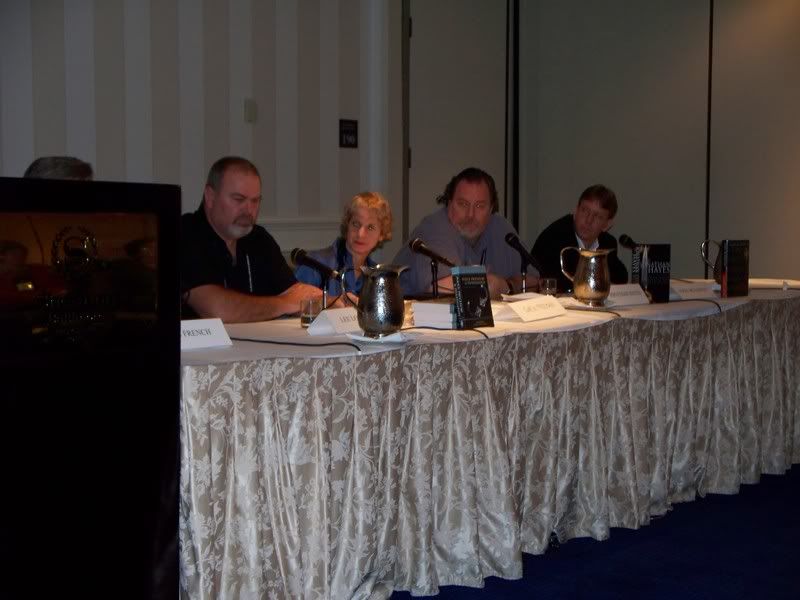
Here's a shot of Joyce, Paula Matter, and Rebecca Drake:
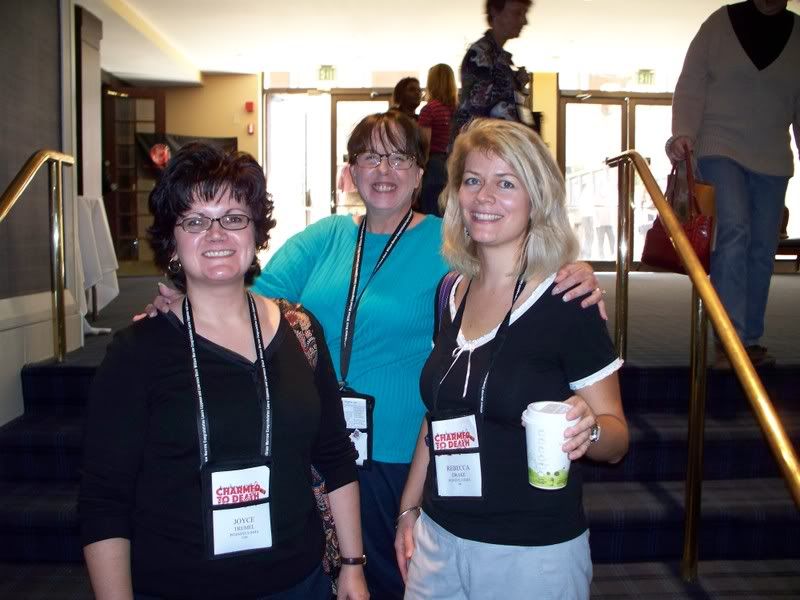
Joyce and I took a walk down to the Inner Harbor this afternoon. Baltimore can be very gritty and dangerous, but some areas are absolutely breathtaking. The Inner Harbor is one of those places
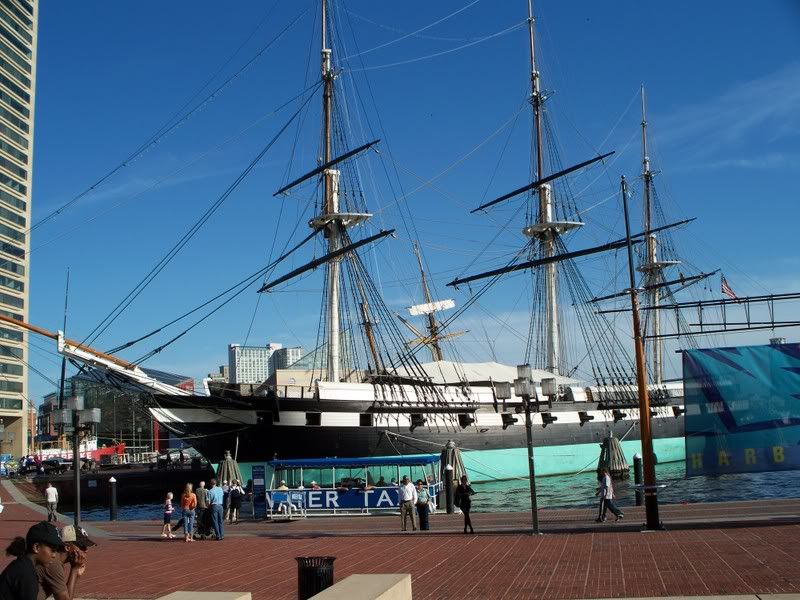



Felicia Donovan with Joyce:
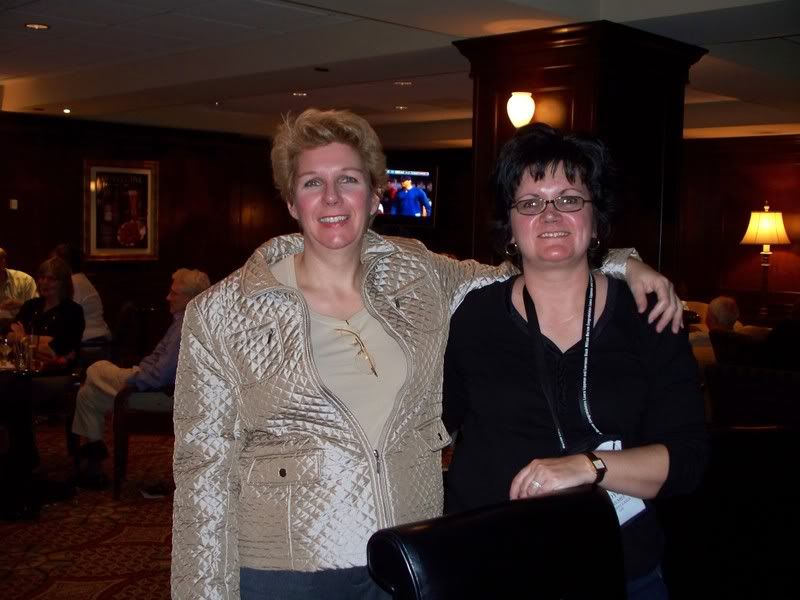
Subscribe to:
Posts (Atom)