Wednesday, June 22, 2011

Interview with Mindy Klasky, traditional author serializes book online

by C.L. Phillips

Today we've got a tasty treat - an interview with Mindy  Klasky.  Believe it or not, I discovered Mindy on Twitter.  I went to her website and read FRIGHT COURT.  She's using a novel concept (pun intended) to sell her words, and I thought you might enjoy meeting her.  Here's our interview:

1)  Fright Court - lawyers, vampires and cupcakes - What a concept.  Tell us about the story, without giving away the ending.  We love mysteries.

FRIGHT COURT combines a lot of my interests.  I started out my professional life as a lawyer, and I spent *way* too many hours in courthouses around the country.  There's something a little creepy about all those chilly marble hallways, all those quiet-as-a-tomb corridors.  I started to think about what might happen if an ordinary human woman found herself involved in some pretty extraordinary legal events.  From there, it was a short hop to developing the Eastern Empire, my collection of supernatural creatures who have their own legal system.

Of course, "murder" (of a human) wouldn't be a capital crime for a vampire.  But other things might be -- letting the human world know about the existence of supernaturals, for example.  Or creating a "blood-herd" of unwilling humans, to feed from at will (possibly drawing unwelcome attention from mundane authorities.)  Or...  well, let's just say that there's a lot of trouble vampires can cause.

Before long, my human heroine found her way into a maze of supernatural legal proceedings.  As for the cupcakes?  Well every girl needs sustenance along the way!  :-)

2)  You are doing something very innovative - you are serializing Fright Court, asking for Paypal donations and offering sweet rewards for your readers.  What encouraged you to try this idea?

I have published twelve novels through traditional channels.  Originally, I thought that FRIGHT COURT would follow the same path.  Along the way, though, I realized that traditional publishing offers pretty narrow channels -- vampires can be dark and secret and scary or vampires can be frothy and light and all about shoes and shopping.  My vampires are somewhere in between -- there are definitely dark elements to their tale, but I can't tell Manolo Blahniks from Christian Laboutins.

Therefore, I decided that I needed to provide FRIGHT COURT with a different type of home -- an online launch as an electronically published novel.  As for the serialization?  There's a very long tradition of serialized publishing -- Dickens, Melville, Highlights Magazine for Children...  I've always liked the idea of building suspense over chapters -- and so far, it looks as if my readers are enjoying it too!

3)  What has been the response from your readers?

Most modern readers aren't used to serialization.  A handful of people have complained about the delay in waiting for chapters; a number of readers have asked if I'll be publishing the entire novel as an ebook when I'm done.  (The answer is ... probably.  I'm taking one project at a time, for now.)  

Most readers, though, have really enjoyed the new format.  A number have made donations to support the project, in part because they get a weekly email, reminding them that a new chapter has been posted.

4)  How has the reader response been different from your initial expectations?

I had originally expected to get a lot of reader reaction, including donations, when I posted the first chapter, and then nothing for weeks and weeks, as I continued to reveal the story.  I've been surprised -- and gratified! -- to receive a lot of ongoing support, with new donations coming in ever week.

5)  What do you know now that you wished you knew before you started the Fright Court serialized novel?

Organizing the serialization took more effort than I expected.  Due to the structure of the web pages, I can't just prepare all the posts and program them for appearance on their individual dates; I need to add links to existing pages each time a new chapter goes live.  Those links create a better reading experience, so I'm pleased to add them, but they do make for some challenging Thursday evenings!

6)  What else can we look forward to reading from you?

My next novel will be traditionally published -- a fun, light category romance called THE MOGUL'S MAYBE MARRIAGE (available August 11 from Harlequin.)  I am also working on a middle-grade traditional fantasy novel, and I have dozens of other irons in the fire.

Thank you so much for the chance to visit here at Working Stiffs!  I hope that you will check out FRIGHT COURT, and let me know what you think of the novel!

Mindy will be hanging out with us today responding to comments, so don't be shy.  Ask her anything about her books, e-publishing, or even cupcakes.  And Mindy, we at Working Stiffs thank YOU for sharing your experience and wish you the BEST.

Tuesday, June 21, 2011

Social Media and the Herd Mentality


By Martha Reed

Last night I watched the movie Social Media, about the advent of Facebook and the business chaos it inspired, and as I sat there watching it I kept thinking: This has a lot of application to what it happening in the publishing business today, too. I’ve repeatedly heard at conferences and workshops that what’s happening to authors today is very similar to what happened to musicians with Napster five years ago.

We’re experiencing the concept of direct content (via eBooks), we’re questioning the old business model structure and pay breakout, ie., author/agent/editor/Publishing house. I’ve seen concerns over copyright. And these are all good discussions to have, in any situation.

The question, as I gaze into my murky crystal ball, is what is an author to do?

For example: I have a completed manuscript in the pipeline. I’m following the traditional publication route, querying agents, etc. but I’m also reading everything I can get my hands on about the publishing marketplace. I get discouraged to see that agents, desperate now because of the inflow of out of work former editors who are morphing into agents seem to be following a herd mentality by only looking for YA supernatural because they think that’s where the money is post-Twilight. Maybe it is. But Sisters in Crime paid for a survey that indicated a majority of readers were women between 50-70 years old who lived in the southern states. I’m sure some of them are reading Charlaine Harris’ Sookie Stackhouse, but there must be room in there for other trend lines that are not YA paranormal.

What are your thoughts on the current marketplace? What publishing strategies are you choosing to follow? Inquiring Mind wants to know.

Monday, June 20, 2011

MAGIC WORDS

by Gina Sestak

"Open sesame."  "Presto Chango."  "Abracadabra."

We're all familiar with the power of magic words.


It seems to me, though, that every word is magical.  A squiggle on the page, a tickle on the eardrum, can convey a complex meaning.  Every word is freighted with connotations and somewhere, deep in the recesses of our subconscious mind, we've all been programmed by words.  The language we speak colors the way we see the world.

I've always been fascinated by languages.  Before I realized that I have absolutely no talent for learning them, I used to fantasize about becoming a translator.  And so I studied Latin and French in high school, more French, Spanish and Russian in college.  I tried to learn.  I really did, but it seems as if my brain has two compartments:  "English" and "Other Stuff."  So when I'd forget the Spanish word for "rain" I'd just plug in the Russian one . . .

I've tried to learn Greek and Danish before trips to Greece and Denmark.  No luck.  So why, I wonder, have I now embarked upon trying to learn an even more difficult language?

For the past several months, I've been using the Pimsleur method to study Hindi.  Pimsleur is one of those programs that promises you'll learn a language in a week.  It's been months.  Instead of covering a half-hour lesson every day, I've had to repeat every lesson for at least a week before it started to sink in.  I'm only up to No. 14 of 30, and I can't pronounce anything correctly.  NOTHING.

Hindi sounds are different from English sounds.  Worse, I have trouble hearing exactly what each sound is.  Listening to the same speaker on the same CD, it sometimes sounds as if she's saying t and sometimes d, and so I figure that it must be something in between.  Same goes for another sound that seems to be a cross between k and g.   Then there's the one that seems to be triangulated in the center of t, d, and th.  My tongue doesn't work that way!

I'm really not aiming to learn to speak Hindi, though.  I'm trying to learn to understand enough that I can watch Bollywood films without having to be so dependent upon subtitles.  So far, I've been able to pick up some words.  I can comprehend fragments of the dialogue: but, and, or, tonight, eat, and things like that, but it would be a boring movie if the characters spoke like the Pimsleur lessons:

     "Hello."
     "Hello."
     "How are you?"
     "I am very well."
     "Do you want to drink something?"
     "Yes.  I want to drink some tea.  Do you want to drink something?"
     "I want to drink some coffee in the restaurant."

Understanding spoken Hindi is challenging enough.  I haven't even tried to learn to read - it's written in an entirely different alphabet, the Devanagari.  It looks pretty on the page, but it may as well be Greek to me.*  Here's an example - the word Om:
Yikes.

*Actually, when I was in Greece I found that I knew enough about the Greek alphabet to sound out words and sometimes guess their meanings.

At this point, you're probably wondering: What kind of flaming idiot tries to learn an entire language just to watch movies in it?

The answer is: me.


Friday, June 17, 2011

Mystery Series from Acorn Media

by Pat Gulley

Not so long ago I wrote a blog about the Murdoch Mysteries; a Canadian TV series that takes place in the late 1890s in Toronto. I rented the series from Netflix and watched two seasons and thought that was it. Well, there’s a third season, and I’ve got it ordered from Netflix. This series, like Rosemary & Thyme, are both excellent and I’ve always wondered why some network hasn’t picked them up. Friends have told me that R&T did play on their local PBS, but both Murdochs, the 2004 and 2008, hadn’t played in the USA at all.

            What alerted me to the 3rd season of Murdoch was an ad on a Midsomer Murder episode I was watching on Netflix that had a whole list of TV productions done by Acorn Media. I suddenly realized just how many mystery series (and many other things) Acorn has done that I absolutely love! As-a-matter-of-fact, when I finally found a complete list, I wondered if they did 90% of British TV. I’m sure they don’t, but they sure have done a lot of stuff I’ve watched, and loved, over the years, many not mysteries. I also found myself going to Netflix to search some of these shows out, only to find more and more suggestions until I had to quit, worrying that I’d spend days pulling up show and doing nothing but watching old shows forever. (Author opinion: Ain’t that the way of research???)

            I digress. So, here’s a list of “I’m thankful” for, and to tell you that if you are a purchaser of mystery series, then Acorn Media’s website is a treasure. Otherwise, Netflix does have most of them. One, however, was not. The Agatha Christie Hour, featuring classic tales of her lesser know sleuths, was missing and though I’m sure Tommy & Tuppence was on it, I wonder if Mr. Parker Pine was? No way to know without buying, but I’m not a buyer of movies or series.

            Here’s my nostalgic list of “wow, I love that show”. Midsomer Murders (18 discs—seems there are more), Murdoch Mysteries (3 seasons) Miss Marple with Geraldine McEwan, Blue Murder (with Caroline Quentin—remember her in Jonathan Creek? They have it too.) Doc Martin (I know not mystery, but come on!) Hetty Wainthropp, Mrs. Bradley Mysteries, Sherlock Holmes w/Jeremy Brett, Sherlock (the new one about when he was young) Inspector Lewis, Morse, Cracker, A Touch of Frost, The Last Detective, Cadfael, Life on Mars (the British version and the best), Rumpole of the Bailey, Foyle’s War, Inspector Alleyn Mysteries, Ruth Rendell Mysteries and Wallander. Wire In The Blood and Raising The Dead too, but not sure who did them.

            One I found but don’t remember is Oliver’s Travels. There were five episodes. Netflix does have it. Oh gosh, and another one: George Gently, better go order.

            Are you a fan of British Mysteries? What did I miss?


Thursday, June 16, 2011

Paging Elmer Fudd

By Paula Matter

I had a nice, upbeat post all prepared for today. You would've loved reading all about the progress I've made in my garden. You would've been happy for me. It was that kind of post.

Then I went outside to take a couple more photos. . .

Rabbits: 9 12   Paula: 0

I no longer call the little bastards bunnies.

I'm not going to let them win. No, I'm not a killer (she wrote on a public forum), but I must stop them from destroying my plants. 
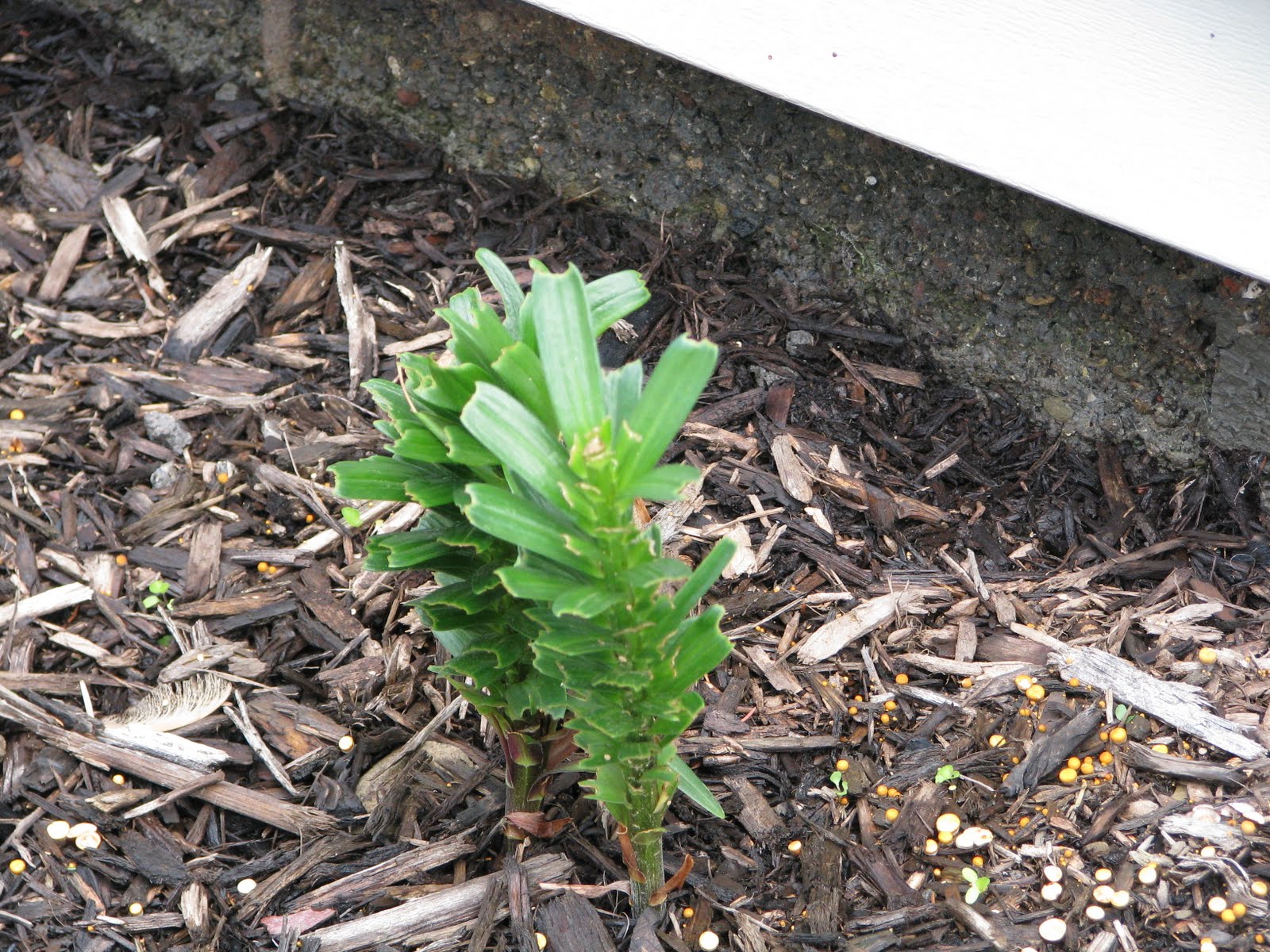
A half eaten lily


Y'know what? I'm not gonna give the little bastards the satisfaction. Bitching about them gives them power. I'm gonna show you what progress I have made despite their evil ways. I'm at about the midway point.


                                                                      April 2010


                                                                      June 2010


                                                            June 2011 minus the mulch
Putting this photo up here before it's finished is kinda like querying an agent before the book's done.


April 2010                                                                                                 June 2011


April 2010                                                                                                 June 2011
 
 
Okay, so maybe it wasn't that kind of post since I uploaded only photos. But you do see progress, right? I'll be back in three weeks with the final results. In the meantime . . .  http://tinyurl.com/4xp9e55


Wednesday, June 15, 2011

The Monster in the Dark


Last week can only be described as “interesting.” If you don’t read my Writing, etc blog or follow my mayhem on Facebook, you may want to go here to catch up a little. Go on. I’ll wait.

Okay, so now you know I’m working my way through the trifecta of colonscopy, scratched cornea, and cat bite, all within a two-day period.

First, let me say that my foot is healing nicely, and Moochie cat is snoozing comfortably in my basement, showing no symptoms of rabies so far. But we’re only on day four of the ten-day quarantine. I’m a little like the guy who jumps out of the 50-story building and, as he passes the twenty-fifth floor window, can be heard saying, “Nothing’s happened YET.”

Besides providing a ton of research material for a future story (I swear, you have to complete more reports for an animal bite than for a gunshot wound!), the experience has made me think about other aspects of fiction writing. Motivation. Ticking clock. Deep-seated terror.

I’ve been a farm girl all my life. I’ve been bitten and scratched and kicked more times than I care to mention. So my initial reaction to this bite was blasé. Other than the stream of curse words I directed at the culprit, of course. I had plans for the weekend and figured if I wasn’t healing by Monday, I’d go to the doctor. But as the day wore on and my foot ballooned into a painful, crimson lump, I became strongly motivated to take more immediate action. Words like “blood poisoning,” “septicemia,” and the dreaded “rabies” started rolling around in my brain.

For me the big one was the “R” word.

The first horror flick I ever saw as a kid was a movie by the title of “Old Yeller.” Okay, some of you may not consider it to be in the horror category, but for me? Lifetime emotional trauma. We saw it at a drive-in theater and I spend a large portion of the evening on the floor of the car, hiding.

I also have very vivid memories of an episode of Dr. Quinn: Medicine Woman where one of the characters contracted the disease. I’ve blocked out the details in my mind, but I can attest that it further traumatized me. I’m not a germaphobe, but the ideas of  “no cure” and “always fatal” scare the bejeezus out of me.

Forget my modest fear of needles. Give me the damned shots before it’s too late.

Hence the ticking clock. I remember all those news stories about pleas from family members. If you happen to see this particular dog or cat, please let us know so our loved one won’t have to undergo those dreaded shots. And it has to be done SOON.

All this played out in my mind Friday night (can you say “sleep deprived”?) into Saturday morning. And as I sat on the bed in the emergency department having an I.V. jammed into my arm, the urgency of the doctors, nurses, and techs fed my fear. I was told if I had followed my original plan to wait until Monday, they’d have been admitting me.

Staff members bustled in and out, asking questions about the cat, taking reports, making phone calls.

I’ve had family members get less attention for a heart attack.

With the antibiotics dripping into my veins, the threat of infection seem to be quelled. But that ticking clock continued to run. We needed to catch the cat ASAP.

Now, some municipalities may have facilities to keep quarantined animals. It turns out my little rural township doesn’t. So confining the little furry perpetrator became my responsibility.

Moochie is happily serving out his term in my basement. Unless he shows symptoms before next Tuesday, I’m safe. And even if he does, I’ll know about it and be able to get treated. So for me and this episode, the panic has passed.

But it’s made me think about what strikes terror in our hearts? What motivates us to take action when we’d really rather be camping? For me, the monster in the dark wasn’t a…well…a monster in the dark. It was the memory of a scary childhood movie. The fear of certain, painful death if left ignored. The idea that a small, furry pussycat could be the harbinger of disaster.

How can we put these ideas into our stories? Not by remaking Old Yeller. But by making the threat to our protagonist something seemingly innocuous. By finding something that is so terrifying that it can’t be ignored.

What is your monster in the dark?

Tuesday, June 14, 2011

Best-Selling Blank Books


I recently read about an Englishman whose self-published book is topping Amazon's UK charts. It consists of 200 blank pages beneath a cover with the title: "What Every Man Thinks About Apart from Sex."

His success at turning a gimmick into profit got me thinking about a similar blank book I could publish. Imagine the possibilities! And considering how difficult writing is, this route might be a novel approach to becoming a best-selling author.
I considered a variety of titles, eventually settling on: "What I Knew About Motherhood Before I Became a Mother."

Although I've since learned many Mom lessons the hard way, I do wish someone had warned me a bit more about motherhood, especially the stressful conversations I'd be having with my children. For example, I've threatened for years to cut off all financial support to my children if they 1) Buy a motorcycle 2) Get a tattoo and/or 3) Pierce their bodies.

So when No. 1 son-the-cop recently telephoned with the announcement that at the age of 25, he'd fulfilled his longtime dream of purchasing a motorcycle, I was speechless. Then he proceeded to detail the tattoos he'll be getting. Again, stunned silence. "Mom, Mom, are you still there?" he finally said.

"I think your mother just fainted," advised his father from the extension.

"Just kidding about the tattoos, Mom," he laughed.

This was even less funny than the startling realization that motherhood looks  different when you don't have anything to hold over your children's heads anymore. But after adjusting to the reality that my son carries a gun to work every day, I suppose a motorcycle doesn't seem so bad.

Meanwhile, No. 2 son's check-in call at the beginning of his Great Dismal Swamp National Wildlife Refuge archaeology adventure as part of his college education began with, "I probably shouldn't tell you this...."

And here is where I began thinking, "Are we really going to have ANOTHER one of these conversations no one told me are part of motherhood?

"The swamp is home to the largest concentration of black bears on the East Coast," he continued. "But don't worry. We've been given lots of safety instructions."

I struggled to remain calm and offer my standard response in stressful situations (the ones where I'm screaming inside): "That's nice, dear."  But the screams in my head were getting louder, so I added, "Such as?"

"If you hear loud noises in the underbrush, be prepared to make loud noises in response," he said.
I wasn't sure whether to laugh or cry. Then he offered: "And I probably shouldn't tell you this either, but I may get trained in using a machete."

The screams were now in danger of escaping into the atmosphere.  "Will you be able to use the machete against the three types of poisonous snakes that inhabit the swamp? Because I'm really concerned about the snakes."

"I'm not sure. But don't worry. We've had lots of safety instructions," he repeated.

Don't worry? As much as I wanted to, I didn't scream this out loud. Instead I said: "Maybe you should ask your brother if you can borrow one of his guns."

This was the moment when we both realized I'd gone over the edge: a woman who hates guns was suggesting one son get a firearm from the other. "I don't think they'll allow that, Mom. This is a university course," No. 2 son said, carefully enunciating each word as if trying to placate a crazy woman.

After I calmed down somewhat, I came up with a solution: I probably shouldn't tell you this.... but I'm ordering No. 1 son to get his gun and climb on that motorcycle I didn't want him to buy -- and drive the 3 1/2 hours south from Washington, DC, to retrieve his brother immediately.

Then I'm going to sit down and design that cover for "What I Knew About Motherhood Before I Became a Mother." I think it probably should include a motorcycle and a machete, don't you?

What would the title of your blank book be?

Monday, June 13, 2011

Exquisite Use of Back story : Super 8

by C.L. Phillips

While at a party this weekend, I found myself telling everyone about my new favorite movie, Super 8, released on June 10, 2011.  Why is it my favorite?  Because of its exquisite use of back story and single line dialog anchoring the scene and action in 1979.

I don't dare give away the movie premise, so I'll confine my comments to how the back story and dialog provided a richness and depth I don't often find in movies.

1)  Gadgets - "Don't touch my C.B., man." - Doesn't that just scream the 70's to you?  Sure does for me.  "Breaker, breaker one-nine."

2)  More gadgets - "It's called a Walkman, sherriff.  You can listen to your own music."  I wondered where they found a real Walkman.  At the Smithsonian?  Compare the size of the original Walkman to an ipod nano, and you'll appreciate how far the music business has changed in thirty years.  I wonder what it will look like in thirty more years, in 2040.  Music on your fingernail?

3)  Hero back story - One of the heroes in the movie is a school teacher.  We see his actions, but do not learn his background or motivation until most of the movie is over.  The back story provides another level of emotional depth - one that I did not expect.  Again, I don't want to give it away, but after that scene, I started cheering for the bad guy.  Why?  Because the bad guy wasn't bad, and the bad guy was behaving exactly as I would if I were in his circumstances.  Now that's effective back story.  And it was done with one simple line of dialog.  "I felt what he felt."  Of course, there were more words, but...you'll have to see the movie! :)

4)  Visual back story - the picture of the businesses on main street - including a photo store with film processing.  When was the last time you dropped off a roll of film?  Or picked up a package of prints?    As the camera panned down the street, I thought, "I buy that on Amazon, haven't bought that in twenty years, buy that at Walmart."  The scene captured a time that is no more.  Commerce that has evaporated into the network and the world of electronic payments and super stores.

So go see Super 8.  Listen for the back story.  Check your watch.  None of it arrives until well past the half way point of the movie.

I plan to incorporate this lesson into my editing.  I'm calling it SUPER 8.  Backstory way back.  Deep back.

What's your favorite example of well placed back story?  Movie or book?

Friday, June 10, 2011

IN WITH THE OLD


My sister (whose name is Annette, but for obvious reasons I will call her “The Other Annette”) and her family are visiting this week from Louisiana, so I am using the vacation theme to do a non-writing post. 

On Wednesday, I announced on Facebook that, in honor of The Other Annette’s arrival, I baked my fabulous chocolate cake using my secret metal cake cover trick. Requests were made to share the recipe, so I will pony up and do that after I ramble about a few other things.

The metal cake cover in question belonged to my grandmother. It is red, and I match it (or mis-match it if you are picky) with a gold metal plate, also from my grandmother. On the back of the gold plate is a piece of masking tape with “Mrs. John DeFelice” written in blue ink. This plate had a long and happy life attending weddings, baby showers, church socials and ladies’ groups meeting with my grandmother (whose given name was Euphraisie, but she went by “Mrs. John” to her neighbors, “Ma-Ma” to her grandchildren and “Frazie” to her friends). Now the cake plate is in service with me.

A lot of my possessions have signed pieces of masking tape on the back. The ones that don’t are signed in my memory. My collection of tablecloths, for instance, began with a couple of tea table covers I inherited from my other grandmother (whose given name was Clemence, but she was “Grom” to her family, “Mrs. Paris” to her husband’s friends, and “Miss Tit” to everyone else in town, most of whom were French and understood that “tit” means little, not the thing it means if you are English.) 

I like old stuff. I don’t need to pretty it up and call things classic or vintage. Old is fine. When we have dinner, it’s on old jade colored Fire King dinnerware that came from my husband’s grandmother, (whose given name was Sara Keith, and everyone called her that.)  Despite her lack of nicknames, Sara Keith was a gifted artist. When her husband (whose given name was Leven, after Loch Leven in Scotland) returned from World War II, Sara Keith took the greatcoat he’d been issued by the Marines and created a rug from it. She designed a floral pattern, cut the wool into strips, had the strips dyed into the appropriate colors and hand wove it. That rug now hangs on my dining room wall, which is the proper way to display a work of art.

On the wall across from the art rug is a large and colorful turkey platter. The platter has no family connection, but it is valuable to me because I found it in an antique shop in Bedford, Pennsylvania, while on a weekend getaway with the Indiana Women’s Writing Circle. It’s also important because I bought it with the tiny paycheck I received for an article on children’s mysteries in TWINS magazine. 

I can look around my house and see possessions that have meaning and history. Not much of it is valuable in monetary terms, but to use a cliché, in terms of sentiment, it’s all priceless. From time to time, like now and earlier this week when another tablecloth piece was published online by Dew on the Kudzu, I mine my possessions to write about them.

So I guess this is a writing post after all. Hmm. Funny how that happened, isn’t it?

What do you own that is priceless? And why does it hold meaning for you?

And here’s the recipe!

1 boxed chocolate cake mix. (Devil’s Food, Dark Chocolate, Duncan, Betty, whatever is your favorite.)
1 box chocolate pudding (NOT instant.)
1 cup regular sour cream (NOT low or no fat.)
Powdered sugar
1 metal cake cover
Instructions: Mix the dry cake mix with the dry pudding mix and whisk together. Prepare the cake mix as directed on the box. When it’s mixed, gently fold in the cup of sour cream. Bake the cake as directed in a Bundt pan. When the cake is cooked, let it cool for about 2 minutes. Turn it out onto a cake plate and then immediately cover with the metal cake cover. Let stand for 1 hour—no peeking! The heat from the cake cover with infuse moisture into the cake and it will be rich and fudgy. After an hour, remove cake cover, which is will be covered in condensation. Sprinkle powdered sugar over the cake. No icing is necessary. Eat at a table covered with your favorite tablecloth.

Thursday, June 09, 2011

Some Twitter Pet Peeves

by Joyce

I started writing this post about Twitter and realized that only the cool people who are on Twitter will know what the hell I'm talking about. But, you know what? I'm going to write about it anyway.

You may or may not be surprised to know that I have a few pet peeves. Regarding Twitter, that is. Don't get me wrong, I LOVE, LOVE, LOVE Twitter. It's the things that certain tweeters do that bug the hell out of me.

One thing that annoys me is when people expect you to follow them back just because they follow you. I don't autofollow. When someone follows me, I check their tweetstream to see what they're tweeting about. If it's tweet after tweet of junk, profanity, or anything at all political, I don't follow back. I have unfollowed people for the same reason.

I've also unfollowed people with an overabundance of my next pet peeve: Too many #FF and/or #WW tweets. You non-Twitter people are really confused right now, aren't you? #FF is the hashtag for Follow Friday, #WW stands for Writer Wednesday. The idea is to use them in your tweet and list a few people to get others to follow them. The operative word here is FEW. I don't want my tweetstream filled with so many #FFs and #WWs that I have to scroll down for five minutes to get to something worthwhile. I have yet to follow anyone through an #FF or #WW. I recently unfollowed someone who had 30 separate #FF tweets (yes, I counted them) one right after the other. I couldn't help but wonder how long it took him to type all that.

Other than that, I love Twitter. I've met a lot of nice people there. It is, without a doubt, the place to be if you want to learn about anyone involved in the publishing industry. It's crucial for anyone looking for an agent. Many, many agents tweet. Twitter is the best place to get to know what they're like and see if he or she is someone you'd like to work with.

Call me a Twitter evangelist if you'd like. Get thee to Twitter. Immediately.

Wednesday, June 08, 2011

Robin Allen Interview - If You Can't Stand the Heat - a Poppy Markham mystery

Interview by C.L. Phillips


Robin Allen, your debut mystery is out - If You Can't Stand the Heat.  Tell us about Poppy Markham.  What makes her remarkable?

The first book in the clean, humorous Poppy Markham: Culinary Cop mystery series was released on May 8, 2011 by Midnight Ink. It’s available both as a paperback and electronically on the Kindle, Nook, and eBook.

Oh, that Poppy. She loves rules and regulations, lists and procedures, things that are black and white. Her t’s must be crossed, her i’s dotted, and her clothes arranged by type and color in her closet. Poppy is a planner. She likes to know every little detail about every little thing in advance. When she enters a restaurant’s walk-in refrigerator, she likes to know that she’s going to find milk, eggs, and cheese stored at the proper temperature, not a flock of unplucked pheasants filled with buckshot hanging from the shelves. But if she does find that, she knows what to do because there are procedures.

Poppy cannot abide people who try to get away with something, whether it’s a cook trying to hide his infectious case of pinkeye, a litterbug flicking a cigarette butt out his car window, or a killer trying to frame Poppy’s territorial stepsister for the murder of a horrid little French chef. Poppy wants justice for all. She also doesn’t want to get sucked back into Markham’s, so there’s that incentive.
 
What's your next project?  Is Poppy getting in more trouble?

In the second book, Stick a Fork In It, Poppy is doing a food permit inspection on a new restaurant with an unusual theme. From the beginning, the inspection is anything but routine, but she’s handling it—until someone dies. Was it murder or suicide? Poppy has to know.  
When you go in a restaurant, what's your biggest fear?

Health inspectors perform two surprise inspections every year. I’m always wondering if they just got inspected or if they’re due. Restaurants are usually on their best behavior after an inspection, but a few months down the road? No so much.
Now that you've been through the publication process, what do you know now that you wish you knew at the beginning?  What would you do differently?

Like Poppy, I like to know the rules and expectations, so I did a lot of research before I started the process. I asked this same question of several published friends and listened to their answers, and I read several author and agent blogs. Here’s what I learned: There are no do-overs. You have one chance with an agent, editor, or reader. One. Make it count. Don’t be in a hurry with anything. Take your time to get everything exactly, perfectly right—your book, your query, your synopsis, your agent contract, your publishing contract—because you’re going to live with the results for the rest of your life.

Also, agents and editors don’t really care if you use adverbs in your prose.

If I could do things differently, I would publish under a pseudonym and have an extrovert with a PhD from Toastmasters give radio interviews for me. I would also use adverbs more liberally and regularly. 
Who is your writing hero?  What other authors do you read?

As the ultimate creator and storyteller, God is my hero, and I love His bestselling book, the Holy Bible. There are also several human authors I look forward to reading. I love Ben Rehder’s Blanco County mystery series that features a Texas game warden, David Liss’s complex historical mysteries, Reginald Hill’s British Dalziel and Pascoe British police mysteries, Donald E. Westlake’s Dortmunder capers, Pete Hauptman’s gambling stories, and Arthur Conan Doyle’s brilliant Sherlock Holmes adventures. I also enjoy the Spanish author Arturo Pérez-Reverte (in translation), Anthony Bourdain (in moderation), and Peter Mayle. I’m drawn to off-center characters with any sort of DSM-IV-inspired personality disorder. My second-favorite book is John Lanchester’s The Debt to Pleasure, and my very favorite book is John Kennedy Toole’s A Confederacy of Dunces.

Like Poppy, I’m a fan of the Coen brothers’ movie, The Big Lebowski, and drop little Easter egg references throughout my books.

Thanks for having me! I’m happy to answer any questions your readers leave in the comments.

Tuesday, June 07, 2011

The Pause That Refreshes


By Martha Reed

May was an exceptionally busy month because of the PennWriters conference. I went into it ready to pitch the first novel of my Nantucket series, NO REST FOR THE WICKED. That strategy included a full array of pitches of varying lengths (1 sentence, 1 paragraph, 2 paragraphs, full), a query letter, a synopsis and sample chapters in PDF (first 30 pages, first 3 chapters, full). It’s a miracle my flash drive didn’t implode.

A lot of terrific things came out of that conference. I met agent Victoria Skurnick who requested a full. I got to hang out with my fellow Sisters in Crime siblings and adopted sibling and freelance editor Ramona Long. That is always insightful. I was inspired by Jonathan Maberry’s keynote speech and frightened by both his level of success and output. The man is an automaton fueled by Starbuck’s hi-test but boy! Does he sound like he’s having fun.

Then comes the morning after. You know the feeling. It’s like the Friday after Thanksgiving. All that effort and production and then you look around and think: ok, what do I do now? I imagine Colin Firth felt this after winning his Oscar. You don’t want to go to sleep because then all that lovely effort comes to an end.

I’ve decided to do something radical. I’m taking the month of June off.

I know, I know, it's a scary thought. I’ve been working on my Nantucket series idea for 13 years. Lucky 13, in case you’re superstitious. I’ve written two full-length novels and outlined the third. I’ve got an idea for a completely different series that may actually be a screenplay, and I think this one is heading for comedy. I hope so. Everyone needs a good laugh these days. I have signed on for an intensive mss workshop moderated by Nancy Martin that runs through July, and I’m looking forward to digging into that.

In the meantime, I’m going to sip lemonade on my patio and consider: What do I want to write next? It’s exhilarating not to be on a self-imposed deadline. Kind of scary, too. I’ve stepped off the treadmill. I can’t wait to see what comes next!

Monday, June 06, 2011

EVERYBODY DOES IT

by Gina Sestak

Which do you think is harder?  Describing an unusual experience - rafting down the Amazon, building a pyramid - in a way that makes it come alive for readers, or describing a common occurrence, something everyone has done?   I'm thinking it's the latter.

No one but a traveller who did it, or maybe a National Geographic addict, is likely to notice flaws in the Amazon account, whereas everybody and their brother will notice the inaccuracies in a commonplace account.

I was thinking about this while I planned to write this post about a very ordinary experience, one almost all of us have been through.  Death.  The death of a loved one.  The death of a pet.

My cat Taffy died last week.


Taffy came to me in 1997, after my mother died.  He had been an adult stray when she took him in, so I never knew him as a kitten.  Sometimes I wondered whether he had ever been one.

Taffy didn't play.  He was too sophisticated for activities like chasing balls.  If I shook a string in front of him, he would glance at the string, then give me an elegant stare, as if to say, "Are you out of your mind?"  Our other cat Dusty (who passed away summer before last) was always trying to entice Taffy into wrestling.  He would pop up over the edge of a sofa or bed and bite Taffy's feet, trying to make him mad enough to chase him.  [Dusty used to do the same thing to me.]

Taffy did love to be petted.  He was insatiable.  One time I counted strokes; when I got to four hundred, I gave up.  My hand was exhausted.  Taffy wanted more.  I didn't mind petting him.  His fur was very soft.  Even on the evening that he died, his fur was soft.

As he got older, Taffy developed health problems.  His thyroid went into overdrive and he lost weight no matter how much I persuaded him to eat.  Medication controlled the problem to some degree, but it meant a daily battle to force pills into him, a struggle that escalated when additional meds were needed.  Last year he went blind.  He regained some sight eventually, but seemed to lose the ability to use the litter box effectively.  At first he would try, standing in the box but urinating over the side.  After awhile, he'd just go in the general vicinity.  I started covering large areas with newspaper and trying every odor eradicating product I could find.

Veterinarian visits became frequent.  Taffy hated them.  He detested being stuck with needles to such an extent that he fought back against the vet, prompting a protocol of calling in an assistant wearing welder gloves every time Taffy needed blood tests.

Thursday before last, I took him to his final vet appointment.  Taffy had been lethargic for a few days, not eating much.   The vet gave me two options - emergency admission for intensive treatment that might buy him a few weeks or euthanasia.  I opted for a third.  I took him home to die.

On Tuesday, nearly a week ago, Taffy passed quietly in the night.  The vet had given me medication to use if he was in pain, but he never seemed to be in much distress.  He ate less and less every day, but continued to drink water almost to the last.  He lay on the floor in one of his favorite spots and slept.  On the last day, I petted him for awhile in the evening, then went to bed.  When I got up in the morning, he was already stiff, still laying in the same spot.  At peace.

Friday, June 03, 2011

The debate rages on

The debate on pricing in indie publishing, that is.

If you have a Kindle or Nook, or for that matter a Kobo, Sony, or iPad, and you read e-books at all, you’ve probably noticed the wide disparity in pricing. The price of a newly released e-book of a hardcover bestseller can be as high as $12.99 or more. On the other hand, there are plenty of $.99 e-books to be had, as well.

Mostly, those 99-centers are from indie, i.e. self-published, authors. Publishers have too much overhead to price their books that low. Amazon pays 70% royalty on e-books listed at $2.99 or more, but only 35% on those below that magic divide. Most of the time, you won’t find a traditionally published e-book much lower than $4.99. That seems a fair price to me, for a book that’s been professionally written and edited and that has professional cover art. There’s a certain sense of legitimacy in the traditionally published books: whereas I may not like the content, at least I’ll know that the product itself is pretty good.

As you know, I have a few traditionally published books out there. They’re released in mass market paperback for $7.99, which is a pretty standard price for a mass market paperback of 90,000 words. The electronic versions of those same books are also priced at $7.99. Same as the paperback. This also seems like an industry standard, and in polls, that $6.99-$7.99 price point is comfortable to a lot of people. Anything above that, and people start to complain that prices are too high.

So that’s the traditional e-books. In indie publishing, there’s no real standard. We’re all just trying to figure out what works. And we all seem to have different ideas. There are people like John Locke, who’s making a ton of money selling all his books at $.99 each. He has lots of titles that people can choose from, and that probably has something to do with it. When you have a lot of inventory, you’ll make more money than if you have just a little, regardless of price.

Some people, like golden girl Amanda Hocking and e-publishing guru Joe Konrath, as well as our own Stiffs buddies C.J. Lyons and L.J. Sellers, take a more staggered approach. They offer some of their books as $.99 titles to entice people to try them out, and then the rest of the books are priced at $2.99 or higher. Those $.99 titles are sometimes called ‘loss leaders,’ because you know darned well you’re going to lose money on them, but you hope you make up for it in volume and in sales of your other books. Some authors switch their $.99 titles out regularly, while others keep the first book in a series, for example, at a steady $.99 to get readers to try the series.

On the other hand, you have Michael Sullivan, another bestselling indie author of fantasy novels. His books are priced at $4.99-$6.99 – a deliberate choice on his (or his publicist’s) part, to align him with traditionally published authors and get away from the indie/self-published stigma. It seems to have worked: Michael sells more than 10,000 e-books per month, and when he tried to drop his prices, sales dropped, too.

Some of it comes down to perception of value. Some readers think they’ll get a more professionally written and presented product if the book is traditionally published – or if it appears to be. Some readers don’t care about professional; all they care about is price. Some authors have it as their main goal to sell lots of copies while some would rather sell less copies for more money instead of more copies for less. Some feel that the book they spent six months or a year on, is worth more than $.99. Others – and I quote Konrath here, as well as Bob Mayer – say that value has nothing to do with the cover price; value is about how much money the book makes for the author.

And then there’s the question of the devaluation of the book as a whole. Perpetuating the idea that books should only cost $.99. Setting the bar so low that there’s nowhere to go – except free – if you want to run a promotion, and so low that the public’s perception of value is skewed forever.

I could go on, but I won’t. It’s a tough issue, with many facets and good points on either side of the argument. I have to confess to being on the perception of value side myself: I’ve priced my Cutthroat Business mysteries at $3.99. Half the price of my Berkley e-books. It seemed fair. I make more per copy than I do the traditionally published books, and they’re still priced below that magical $5 mental mark, where everything supposedly is an impulse buy. They’re selling, but not like hotcakes. Then again, this stuff takes time.

I’d love to hear what you think. Is $.99 the sweet spot for lots of sales? Or is $2.99? Is anything below $5 really an impulse buy? (It isn’t for me.) Is Michael Sullivan selling so well because his books look like a bargain compared to the traditionally published fantasy books he’s aligned himself with? Or doesn’t price have a lot to do with it when it comes right down to the nitty-gritty, in your opinion?

Inquiring minds want to know.

PS – Hot Property, the sequel to A Cutthroat Business, is available for Kindle and Nook. If you’d like a free digital review copy, email me and I’ll tell you how to get one. If you do get a review copy, I’d appreciate it if you’d actually get around to writing a review at some point. Unless you absolutely hate the book, of course. Then you can feel free to keep your opinion to yourself.

Till next time!


Thursday, June 02, 2011

How Does Your Garden Grow?

By Paula Matter


I’m good at three things and one of them is illegal in 27 states.* So that leaves me with: 1) giving excellent customer service and 2) making people laugh. That second one is still out for a vote by the people who don’t get me. Or maybe the ones who do are simply used to me. Oh, and I can whip up really good White Russians and Creamsicles. (Dammit, Word, that is so how you spell creamsicle. I am not changing it.)


When I want to improve on areas in which I suck, I seek help from the experts.

Since early April I’ve been planning and designing my landscaping. I do this every year, and each year I become a little better. Better at knowing what to plant where and when, better at identifying plants, better at removing what isn’t working. But I’m still not good enough on my own. Time to go to the professionals.

I start by poring over Internet sites where I look at before and after photos. I drool over gardens, decks and patios, Rate My Space. I create a list of the kinds of plants, flowers, shrubs I like.

I walk drive around my neighborhood looking at front yards for ideas. Some are gorgeous gardens, others are plain, and then there are the ones that have too much. Too many plants/shrubs/trees/accessories. I know exactly what to do if it were my yard. That sixth gnome you got there? Pluck. And his little brother and sister, too. Trim that shrub, pull up those weeds, mulch that side. Huh. Funny how I know what to do to fix other people’s yards. (You writers out there know where this is going, don’t you?)

I spent a couple of hours Tuesday morning at my favorite nursery going over my list. Judy, the wonderful gardening expert, told me to bring in more photos of my yard, said I had good taste, and that we’d come up with a good plan. She also told me that I knew more than I thought I did. I’m looking forward to having a nice garden for a change. I’m eager to get digging and planting. A lot of hard work is ahead, and I’m excited.

Gardening, for me, is much like writing. I want to be better at both. I know that I improve the more I garden. I’m told I’m better that I think I am. I know what needs to be pulled out. I know what needs to go in. I ask the right people for help.

On good writing days, I even remember some of this. On bad writing days, I want to go out to the garden and eat worms. Which I have learned are good for gardens.

I’ll be taking before and after garden photos of my progress. Maybe it’ll help keep up my current level of confidence. When I need proof that I’m capable of gardening, I’ll look at the photos.

And when I lose confidence in my writing ability, I’ll look at one of the anthologies I’m in as proof that I can do that, too.

*I made up that number. . . I’ve no idea if it’s still illegal anywhere.

Wednesday, June 01, 2011

Word Count Woes


In recent weeks, I’ve become more and more aware of daily word/page counts. Specifically, those of my fellow writers versus my own.

At the Pennwriters Conference, Jonathan Maberry was pressing to meet a Monday morning deadline. He kept updating us on his progress. The man’s productivity is staggering. I’m in awe.

Ramona has a group over on Facebook called How Many Pages Have You Written Today? We boast our accomplishments, cheer each other on. And we can see who’s pumping out large quantities of prose and who’s struggling with each and every word.

Which has started me wondering. Why do some of us whip out 2,500 (or more!) words a day and other celebrate when we manage 500 or 1,000?

Being a more regular member of the latter group, I can count off myriad excuses. Hubby needing fed. Both of us needing clean clothes. Killer dust bunnies taking over the house. (Okay, if you’ve been to my house, you can stop laughing. I do on rare occasions clean.) Mom’s doctors’ appointments. Yoga class. Et cetera, et cetera.

But there are hundreds of productive writers out there, who have family obligations and FULL TIME jobs, who still outpace me. Even when I have an entire day (or two) to write, I rarely seem to put up huge numbers. I have. But not usually.

So I’ve come up with a new excuse…er…reason for it, and I wanted to test it out on you kind folks.

Here it is: I write mysteries.

And as such, my fiction has to be truer than reality. Who was it who said, “The difference between reality and fiction is that fiction has to make sense”?

Also, can the question mark come after the quotation marks in the previous sentence, or must it be inside them? Stuff like that stops me cold and sends me running for my books on style and grammar.

Just like the situations I create in my fiction send me running to my resources in search of authenticity. Would a police officer really react the way I’m imagining? Can a paramedic legally respond that way at a crime scene?

I can’t just imagine it and write it. I have to make sure every scene is correct.

Plus, since I’m writing mysteries, I’m creating puzzles. With clues that must be fairly and discretely tucked into the story. I spend a lot of my “writing time” thinking about the plot. Who did what and why? In all fairness, I spend a lot of NON writing time doing this, too. Doing laundry is prime time for sorting out glitches.

So I want to pose a question to all the writers out there. Do you think writing mysteries is a slower process than…say science fiction or fantasy where the author determines what’s accurate for their own particular world? Or romance where the author’s heart leads the story. (Yes, I know there is research to be done in other genres, too.)

And if you are an especially prolific mystery (or other genre) writer, please brag about your numbers here. I’ll try to keep my weeping to a minimum.