Today we welcome guest blogger Gary Corby!
Working Stiffs of Classical Athens
by Gary Corby
Thanks
to Working Stiffs for asking me drop in!

I write murder mysteries
set in classical Athens. That's 2,500 years ago! So given the rather intriguing name of our
gracious host, I thought I'd write about the real working stiffs of the ancient
world.
If you went back to Athens
in 460BC, which is when western civilization began—and when my stories begin—you'd
find three classes of people: citizens, metics, and slaves.
Reputable citizens were either landholders (definitely the
preferred option); or craftsmen or artisans (definitely the most common
occupation); or they might be a mercenary soldier (killing people for money was
only slightly frowned upon).
Metics were resident aliens with permission to live and work
in Athens. Think of them like green card holders in the
US, and you won't be far wrong.
The metics had no say in how the city was run, but nor did
they care as long as they were making money.
And they made a lot of
money. In those days Athens was the economic powerhouse of the
world. (Things may have changed slightly
since…)
So metics ran businesses.
But it was considered shameful for a citizen to indulge in trade. Which didn't stop it from happening; they
just didn't talk about it at parties.
Citizen A (as he sips fine wine imported from Chios): "So,
what do you do for a living?"
Citizen B: "I import fine wine from Chios in my shipping fleet."
Citizen A: Gasp! Drops wine cup. Backs away from disreputable individual.
Money, you see, had nothing to do with how your reputation
stood.
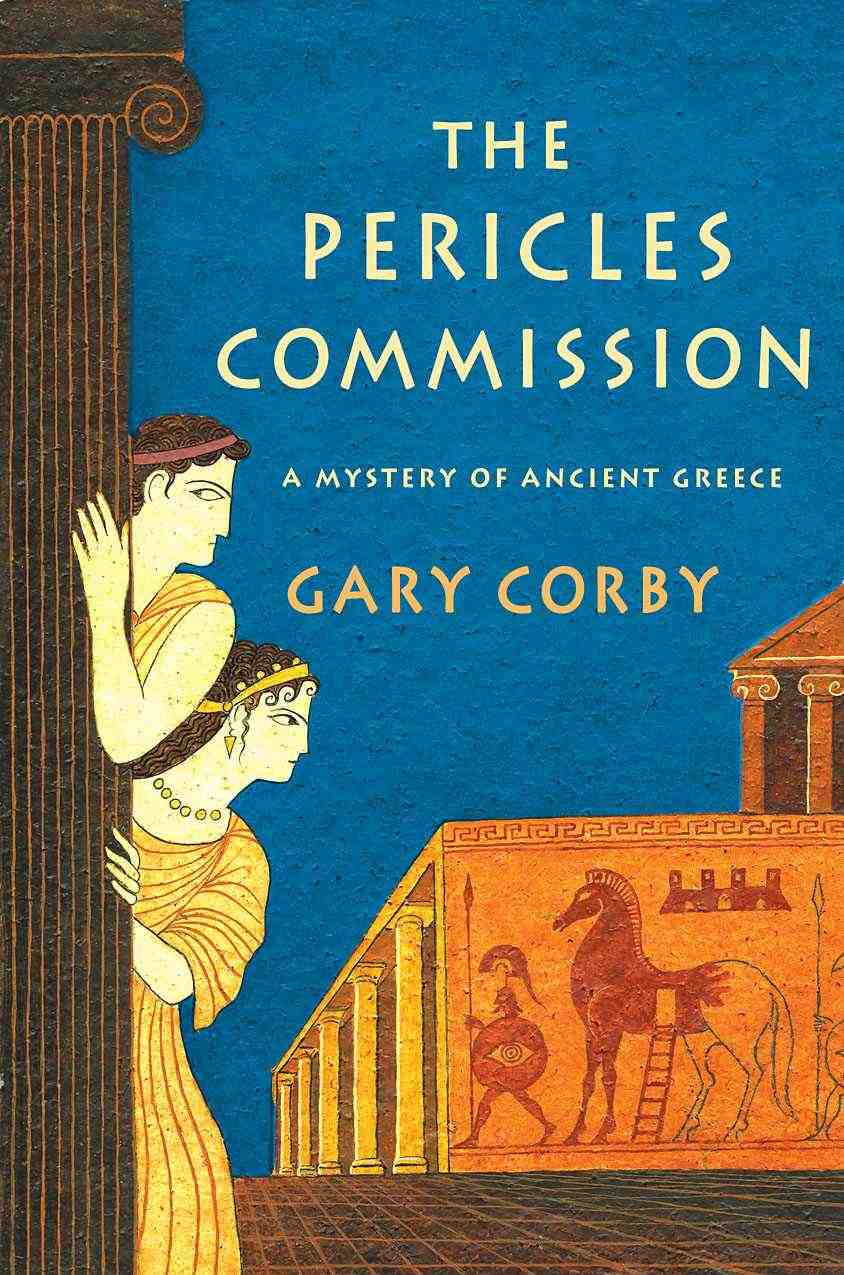
My hero, Nicolaos, is a
citizen; but his girlfriend Diotima is a metic.
Which makes for a slight problem, because while marriage between
citizens and metics isn't illegal, it isn't exactly encouraged either. The Athenians discouraged cross-class
marriage by declaring a law that to be a citizen, both your parents had to be
citizens.
You might think the slaves were the worst off—and if they
got assigned to the silver mines, then they certainly were—but in some ways,
slaves were better off than poor citizens.
At least the slaves were guaranteed to get fed.
These days, most of us get up in the morning, go to work for
some big company, and then come home at night.
The standard daily grind, right? Something
a lot of people don't realize is that, historically, this is really strange:
for one citizen to work full time for another is a very recent system.

We often call ourselves
wage slaves. Well, in the ancient world,
if you were working permanently for one employer, then you almost certainly were a slave. For real.
They were the ancient world's working stiffs.
Permanent employment was the essential difference between a
slave and a citizen. The slave had it
and the citizen didn't. Your average middle
class citizen was like what we'd call an independent contractor. And if you suggested he take a permanent job,
he would have punched you in the face, because that would be demeaning.
This leaves my investigator-hero Nicolaos with a problem. How does he describe his own work? There were no such things as policemen in the
ancient world to compare himself with. He's
surviving from one job to the next, like an artisan, so in his world, that
makes him…a craftsman of crime.
Nicolaos, the
ambitious son of a minor sculptor, walks the mean streets of Classical Athens as an agent for
the promising young politician Pericles. Murder and mayhem don't faze Nico;
what's really on his mind is how to get closer (much closer) to Diotima, the
intelligent and annoyingly virgin priestess of Artemis, and how to shake off
his irritating 12 year old brother Socrates.
To learn more about Gary and/or Nicolaos, visit http://blog.garycorby.com.

