Tuesday, April 22, 2008

MANHUNT

by Martha Reed

Assassin: a person who commits murder; especially: one who murders a politically important person either for hire or from fanatical motives.

A friend at work loaned me a copy of a book I probably wouldn’t have picked up for myself: MANHUNT The 12-Day Chase for Lincoln’s Killer by James L. Swanson. I thought it was an appropriate blog topic, because 143 years ago this week – between April 14th and April 26th, 1865, our nation was focused on locating John Wilkes Booth, the assassin who shot and killed our sixteenth President.

This book is not the same dry history I remember. I can’t put this thing down, and I’m losing sleep over it.

At approximately the same time Abe Lincoln was being stalked in Ford’s Theater, another member of Booth’s murderous crew, Lewis Powell, entered the home of Secretary of State William H. Seward under false medical pretenses and attacked Seward with a knife. Seward, who was already bedridden and trying to recover from an earlier carriage accident (broken arm and jaw) was repeatedly stabbed and cut about the face before his assassin was driven off by members of his family and staff. Secretary Seward eventually recovered, but it must have been one tough week by anyone’s measure.

This is what the Lincoln assassins looked like:


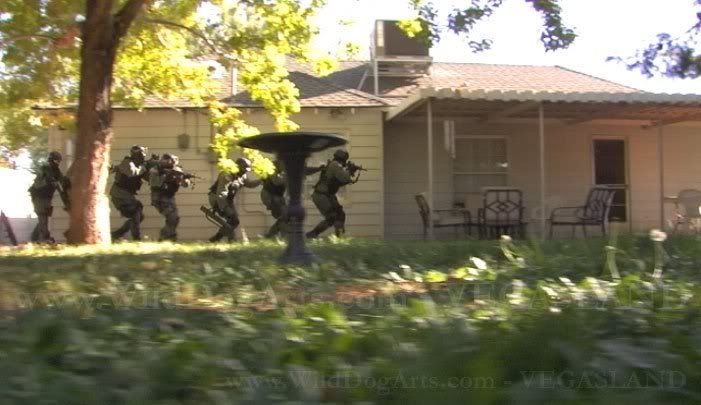
And when it comes to assassins, this is what Hollywood keeps serving up:


Why is it, when history offers such incredible true stories, that Hollywood keeps offering the same hackneyed female assassin stereotype? I suspect it has a lot to do with immature males (and I’m not just talking movie producers) and their spendable dollars.

To balance the scale a bit, let’s consider the male assassin: Viggo Mortensen in American Yakuza.


Speaking of Viggo, he’s in Pittsburgh this week filming his new movie The Road, and rumor has it he’s also considering a movie based on the life of Edgar Allan Poe. So in the end, it all comes back to mystery, as it should.

Monday, April 21, 2008

ugly, little and mean

by Brenda Roger

You’ve probably heard of Manet and Monet. The calendar boys, as I like to call them, have worked their way into popular culture. The once revolutionary canvases that they painted now seem commonplace –and not the least bit shocking, but in 2008 we know that shock will get you everywhere, including twenty-first century notecards.

Manet, Monet, and their comrades in nineteenth-century France had a contemporary that you probably have not heard of, Jean-Louis-Ernest Meissonier. Meissonier featured prominently in the artistic community, art market, and culture of Paris in the 1860s. He is also one of the major players in Ross King’s The Judgment of Paris, a rollicking account of the shift in French painting that peaked in 1863. King was as meticulous about his research of Meissonier’s life as Meissonier was about his research of horses and soldiers. I must admit, I’ve grown quite fond of dear Ernest in the past few weeks, thanks to King’s engaging details about him:

In his forty-eighth year he was short, arrogant and densely bearded: “ugly, little
and mean,” one observer put it, “rather a scrap of a man.” A friend described him
as looking like a professor of gymnastics, and indeed the burly Meissonier was an eager
and accomplished athlete, often rising before dawn to rampage through the
countryside on horseback, swim in the Seine, or launch himself at an opponent,
fencing sword in hand. Only after an hour or two of these exertions would he retire,
sometimes still shod in his riding boots, to a studio in the Grande Maison where he
spent ten or twelve hours each day crafting on his easel the wonders of precision and
meticulousness that had made both his reputation and his fortune.

Not only do I aspire to craft “wonders of precision and meticulousness” in any discipline,
I now realize the merits of extreme research. Meissonier was obsessed with Napoleon Bonaparte. The pint-sized monarch was Meissonier’s favorite subject, and in order to depict him accurately, Meissonier befriended a former valet of Napoleon who had a collection of artifacts like tack and uniform buttons, he borrowed a horse that was a descendant of Napoleon’s white charger to use as a model, he created wax maquettes which he inserted into scale dioramas in order to compose more accurate battle scenes, and he galloped alongside soldiers so that he may study the engineering of equine anatomy. When his dioramas developed technical problems involving bees and mice (you don’t want to know) he staged life sized battle scenes on the grounds of his house that included horses, tack, and uniforms that were accurate down to most minute detail.

Meissonier sold paintings for hundreds of thousands of francs in his lifetime while Manet went years without selling one, and yet, when I recently acquired a catalogue from 1951 of a French painting exhibition, Meissonier was conspicuously absent. Who knows, if one of his paintings shows up here in Pittsburgh to stay, perhaps I can begin a campaign to ignite interest in this fierce little painter. Stay tuned……

Saturday, April 19, 2008

The Blue Screen of Death

by Brian Mullen

Yesterday was a fateful day. I got to work at 7:15 a.m. and immediately experienced some computer problems. My company-provided computer could not access the Internet. This is a problem I've been experiencing off and on for about three weeks now. Because the IT department doesn't come in until 8ish, I've historically found partial success through repeated rebooting of the computer. Not today.

Today whilst rebooting, the computer suddenly stopped its normal functions and showed me something new: a royal blue screen with lots of white text on it. The text remained on screen only a few seconds, not even long enough for me to reach the third line, but what I did catch was essentially this: "Windows has experienced a problem, the computer interrupted the reboot to prevent it from becoming catastrophic, you may reboot, if you dare. Bwah Ha Ha Ha!" or words to that effect.

When the IT folks arrived I explained what had happened. "Ah," they said. "You've been BSOD'd."

"BSOD'd?" I asked.

"The Blue Screen of Death. Your hard drive has failed."

Fortunately the several weeks of problems had put the fear of God and/or Bill Gates in me and I had been saving everything of any importance onto the company's server each and every day. So when my computer's life flashed before my eyes, there was nothing on it that couldn't be retrieved later. But, I reflected on my way home, the same cannot be said for my personal computer.

I thought of the characters in my drafted stories and what would happen to them if my computer similarly crashed. I like to believe my characters enjoy a "Toy Story"-esque existence when the computer is turned off and they all get together in cyberspace and hang out. I imagine they meet in the several nicely furnished houses I made for them in my hours of Sims games and brag of their adventures, point out each others typographical errors and speculate on unfinished plots. Then, in a scene fresh from some sci-fi horror flick, I imagine a giant blue screen of death sliding inexorably towards them, flinging pixilated debris as it plows relentlessly forward. My characters scream and run helplessly trying to find cover before they are defragmented for the last time.

But there is hope for them, of course. Reincarnation is a strong force for imaginary characters and they will live on in other computers. Plus I have cloned most of them onto CD-Roms so none will die forever.

Still, it is an eye-opening moment when one gazes into the blue screen of death for the first time and ponder what could have been.

Back-up your hard drives...while you still can.

Friday, April 18, 2008

Judy, Judy, Judy

by Cathy Anderson Corn

Are your protagonists larger than life? Have you ever considered weaving your story around someone you know who's a character? I haven't used her yet, but my friend Judy is surrounded by stories that are stranger than fiction.

I'll just mention the part where she was hit by a drunk driver and suffered injuries that required surgery and several months in a metal halo device around her head. Oh, and while she was recovering in a hospital bed in the livingroom, her mother had a heart attack and went to the hospital, leaving Judy alone in the house.

Let's skip to the part where Judy and her two little dogs have moved to Sedona, Arizona, where Judy worked as a hospice nurse, visiting the dying. We took Judy out for dinner last fall when we visited Sedona, and she shared a hospice story.

She traveled to a patient's house one day, and there were no meds in the house to ease the dying man's pain. The meds were gone because the dying man's wife had given them to her boyfriend. As the man was near his transition time, and Judy wanted to make him more comfortable, she implemented care as only Judy could have.

"Everyone, let's sit at the table and hold hands (I think the boyfriend might have been there, too). We're going to breathe deeply and relax. We're going to send healing energy around the circle..." And so Judy, unable to give meds, did a healing meditation. The man relaxed and so did everyone else in the room, and he made his transition. A few days later the hospice got another request for Judy and her meditations.

That evening, we drove Judy home, and her two little white bijons danced on her condo balcony waiting for her. Judy is single, and they are her children, and they were excited to see her. So I was blown away when I got Judy's email two months later. Donny, ten years old, had suffered a cardiac arrest at the park during their morning walk after a normal morning at home and good health. Judy tried to resuscitate him and drove him to the vet, but it was too late.

We mourned his loss. At least she still had Dolly, just a year older than Donny, to bring her comfort.

Just a few weeks later, Judy emailed me that Dolly was very near death from Addison's Disease. A few days after that, she wrote that for the last few hours of Dolly's life, she had held her and sung her into the light.

Dolly was gone. Judy had lost both dogs in 27 days, and I didn't know how she was going to stand the pain. Sandwiched in between the passings was Judy's 50th birthday.

Then, about six weeks after that, another email from Judy. A patient from hospice had died, leaving her pets behind. Someone needed to take them.

They were two white bijons, two years old.

So Judy writes me that she now drives around the countryside taking care of people who want to live--she switched from hospice to Home Health Care. She says she still has two little white dogs, the ones the universe sent to fill the void in her life and heart, but it all feels much lighter and brighter now. Judy, a survivor, has overcome once more.

So tell me, who are the colorful characters in your life? Have you given them a place in your fiction?

Wednesday, April 16, 2008

Citizens' Police Academy: SWAT!


By Annette Dashofy

The guys from Pittsburgh’s SWAT team tried to convince us that their job isn’t glamorous, but let me tell you, they do get to play with some really cool stuff. Their presentation was so fascinating that while I started out scribbling notes like crazy, pretty soon I got so wrapped up in listening and watching the videos that I forgot to take notes! This is why I never made it as a journalist. But here is a little of what I did jot down.

SWAT teams across the country from Pittsburgh to Los Angeles employ the same techniques. They are specialists with the goals of preserving life, minimizing injury and property damage and reducing public concern over law enforcement operations.

The reason SWAT teams exist is to increase the safety of officers, innocent parties, the general public AND the suspect. They reduce liability by having more highly trained officers working as a coherent, cohesive unit. They utilize standard tactics and work together all the time, so there less chance of someone making independent decisions or taking actions that might put officers at unnecessary risk.

Some specific circumstances in which they might be called into action would be hostage rescue, a barricaded suspect, a sniper, high risk warrant service, or dignitary protection.

SWAT’s mission is not to go out and kill people as some movies and TV shows might have you believe. SWAT’s mission is to SAVE lives. Their motto is “We put ourselves second that others may live.”

In a hostage situation, their priorities are: 1. the hostages, 2. innocent bystanders, 3. SWAT officers and 4. the hostage takers.

In such a situation, there would be an Incident Commander who establishes a Command Post (CP) and manages the overall operation. Everyone answers to him.

There would also be a Hostage Negotiator

And there would be a Tactical Commander who establishes a TOC (Tactical Operations Center). He is subordinate to the Incident Commander, but oversees the operation at the scene.

On the subject of terminology, SWAT trained personnel are called SWAT Operators.

As mentioned previously, they say it’s not glamorous. It’s hard work. They get no extra pay. All SWAT team members in Pittsburgh have other duties. Some may work in narcotics. Some may work in homicide. But they all wear pagers and can be called out at any time. They carry their gear in their vehicles. They take it home with them in case they’re called from there (although they are not permitted to leave it in their personal vehicles. They must take it into the house and store it in their basements.)

And the gear they carry weighs over 75 pounds.


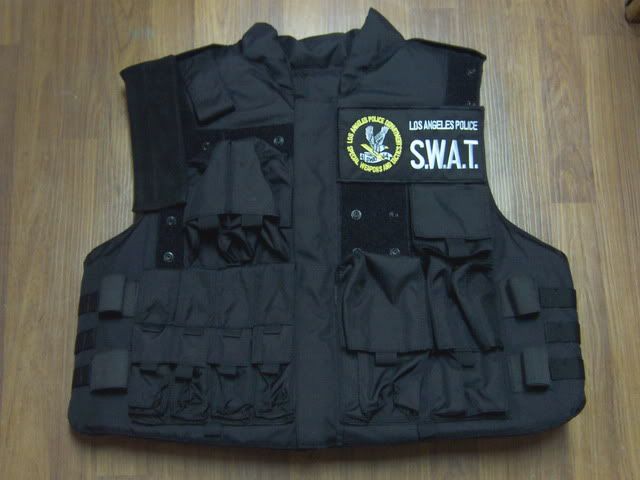
They brought a lot of it to the class. We got to handle an assault rifle and a Glock pistol (both unloaded). We got to feel the weight of a SMALL battering ram. Even the Level 4A Tactical Vest that they wear weighs over 20 pounds.


Some of the really cool stuff they brought to show included an eyeball camera, their newest “toy.” It’s a small black ball, just a bit smaller than a baseball. When tossed down a hall or into a window or door, it will roll, right itself, and begin self-rotating while broadcasting images to a viewing screen. We determined that there were no hostage takers lurking in the hallways at the Hazelwood Presbyterian Church. They also had a pole cam, which is a small camera on the end of what looks like a heavy fishing pole. SWAT operators can peer into windows on the second floor, for example, to see what’s there before risking their life entering a building.

Several classmates thought they would like to have one until we learned they cost $19,000. FYI, Pittsburgh SWAT only has one.

They also showed us a Ghillie suit which is a form of camouflaged jacket that allows a SWAT operator to blend into the surroundings while gathering intelligence. Other methods include going undercover as a UPS guy or a homeless person on the street.

The “toy” they didn’t bring with them was the BEAR or Ballistically Engineered Armored Rescue Vehicle.

Glamorous? Well, the “toys” are cool for sure. But then you have to consider that there’s a growing tendency of bad guys who wish to commit “suicide by cop.” While many suspects will take a stand against regular officers, most will give up when the SWAT team rolls in. But not everyone.

It’s not a job for the meek. Or the weak. But it made for one heck of a presentation to the Citizens’ Police Academy.

Next week: Another Field Trip!

Tuesday, April 15, 2008

Name Games

By Mike Crawmer

Names are funny things. At once memorable and forgettable. Lyrical and unpronounceable. Full of meaning and import on the one hand, vapid and tasteless, like salt-free V-8 juice, on the other.

How long did Charles Dickens fuss and fret before settling on “David Copperfield”? Why did Agatha Christie decide on “Miss Marple” and “Hercule Poirot”? Why not “Sarah Shortbread” or “Avant Maintenant”? Would Laura Lippman be as successful if she wrote about the adventures of “Adele Schlotterbock” instead of Tess Monaghan?

I’ve been thinking about names because I’m still not all that happy with the name I gave to one of my two protagonists. “Andre” originally was “Devlin,” then I decided that “Devlin” had to be African-American, and “Devlin” is not an African-American name. “Andre” is, sort of. Maybe. In some circles. It’s certainly better--that is more resonant, more identifiable with the person--than the name for my other protagonist, his partner Greg. Solid sounding, yes, and one syllable, but oh-so-white-bread.

But I’m comfortable with “Greg,” the name and the fictional creation. “Andre”--or “Dre,” as Greg nicknames him--is still causing me to doubt myself.

Not so with my other characters. I named Greg’s bete noire “Proctor” after seeing that name painted on the side of a decrepit brick building in Lower Greenfield. I dubbed my Eileen a “Shackleford” because it just fit her well and I liked the sound. (There’s that “sound” thing again.)

My day job at an international human resources training and development consulting firm (no other way to describe it in shorthand) requires careful attention to names. Because our products are sold in countries where English--or a reasonable facsimile thereof--is in common use in the business community--the U.S., the UK, Canada, Australia, New Zealand, India, South Africa and a few others--the names we use for characters in our case studies and videos must be acceptable in all countries. Conrad, Marcos and Spencer are fine; Blair, Ed, Lloyd and Ike are not. As for women, we can create an Anita, a Jayne or a Rhonda, but Brianna, Cheri, Jeanne, or Paola are no-no’s.

Assigning names is one thing; having to work with the weird and unpronouncable is another. On the third floor of the building where I work, a large crew of assessors deals daily with client companies populated by people with such first names as Chrysostome, Jonantony, Crege, Daquanda, Turron, Trustin (as in “You can ‘trust in’ me,” perhaps?), Taquoila (pronunciation, anyone?), and Jamessa (guess Daddy James wanted a boy and when his wife produced a girl, well, “Jamessa” was born).

Names fascinate me. I love the images that pop into my mind when I hear names like Dorothy, Scarlett O’Hara and Bilbo Baggins. On a personal level, I'm a dismal failure at remembering names. Go figure. Now, give me the last four digits of your Social Security number, and I’m bound to remember it til the day I die. But, your name, sorry, what was that again?

Monday, April 14, 2008

THERE IS NO JUSTIFICATION FOR CRUELTY

by Gina Sestak

The first time I killed a character, I felt terrible. He was a minor character I had created solely to die in battle. Since my protagonist would come through the fray unscathed, I thought this minor character's death would make the scene seem real. Still, my gut reaction was to try to save him. I wanted to destroy those foul attackers who had set upon this young man with their swords and short, sharp knives. I didn't. The story really needed him to die a horrible death.

Which brings me to my topic for today: where should we draw the line in our treatment of fictional characters?

The title of this piece is a quote from a 1991 film, Closet Land, written and directed by Rhada Bharadwaj. There are only two characters in Closet Land, a writer (Madeleine Stowe) who is suspected of planting subversive ideas in her children's books, and an interrogator (Alan Rickman) who, for 90 minutes, questions, manipulates, abuses, threatens, and tortures her in an effort to obtain a signed confession. It's a hard film to watch.

So why watch it? Amnesty International supported the film as a strong statement about the condition of political prisoners. One of the executive producers was Ron Howard -- that's right, Opie. And the two actors involved did such wonderful jobs of portraying the characters that it's difficult, even after the film ends, not to admire her and despise him. You want to run right out and put an end to all injustice in the world. The film made a point.

And maybe that's the key. It is often necessary to portray extremes of cruelty just to get a point across and, to advance the story, we sometimes do terrible things to our fictional characters -- or rather, we allow our fictional characters to do terrible things to one another.

Where do you draw the line? When does it stop being a compelling read and start becoming sado porn? That is the question for the day: how do you handle cruelty in your writing?

By the way, the complete quote is:

Victim: Your aim is to debase and humiliate a human being. There is no justification for cruelty.
Interrogator: Our aim is to rid society of negative influences. The end justifies the use of certain unorthodox means.

The Interrogator's line sounds like something out of a White House memo, doesn't it? Perhaps all world leaders should be required to write "There is no justification for cruelty" on the blackboard a few hundred thousand times, until the message sinks in.

Friday, April 11, 2008

Series Books: No Such Thing as Too Much of a Good Thing

By Lisa Curry

There’s nothing I like better than reading a book I love and finding out it’s the first in a series. Unless maybe it’s reading a book I love and finding out it’s the first in a series in which the next 10 books have already been published, which means I don’t have to wait a whole year before I can read the next one. I can devour them all in rapid succession – and then start waiting for the next one.

I hate waiting for the next one.

Sword Song, the latest book in Bernard Cornwell’s Saxon Tales, a ninth-century delight featuring the best protagonist/first-person narrator I’ve ever read, came out early this year. I rushed to buy it the day it was released, finished it in 24 hours, and then lamented that I hadn’t read slower and made the book last longer.

On the upside, Sword Song is book four in a series that was originally planned as a trilogy, and the story’s not over yet.

Waiting for book five is infinitely better than not having anything for which to wait.

Back in the 1990s, I was mad about Colleen McCullough’s Masters of Rome series, set in the Roman Republic just before and during the time of Julius Caesar. Even then, Colleen McCullough seemed like an old woman, and I used to pray constantly that she wouldn’t drop dead between books and never finish the series. When The October Horse, the sixth and final book, was published in 2002, I breathed a sigh of relief.

Imagine my surprise when the seventh book in the Masters of Rome series, Antony and Cleopatra, hit the shelves late last year. I bought it last month while I was at the launch party of another book I’d been waiting a year to read, Murder Melts in Your Mouth, book seven in Nancy Martin’s Blackbird Sisters Mysteries. As soon as I finished Murder, I started Antony and Cleopatra. I’m reading it slow and savoring every word – trying really hard to make it last.

Being surprised by a book you weren’t waiting for in a series you thought was over is sweetest of all.

I’m on page 145 of 551 in Antony and Cleopatra. Even if I read as slow as possible, I’ll finish it before the end of the month. Book five of the Saxon Tales won’t come out until next year, and neither will book eight of the Blackbird Sisters Mysteries.

So help me out here – I need recommendations. What’s your favorite series, who’s the author, and what’s the title of the first book? (Because I hate reading a series out of order even more than I hate waiting for the next book.)

Wednesday, April 09, 2008

Citizens' Police Academy: Drivers Test!

by Annette Dashofy

Years ago, I took a DOT course on emergency driving, so I didn’t expect to learn all that much in this week’s Safe Vehicle Operation class. Wrong again.

Let’s begin with some national statistics. One in eight LICENSED (not counting those driving illegally) drivers are involved in a collision each year. Just under 42,000 people die in motor vehicle crashes annually.

Three in ten Americans will be involved in an alcohol-related crash sometime in their lives.

Nearly one in three crashes where someone dies is related to speeding.

6,289,000 traffic crashes were REPORTED in 1999 with 3,200,000 people injured. Check your decimal points. We’re talking millions.

These figures point out the importance of Defensive Driving, which means the ability to operate your vehicle in such a manner as to be able to avoid a collision no matter what the road and weather conditions.

Our instructor for the evening, Roland Livermore of the Community College of Allegheny County showed us a series of videos that should convince just about anyone to wear their seat belts. If one person in a car is NOT wearing a seat belt and the vehicle is involved in a crash, that person becomes a missile crashing around inside the car and into other passengers. In the first video, an unbelted passenger was the reason three other belted passengers died and a fourth was critically injured.

BUCKLE UP!

We also saw videos on the effects of speeding in crashes. Let’s just say, I drove the speed limit the whole way home.

There was also one on a PIT (Pursuit Intervention Technique) involving a police vehicle tapping one side of the evading car’s back bumper, sending him into a spin. Pretty cool, but not permitted in Pittsburgh at this time. Pennsylvania is just starting to train in such procedures.

DID YOU KNOW that you cannot see color at night unless in a lit area? Police calling in descriptions will use terms like “light-colored vehicle” or “dark-colored vehicle” but they can’t accurately determine color.

Also, a sixty-year old needs three times as much light to see at night. Now you know why older folks frequently don’t like to be out after dark.

DID YOU KNOW that when you get hit by an oncoming vehicle’s headlights, the glare causes a temporary blindness that requires five to seven seconds from which to recover? The trick to avoid this is to look at the “Fog Line” which you might know better as “the white line on the side of the road.” Yes, it’s a Fog Line.

Terminology lesson: The preferred term is “pursuit” rather than “chase.” A pursuing police vehicle should maintain a four-second following distance, more in the case of rain or ice.

Officers are trained to exhibit a level of skill beyond that possessed by non-law enforcement drivers. They are to have the ability to remain cool, calm, and collected in stressful driving situations. If an officer loses that ability during a pursuit, they can be ordered to “terminate the pursuit.” They must also have an accurate perception of their driving abilities and the performance capabilities of their vehicle and they must be able to successfully apply their actual driving skills to specific situations in the driving environment.

We heard quite a few wild stories in the course of the evening, but I’ll leave you with just one. Two guys were driving on the highway, passing each other, cutting each other off, and generally demonstrating aggressive, dangerous, and immature driving. The first guy exited the highway. The second one followed him. He followed him all the way to his home. The first guy pulled in his garage. The second guy kept going.

The second guy came back later and torched the garage with the car in it.

Yes, they busted him.

Part of the evening was spent on a quiz. These are questions that very likely were on the driver's test you took when you were sixteen. See how many you can answer now.

Question #1: What does a steady yellow light of a traffic signal mean?
Hint: No, it does not mean GO FASTER.

Question #2: What is the required distance to legally use your high beams?

Question #3: What is the proper position for your hands on the steering wheel?

Question #4: When should you use your turn signal?

Question #5: What do lights and siren mean to a driver?

Question # 6: What is hydroplaning and what should you do if it happens to you?

Post your answers as a comment. (No helping, Gina!) I'll give the correct answers after lunch.

Next week: SWAT Team!

Tuesday, April 08, 2008

A Change in Seasons

By Martha Reed

I know some folks think daffodils are the first sign of Spring, and don’t get me wrong, I love those bright yellow flowers as much as anyone but I live next to a park, so my first sign of Spring is when I start finding baseballs in my garden. I suppose I should be grateful I’m not finding them inside my living room.

The house next door is for sale and people ask me about it when they walk by. One older gentleman asked: ‘Is this a quiet neighborhood?’ and in all honesty I had to answer ‘no’. It’s not noisy like drug related gunfire or gang activity, but we do get kids. Skateboards, scooters, kids on bikes, kids with dogs, teenagers sneaking illicit kisses and cigarettes; they all end up hanging out at the park. Near as I can tell, that’s what a park is for.

Personally, I like all the activity. Writing takes discipline, and it can be lonely. Sure, there are days when I’d rather be outside chasing a ball then inside chasing a deadline. But just having the noise outside is sometimes enough; I imagine it’s rather like a mother listening with half an ear to her kids playing in the yard. I can detect the difference between a genuine yelp of surprised pain and a shrill burst of sibling whinery.

Yesterday I had to chase a band of adolescent ninja warriors off my garage roof so I’m pretty sure I’m developing a reputation as the mean lady at the end of the street. Since I’ve known most of these ninjas from the day they were born, I’m not too worried about it. I think their parents would grant me the temporary authority to keep them safely on the ground. I’m also going to start playing Sheriff of Fourth Street and find out which adult is letting their dog poop in my yard. I find myself ridiculously annoyed by this; I’ve had dogs and I was fanatical about cleaning up after them. But it’s all about rules; commonly agreed upon standards of behavior, and once that breaks down we’re doomed.

Which leads me to a cute little trick Amazon is trying to pull. Heck, they’ve probably already pulled it off by now, which makes it even worse. I hate strong-arm tactics, it lacks finesse, especially when the people in authority make business decisions without taking a consensus from the group most affected by the decision. Amazon.com is telling publishers that if they don’t use Amazon’s in-house POD vendor, BookSurge, then the BUY button will get pulled off their online Amazon sales web page.

Subtle, and nice, too, don’t you think?

Amazon’s argument is that this move will increase their shipping efficiencies and even limit the environmental impact by reducing overall fuel costs. Amazon’s gone all green. Puh-leeze. If limiting environmental impact is truly their concern, then let’s ditch paper altogether and use e-Books. Oh, Amazon’s already done that with their Kindle? And only authors who have Kindle contracts will get to see their books ‘in print’?

Nevermind.
I’ve never bought into the argument that restricting competition will result in a better product or a more equitable marketplace. And this latest Amazon decision is not limited to self-published authors or small independent presses; more and more traditional publishing houses are taking advantage of digital technology and POD. As an author, it’s hard enough now to find an interested publisher; where does artist integrity go when you can’t even get access to the readers?


I’m not really worried that writers won’t be able to continue to write. Honestly, you can’t stop us. Even when we don’t get paid for it we still do it. I love the story of the Chinese dissident who wrote his novels in prison and got them over the walls and published by having other almost released prisoners memorize entire chapters. And even though it was heavily fictionalized, I adored the movie Quills. As dreadful as the storyline was, I found a great deal of truth in it, and it’s never an effort to watch the oh-so-talented Geoffrey Rush.


So, whatever your take on the current situation in our publishing world, let’s all just duck and cover. Apparently that old boogeyman Mr. Change is back, again.

Monday, April 07, 2008

Summary

by Brenda Roger

I've been struggling, for over a week now, to write a two paragraph summary of my work-in-progress. I was prepared for the request of a synopsis. That has existed for years. In what is surely an effort not to waste anymore of her time, an agent has reqested that those wishing to meet with her at an upcoming conference fill out a form that includes a two paragraph summary of their manuscript. I have decided to treat this as a marketing project rather than a writing one. My work-in-progress is called Clutching at Her Throat. Tell me what you think of my effort. Only honesty will help. I've been through many painting and drawing critique's and yesterday, I competed in a horse show where a seven year old on an overweight pony cleaned the floor with me. Yep, that's right, I have no pride left. Go for it.

There are certain people you innately trust, your doctor, your accountant and your lawyer, to name a few. For many women, their seamstress is included in that unique group of individuals upon whose services and discretion she can rely.

Just days after penning these words in an article entitled, Fitting Room Confessions, for the local newspaper of her Pennsylvania town, dressmaker, Vivien Everett, finds one of her clients dead. With the approaching deadline of a museum gala for which she will dress some of the most notable women in town, Vivien is at the center of the gossip as well as the investigation. Detective Thomas Misselli learns that Vivien is a conduit for crucial information about the young victim’s life. Unfortunately, the killer sees her that way too.

In a business heavily dependent on a social acceptance, Vivien’s situation is further complicated when the list of suspects includes the town’s favorite son, the chaplain and president of the Catholic college in town, and even the victim’s own father. With a marriage on shaky ground and a fledgling business, Vivien Everett helps Detective Misselli piece together a pattern of secrets past, petty larceny, and even a suspicious clergyman.

Friday, April 04, 2008

Short & Sweet

By Jennie Bentley

“For sale: baby shoes, never worn.”

That is what a true master of economy and understatement of writing, the great Ernest Hemingway himself, is said to have called his best work. You may agree or disagree – Hemingway wrote some stellar stuff in his day – but there’s no arguing that those six words pack a wallop.

According to Wikipedia, the classic definition of a short story is that it should be able to be read in one sitting. That seems a subjective definition at best, since some people read faster, and can sit still with a book longer, than other people. My husband, for instance, suffers from some sort of narcolepsy when it comes to reading. Five minutes, and he’s out cold. Me, I can read a whole book in one sitting. You won’t find me getting up before the story is over, unless the house is on fire or one of the kids has fallen down the stairs.

Here are a couple of things I’ve learned over the past few days, as pertaining to writing short fiction:

1. Effective short stories get off to a fast start, as close to the conclusion as possible.
2. They usually take place over a short period of time.
3. There can’t be too many characters, scenes, or details.
4. The theme – what the story is really about – has to be extremely focused.
5. You have to convey more than you say (see Hemingway’s ‘short story’, above).
6. Every word has to count.

That last one’s the killer for me. My usual style tends to be chatty, with lots of interjections and loose association, much like talking. Paring down to only the necessary words is difficult, because I love my darlings, and I hate to kill them. It’s something that would probably serve me well if I could master it, but it goes against the grain.

The reason for all of this, of course, is that I’m trying to write a short story. ‘Trying’ being the operative word. I’m not succeeding, at least not yet. I’m at eight-hundred-and-some words, currently. My maximum word count is 5,000 – the usual length of one of my chapters. That’s the time it normally takes me to establish the setting, introduce the protagonist and maybe a secondary character or two, and get things in motion for the first murder. This time, because I’m writing a thriller, not only do I have to do all those things, but I have to save the world, too. And that’s a lot to expect, in fifteen pages.

So what about you? Have you ever tried to write a short story? Ever finished one? How did it go? Do you have any tips for how I may be able to finish mine? And if someone asked you to write a story in six words, like Hemingway, could you do it?

Thursday, April 03, 2008

From One Book To a Series

Working Stiffs welcomes guest blogger Susan Wittig Albert, author of the China Bayles mysteries!

by Susan Wittig Albert

Thanks to Working Stiffs and to Joyce Tremel for hosting me today. I’m out and about on a blog tour celebrating the launch of the sixteenth China Bayles mystery, Nightshade. For those of you who haven’t met her, China is a former Houston criminal defense attorney who jumped ship and moved to Pecan Springs TX, a small town located halfway between Austin and San Antonio, where she opened an herb shop. When this amateur sleuth isn’t working in her shop or tending her gardens, she’s solving mysteries.

Which poses a problem, doesn’t it? For mysteries (for better or worse) are written in series. When you decide to write a mystery, you’d better have a series premise in mind—something strong enough to carry you and your protagonist from Book One to Book Ten and beyond. This isn’t such a tough prospect if your main character is a private investigator whose clients show up regularly, or at least often enough to keep the wolf from the door. Or a homicide detective, a criminologist, a medical examiner, a bounty hunter, or a forensic anthropologist—all of whom have a gazillion murder cases to choose from.

It is an infinitely tougher prospect if your protagonist is an amateur detective. Of course, this didn’t faze Agatha Christie, whose Miss Marple is the Queen of Amateur Sleuths. But when Christie was writing, Miss Marple was one-of-a-kind (well, almost). Today, the competition for readers is fierce, and there are enough amateur sleuths to fill a football stadium. So how to make your amateur sleuth distinctive and popular enough to cross the bridge from that first two- or three-book contract to ten books and beyond? I can’t pretend to have all the answers, but here are some of my thoughts, based on fifteen-plus years in the business.

Think niche. When China Bayles began her career as a garden sleuth, there was only one other similar series and very few “niche” mysteries. Now, there are dozens, designed for readers who are already passionate about something: cooking, needlework, fishing, rare books, gun collecting, golfing, dogs, cats, birds, you name it. There’s a reason for this multitude. Niches offer the writer an already-out-there fan base, plus ways to target that base (hobby magazines, conferences, online discussion groups). But beware. Choose a niche that’s too small or exclusive (feather collecting, seventeenth-century porcelain snuff boxes) and your series may be off to a slow start. On the other hand, there’s Nero Wolfe—the orchid niche isn’t very large, but Wolfe’s companion and legman, Archie, helps to broaden the appeal, as does the setting (New York).

So think beyond the niche. There’s got to be enough appeal to carry it into the broader market—and unless the niche is huge, the writer needs that broader market. The bottom line: niche just isn’t enough. So . . .

Think setting. Setting has always been important. (Remember Sherlock’s “Hound of the Baskervilles” or the Los Angeles of Raymond Chandler.) But in contemporary mysteries, setting is even more important. It has become the place-frame that gives the series depth, dimension, and plot possibilities. From the deep South to the frozen north, from D.C. to L.A., a unique setting makes the story unique--or maybe it a variety of settings, like Nevada Barr’s Anna Pigeon, a park ranger on the move. Choose a setting that invites reader interest (“I’ve been there” or “I’d like to go there”) and play it for all it’s worth. I chose Texas because it is distinctively multi-cultural, has a fascinating history, its own cuisine, its own music. China’s series is set in a small town, but it’s small-town Texas, and that makes it different.

Think character and character ensemble. In her former life, China Bayles was a criminal defense attorney, which gives her an ironic take on the justice system and gives me more plot possibilities to play with. China is married to an ex-cop turned private investigator. One of her best friends is a police chief, another is a county sheriff. This law-enforcement ensemble opens up more plot possibilities, so that China can get involved (more or less believably) in crime-solving. And since every friend has his/her own personal history, issues, challenges, and problems, there’s a very rich matrix for story material. Don’t just think of a single central character when you’re developing your mystery. Think ensemble, and develop characters who can grow, change, and give you plenty to work with.

Oh, yes, grow. Used to be, mystery characters stayed the same from book to book. Take Nancy Drew, for instance. From 1928 to the present, she’s never grown a day older. But the series form presents writers and readers with intriguing new possibilities for characters’ growth and change. You might want to read my post, “China Who?” to see what I’m talking about here.

Think marketing. Sorry about this, but it’s a hard truth in the book business that writers who don’t market don’t last very long. The publisher can’t or won’t do it for you—you have to do it yourself. Which means library, bookstore, book club, and mystery conference appearances; print materials for handouts or mailings; and online promotion. If you have a platform, use it. (A platform is you-as-expert on the subject of your mystery. For the China series, my platform is herbs/gardening.) If you don’t have a platform, build one. Join organizations related to your niche. Identify yourself with your setting (as Sharyn McCrumb has done with her Appalachian series). Write articles, blog, create a newsletter, make presentations, do whatever it takes to let people know how much you know about the subject.

Thanks again to Working Stiffs for hosting me today. And thanks to all the readers who are following this blog tour through cyberspace. If you have questions or thoughts to share, post a comment. I’ll be around all day, and tomorrow and the next, to reply to your comments.


If you’d like to enter the drawing for a copy of Nightshade go here to register. But you’d better hurry. The drawing for Working Stiffs closes at noon on April 6, 2008.

Want to read the other posts in Susan’s blog tour? You’ll find a calendar and links here.

Wednesday, April 02, 2008

Citizens' Police Academy Field Trip: EOC

By Annette Dashofy

This week the Citizens’ Police Academy went on the road with a field trip to the Allegheny County Emergency Operations Center. Back in the late seventies and early eighties, when I was an EMT on the local ambulance service, I did a little dispatching. So this was something that especially interested me. We’ve come a long way from my days of a telephone and a radio!

There are 131 municipalities in Allegheny County and 88 communities in the City of Pittsburgh and calls for ALL of them come into the EOC’s 9-1-1 center. Not ALL of them are dispatched from there, but ALL the calls come IN to there. In 2007, 1.5 million incidents were handled through the EOC.

It’s a busy place.

If you call into the Allegheny County 9-1-1, the first question you will hear is “What borough, city, or township are you calling from?” It’s vital that you know this information. Don’t just say the North Side. Be specific. They want to get help to you as fast as possible and knowing precisely where you are is vital. Also know what street you’re on.

Yes, your phone number will pop up in front of them, but that’s not enough. These days, you can move and take your phone number with you. So exchanges don’t necessarily mean anything. And records may not accurately show where you live from you phone number any more.

Also cell phones are tricky. Their signals will be picked up by the tower closest to the call and thanks to GPS coordinates and triangulation, the TCO (Telecommunications Officer) will be able to get a rough idea of where you are, but only within 7 football fields. That can be a lot of area.

Another hindrance to finding a caller are PBX systems. These are switchboards used in some schools, colleges, nursing homes, dormitories, etc. You may be in a building in one place, but your phone call may go through a switchboard in a different location, even a different community. The location of the switchboard is what will show up at EOC.

The point is, answer the questions the call taker asks you. Don’t waste valuable time arguing over why they need to know.

Notice I said “call taker,” not dispatcher. They are not always one and the same. Often times, a call taker picks up the phone and then sends the information to another computer, perhaps clear across the room (and it’s a VERY large room!) to the person who actually dispatches help, be that police, EMS, or fire. This happens seamlessly thanks to their CAD system or Computer Aided Dispatch.

Besides location, there are other questions you will be asked, depending on the purpose of your call. Just answer them. Stay calm. Remember, the person you are talking to has already sent the location information to the dispatcher and in most cases, help is already on the way.

Some of the other information they need to know is to help keep the responders safe. Did you hear shots? How many? How fast were they? If you saw a gun, what kind of gun was it?

Of course, not all incidents have top billing. If you are calling to report that your car has been egged and the kid who did it has run off and meanwhile, your neighbor is calling in to report that someone is breaking into her house, HER call is going to get a more immediate response.

But don’t just fabricate stuff to make your call APPEAR to be a higher priority. False information can result in injury to a field unit in response.

Where? What? When? Who? Weapons when applicable and any injuries? These are the types of things a TCO needs to know from the caller.

Under the “who,” there is information on a suspect that you may be able to supply to the TCO. Such as name and address, if you know them. Also, a physical description and their means and direction of travel.

When describing clothing, start at the top and work down. Shirt color and style, coat color and style, pants, shoes. And food for thought: someone who has just robbed a store might swap out their clothes, BUT they rarely change their shoes. Same thing with a child abductor. They will change the child’s clothing, but not their shoes.

When getting a description of a vehicle, think CYMBALS: Color, Year of vehicle, Make/model, Body style (2-door, 4-door, convertible, etc), Additional information, License number, State of license.

And one last note of interest, there is something simple we can all do to make tracking down a loved-one easier should we be in an accident and can’t tell the emergency personnel who to contact. Program an ICE number into your cell phone’s address book. In Case of Emergency. More and more emergency responders are being trained to check cell phones for that ICE number.

Next week: Safe Driving

Tuesday, April 01, 2008

Obituary for a friend

by Kathryn Miller Haines

She found me one fall day when I was walking my other two dogs around the block. Reluctantly, I brought her home thinking I’d figure out who she belonged to after the rush hour traffic died down.

She never left.

When she first joined us she showed obvious signs of neglect. Her belly was covered in fleas, she had extra toes on her rear legs and the nails had become in-grown. Mainly, though, she was desperate for affection. We chose her name –- Violet -- based on the color of the collar she was wearing when I found her. She was a mutt -- part shepherd we think -- that our vet use to gleefully describe as a typical American dog. Her tongue lolled out the corner of her mouth when she was happy and her tail possessed such joy and power that she could sweep coffee cups and picture frames off of tables. She was the only one of my dogs who could be trusted off lead and also, strangely, the only dog who’d never been to obedience school. It’s not that she had manners; she just desperately wanted to be with you.

She was a bad dog, with an appetite for paper that didn’t distinguish between manuscripts and money. She hated thunderstorms and destroyed my front door in a fury of rain-induced anxiety. In motion, she looked like a zeppelin, her large posterior threatening to reach the bottom of the steps before her front did. She anxiously awaited that moment each morning when your eyes first opened. Then, before you could recognize that she was friend not foe, she pounced on you, her 65+ pound body pinning you to the bed and leaving you no choice but to laugh at her efforts to greet you with good morning kisses. Cat-like, she batted at you with her paws, ultimately holding your arm in place so that she could drench it with her tongue.

As many women do, she grew regrettably pear-shaped over time. She loved nothing more than to have her belly rubbed, a substantial effort given its size. In a house full of male dogs, she was the queen, putting both boys swiftly in their place if they tried to do anything that wasn’t to her liking. If they were already seated where her royal highness wished to be, she merely climbed on top of them until they cried uncle and squeezed out from beneath her bulk. She loved to lick their ears and often battled them for the right to do so. If we were threatened by a loose dog while walking, she was the only pup who rose to the occasion to defend me, warning the infiltrator in a voice reminescent of women on “Jerry Springer,” exclaiming, “you don’t know me.”

She dug up my plants and enjoyed burying rawhide until the rain rendered it soft and disgusting. She would haul this canine-kimchi through the house until you insisted she relinquish it to the garbage, which she always did willingly. When I wrote, she was at my side, oftentimes attempting to lay on my keyboard in an effort to comment on the futility of my prose.

When I was sad, she was the first one at my side. As I suffered the pains of three miscarriages in two years, she pressed her body against my belly, simultaneously soothing my physical pain and assuring me that the terrible emptiness would pass.

We didn’t expect her to get sick. We didn’t expect to have only seven years of her affection and haranguing.

Goodbye baby girl. I miss you. Every day.

Monday, March 31, 2008

HAVE LICENSE, WILL TRAVEL

by Gina Sestak

I gave up my private law practice in 1986. I was tired of fighting for people in court, then fighting those same people to get them to pay me. I had begun to regard clients as somewhat akin to cockroaches, except I liked the roaches better.

So I began to rent my services to small firms and sole practitioners. Let those lawyers fight their clients over fees -- as long as the lawyers paid me, I was happy. I billed myself as a freelance associate, willing to step in at a moment's notice to handle awkward, inconvenient matters.

It is an immutable truth of the universe that, if you have to be at two events in any given year, those two events will be on the same day in different locations. Hence the need. A sole practitioner might received notice of a motion being presented in Lawrence County at the same time she is due in court in Allegheny County. I would step in to handle the motion in Lawrence County.

This was fun. There are several small counties with pretty little courthouses around Pittsburgh. I often didn't even charge for travel time. It was too enjoyable, learning to navigate unfamiliar court personnel and judges, and being out and about -- although I admit that I sometimes got confused on the way to Washington County and almost went to Erie (you local folks know what I mean).

My favorite part of this job, though, was attending depositions with the deponent. Modern law practice tries to avoid courtroom surprises, so it is the norm (at least in larger cases) for each side to question the other's witnesses under oath prior to trial. Such a questioning session is called a deposition; the testifying witness is called a deponent. The purpose behind this is simple: if both sides know what the evidence is, they are more likely to reach a settlement. Even if the case isn't settled, the attorneys may be able to agree to certain facts. This can streamline the trial by cutting down on the number of things that have to be proven in court.

The attorney taking the deposition might spend a day or more asking probing questions, while the attorney on the other side fretted over taking time away from other pressing matters. The solution: I would attend the deposition. It is important for attorneys for both sides to be present but, if you're not the one taking the deponent, you don't have to do much. I mainly drank coffee and took the deponent out of the room on occasion to provide advice but -- and this is crucial -- whenever inappropriate questions were asked, I would object. Different jurisdictions handle deposition objections differently. In some places, I've heard, you can go directly to a judge for a ruling. Our local judges don't want to be bothered. Around here, you simply put the objection on the record and, if the deposition is used at trial, a judge rules then.

I also did a lot of research, writing briefs and other legal documents. That, too, is fun in its own sick sort of way. The trick is figuring out what the law is. Oh, I know we say "the law" as if it were a list of dos and don'ts, like the ten commandments. In reality, "the law" consists of thousands of federal statutes and regulations, thousands of state statutes and regulations, and the thousands of cases in which judges have applied and interpreted them. Not to mention the hundreds of rules that govern how, when, and where each issue can be raised. Research can be mind boggling. I must admit that I don't find the law itself as fascinating as the facts. I briefed one marital dispute over cows who were in utero at the time of separation. I can't remember how the Divorce Code regarding them, but the phrase "after-born cattle" has stayed with me.

I freelanced for a few years, mainly for a small group of customers. Although the income was irregular, the work was interesting. What more can you ask than that?

Saturday, March 29, 2008

Book Promotion: A Full Time Job For a Writer


Working Stiffs welcomes guest blogger Elizabeth Zelvin today!


by Elizabeth Zelvin

I haven’t been a working stiff since I left my last day job, directing an alcohol treatment program on the Bowery, in the fall of 1999. Or have I? One of the mystery writers’ e-lists I belong to recently had a thread about what everyone was currently writing. I was not the only one who said, “Who has time to write? I’m hip deep in promotion.”

When I dusted off the existing first few pages of Death Will Get You Sober back in 2001, I was already sitting at the computer. I had just launched my online therapy website at www.LZcybershrink.com and embarked on a major professional journey: building a practice, treating clients all over the world, and making all the mistakes as a website novice that would help me not make them when I launched my author website at www.elizabethzelvin.com several years later. Being an online therapist can be a fulltime job, as can being a writer, though in economic terms both are vocations about which everybody advises, “Don’t give up your day job.”

When I completed the manuscript in 2002, two more jobs awaited me: writing the next one and trying to find an agent, then a publisher. The many tasks included learning how to write a query letter and a synopsis, then expanding and contracting them according to the moment’s needs, polishing them till they sparkled, then fine tuning and fine tuning and fine tuning them. That process still goes on. Did I mention revising the first draft? I made the neophyte’s mistake of sending it out right away and learned about critique and revision the hard way.

Networking with mystery writers and mystery lovers in general was another delightful but time-consuming task. I couldn’t have reached this point without the New York chapters of Sisters in Crime and Mystery Writers of America and their respective e-lists; Sisters in Crime Guppies and its subgroup AgentQuest; e-lists DorothyL and Murder Must Advertise; and later, the online social networks CrimeSpace and MySpace, which I’ll get to in a moment.

So it’s Chanukah and then Christmas, 2007, and I’m finally on the homestretch toward publication of my book in April 2008. And how come I’m working harder—more hours per day, seven days a week—than I have since I got my master’s in social work (60 credits in two years plus three days a week working full time for free, first with severely mentally ill clients and then with alcoholics) more than twenty years ago?

Here’s some—by no means all—of what I’ve been up to:

December:

Sent individual holiday messages to my then 900 Friends on MySpace and 800 on CrimeSpace, greeting each by name and NOT mentioning the book.

Sent holiday cards to the 100 closest friends I send them to every year—with a letter asking for their help in spreading the word about the book, explaining about sales and computer modeling and why I can’t give any copies away, and listing everything they could do, from asking for it at the library to getting their book club to invite me to speak.

Added an address label and a handwritten note to a postcard for each of the 1300 people whose postal addresses I have—some will come back undeliverable, as I’ve been collecting them for 30 or 40 years as I waited to have something to tell them about my dream of publishing a novel.

January:

Set up the book tour. I’ve hired an outside publicist, but can’t afford to turn it all over to her, so I work closely with her and my publicist at St. Martin’s by email, pore over lists of mystery and indie bookstores, make endless virtual trips to their websites and to Mapquest to check the distance between towns and make sure I can get from one gig to the next in time. Do you know that the state of Florida is as big as England? And Dayton, Ohio is not as close to Indianapolis as my publicist assumed it is. The book tour job also requires me to turn travel agent and book flights, hotels, and cars all over the country.

Subscribed to Consumer Reports and did comparison shopping for a GPS. Bought the GPS.

February:

Set up the virtual tour, of which this visit to Working Stiffs is a part. This involved writing numerous guest blogs as far in advance as I could, always striving to hit the requested word count and deadline, to keep it lively, and not to repeat myself; and participating in numerous interviews. Actually, I enjoyed both these tasks. Writing blog pieces (as a guest or doing my weekly stint on my own group blog, Poe’s Deadly Daughters) makes me feel like a journalist, and the interviews give me unprecedented license to go on and on about myself—what bliss!

Sent individual Valentine’s Day messages to my 1100 MySpace Friends and 800 CrimeSpace friends, again not mentioning the book. This kind of networking is its own reward: back-atcha messages are still trickling in from Valentine’s Day and even Xmas, every one putting a big smile on my face and convincing me that all these folks in cyberspace really are my friends who wish me well and might even, some of them, buy the book one day.

Learned how to use the GPS. Started to get used to it. Sent it back to the manufacturer for repair because it stopped talking to me.

March—well, you get the idea. There are now new bookmarks quoting the early reviews instead of the author blurbs and new postcards to alert people about the book tour in May and June instead of inviting everyone to the launch party on April 15 at the Mysterious Bookshop in New York. (Yes, you are all invited.) There’s endless recording of every stock signing and podcast: on two or three calendars, on my website (can’t believe I’ve learned enough HTML not to have to prod my webmaster to make the almost daily updates), on my MySpace and CrimeSpace pages, on the spreadsheets I keep so I won’t lose track. I have to keep reading all my groups because you never know when someone will offer a crucial tip or contact on DorothyL or Murder Must Advertise or CrimeSpace or EMWA or Guppies or SinC or MWA-NY or SinC-NY or MWA-Breakout—or the addictions and online therapy lists I still belong to. There’s the small matter of needing a new agent at this crucial phase of my career.

So there you have it. Network network network. Schmooze schmooze schmooze. Full time job. And you know what? I love it!

Elizabeth Zelvin is a New York City psychotherapist whose debut mystery, DEATH WILL GET YOU SOBER, will hit bookstores April 15. Library Journal called it “a remarkable and strongly recommended first novel.” Her short story, “Death Will Clean Your Closet" has been nominated for an Agatha for Best Short Story. Liz is also one of the bloggers on “Poe’s Deadly Daughters” You can visit Liz’s website at http://www.elizabethzelvin.com/. Elizabeth will also be at the Festival of Mystery in Oakmont, PA on April 28th.

Friday, March 28, 2008

Seeking Wisdom, Finding Nothing

by,
Kathie Shoop

I'm not a politician nor am I a religious theologian. But I am interested in both and I'm equally disgusted by both. I might be easily confused compared to the rest of the world, but I don't see how trying to keep up on the issues means that you actually derive any sort of wisdom that might inform my life decisions.

Who do you believe? There isn't a person in the world, scholar, religious leader, or hack who can withstand the scrutiny of newscasters/critics/Joe Blow. What are we doing here, making every single person who has an opinion on one thing or another out to be a complete moron? It's possible, I'm convinced, to take the most intelligent person on the planet look like he/she's just graduating from kindergarten. Likewise, no one is without bias, we need to understand the perspectives of people who are experts and have influence on the world stage and make decisions accordingly.

Now, the fact that the political arena is a mess and in my opinion, much of religion is just steps behind in its messiness is no excuse for me to throw my hands up and stop trying to figure things out, to opt out of the pursuit to understand. But, I have to admit, there's a part of me that doesn't want to care about anything outside of my own circle of life. Wouldn't things be easier to just tune out all the news, watch a little Nick with the kids, write my novels, and just wait for things to happen?

Perhaps the rest of the world isn't so confused...happy election year, everyone!

Thursday, March 27, 2008

Q & A

by Joyce Tremel


By special request, I'm doing another question and answer day. Post your questions in the comments and I'll try my best to answer them.

Wednesday, March 26, 2008

Report from Week Five: Citizens' Police Academy


Is your automobile’s inspection sticker up to date? If not, beware of the Pittsburgh Police’s Traffic Enforcement Division. They look for those things.

Thankfully, I’d just had my car inspected Monday morning before going to this week’s Citizens’ Police Academy class.

Before the motorcycle officers from traffic spoke, we had a chance to learn about the Pittsburgh Bureau of Police’s Citizen Police Review Board courtesy of Board Member Elizabeth Pittinger who spoke passionately about the board and its duties. They investigate individual complaints of police misconduct and make recommendations regarding the Bureau of Police. With their help, training and systemic problems get corrected, often without the need to go to court. Formed after the police involved killings of Jerry Jackson and Johnny Gammage in 1995, the board consists of seven members. Four are appointed from a list of candidates offered by city council and the other three are direct appointments of the mayor. Two are law enforcement professionals. The other five have no requirements other than being city residents. They employ two full time investigators and average 500 complaints a year. The CPRB protects good cops from bad citizens and good citizens from bad cops.

One tidbit of information that you might find useful in your writing or in any dealings you have with the police, an officer MUST give you his name and badge number if you ask for it. If he says it’s on the citation, well, it is, but that isn’t good enough. Writing can be illegible. He must GIVE you that information if asked. Otherwise, you have a right to complain to the Citizen Police Review Board.

Elizabeth went on to tell us about a recent incident when a child was struck by a car. As police and medics tried to do their jobs, family members milled about along with a growing crowd of onlookers. One of the stressed-out cops at the scene made an unfortunate rude comment, which was overheard by the victim’s grandmother and several other family members. The grandmother made a complaint to the CPRB. The officer deeply regretted making the statement and agreed to meet with the family. He apologized in person to the grandmother, who had had a few run-ins with police of her own. The officer did not let the grandmother’s history color his remorse. Instead of this incident becoming a public relations nightmare, the board facilitated a scenario in which public trust in the police was built.

Following the presentation on the CPRB, Sean Pindel and Jim Miles, motorcycle officers with the Traffic Division spoke of their duties and fielded dozens of questions.

Traffic is broken down into smaller divisions including Collision Investigation, River Rescue (not really a separate division, but some of the Traffic Officers take on the specialized training required), Intoxilyzer Unit (does the breath testing…blood and urine tests are conducted at the hospital), Motorcycle, and Truck Safety Enforcement.

On the topic of Truck Safety, I have always been intimidated by tractor trailers. Now I will give even more thought to that big rig following me down the highway. When a tractor comes off the lot, brand new, already the brakes are only functioning at 70%. A rush-job to repair an on-the-road break-down could cut that to even less. I always knew they couldn’t exactly stop on a dime, but now…I think I’ll just pull over and let them pass me next time one is tailgating me. Fines for trucks are steep. In the city, if a truck driver is caught crossing one of our many little bridges over gross, fines START at $5000. Officers would then do a full inspection, which would likely rack up even more fines.

Currently, Pittsburgh has only 23 motorcycles after once having up to 45. Those numbers may very soon be going back up. Motorcycle officers work demonstrations, making sure they remain peaceful. They escort dignitaries to, through, and out of town. And they deal with the day-to-day stuff as well. Like speed enforcement.

Did you know that only the State Police are permitted to use Radar? But that leaves plenty of other options for local police to nab speeders. VASCAR can be used in a variety of ways, but requires hours of training and even more hours of practice before an officer even takes the certification test. Our two officers made no effort to disguise their preference for Accutrak, a small, handheld device similar to stopwatch. Used with those white lines painted on the road, an officer clicks once when a predetermined part of the car (say the left front tire) crosses the first line and then clicks it again when the same part of the car crosses the second line. Accutrak then does the math and displays the car’s speed. Another type of time/distance speed measuring device is ESP.

ESP involves a three-piece unit. Two pieces sit across the street from each other and emit a beam that is broken by a car passing between them. Those two units are wired to a third piece, a module in the police vehicle which displays the speed.

Similar to ESP, but wireless, is ENRADD.

There is also a laser gun, similar to a radar gun, but any department can use it. All of these require that the officer be certified to use the equipment EXCEPT the Accutrak.

Terminology check: It is “speed enforcement” NOT a “speed trap” as we tend to call it.

By the way, an officer cannot issue you a ticket for speeding until you have gone 10 miles over the limit. And often they give you 15 miles. The exception to this rule is school zones. There, you will get busted if you’re going 16 mph. If you are eleven miles an hour over the 15 mph limit, the fines start at $500.

DO NOT SPEED IN SCHOOL ZONES.

Terminology check #2: There is no such thing as an “accident.” It’s a “collision.” In collision investigation, an officer will take statements from all parties involved including witnesses, but does not include his opinion as to who is at fault in his report. HOWEVER, he may issue citations for violations that have occurred. Those citations may then indicate what caused the collision (not accident).

Phew! There was a ton more information given to us this week. I could go on, but I’ll leave it at this for now. Want to hear more? Attend the next Citizens’ Police Academy! It’s well worth your time and effort.

Next week: The Emergency Operations Center. FIELD TRIP!