This week’s instructors opened the class with a question: How much of what you see on the CSI shows do you think is real? I, of course, having studied Lee Lofland’s book, knew the answer was “almost nothing.” In fact, cases are lost because people expect things to be like what they see on TV. They have a name for it: “The CSI effect.”
In Pittsburgh, the guys who go out and collect evidence are called the Mobile Crime Unit. While they collect all kinds of evidence, Pittsburgh Crime Lab only processes fingerprints. Blood, DNA, or ballistic evidence is sent to the Allegheny Crime Lab or the State Police Crime Lab for processing. Unlike TV when DNA results come back in ten minutes, the truth is it takes eight weeks to get results. And then the report doesn’t come back to the Mobile Crime Unit. Instead, it goes to the detectives on the case and THEY make the arrest. MCU guys don’t do that stuff.
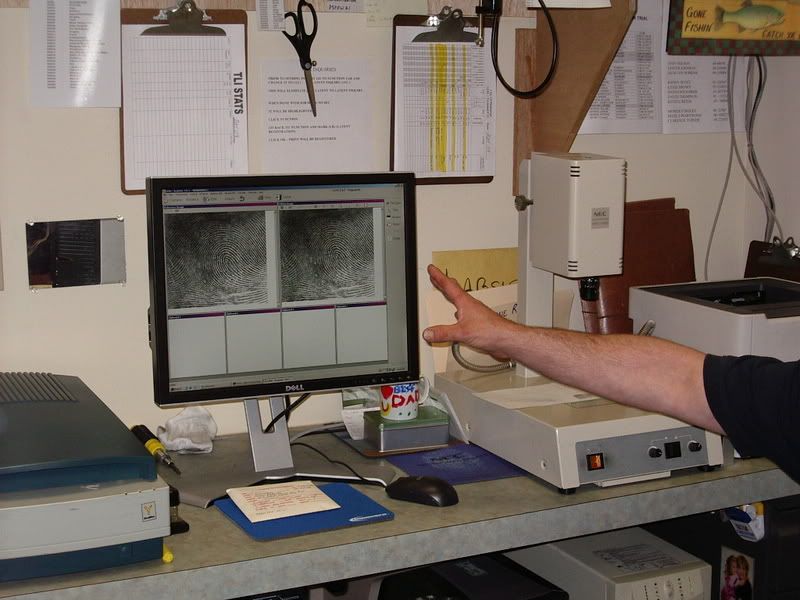
On TV, when a fingerprint is sent to AFIS, the results come back with a photo and address of the person matching the print. In reality, while results may or may NOT come back quickly, what the crime lab gets is a list of potential matches and all they get are numbers.
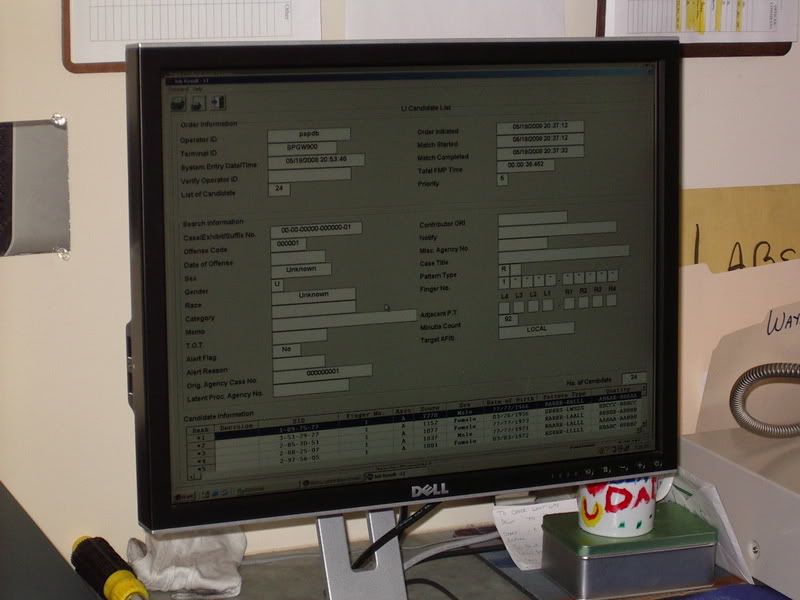
They look up the name belonging to the numbers on another computer. And a human eye is required to make the definitive match.
Different detectives have different specialties. So it takes more than one or two detectives to process a crime scene.
In Pittsburgh, all members of the MCU are police officers. In Allegheny County, crime scene people are civilians and work as part of the Medical Examiners office, not the county police.
A few more fallacies you will see on television:
Video surveillance footage does NOT get clearer when you zoom in. It actually is very difficult to identify a license plate, the color of the car, or the identity of anyone on the tape.
Only 7% of firearms are found to have usable fingerprints on them. In fact, lifting fingerprints isn’t nearly as easy as they make it look on CSI. A smooth, shiny, clean surface is needed to get a clear print. Drawer handles won’t usually work. Too small. Textured surfaces won’t work either. And door knobs have just too many prints to be helpful.
While DNA can be gotten from just about anything, it’s not cheap, costing $6,000 to $7,000 per test. Fingerprint analysis only costs the officer’s time.
Speaking of DNA, the question was posed to us, which is better: DNA or fingerprints? Think about this…identical twins share the same DNA, however, they would have different fingerprints.
When swabbing for DNA, the detective would swab twice. First with a swab dampened with deionized water. Then a second, DRY swab would be used on the same spot. The water brings up more DNA. Gloves would be changed before moving to another spot. The samples would be labeled BS1 (Blood Sample 1) for the first and BS2 for the second and so on. A sample would be taken nearby as a control sample (CS1) to identify contaminants.
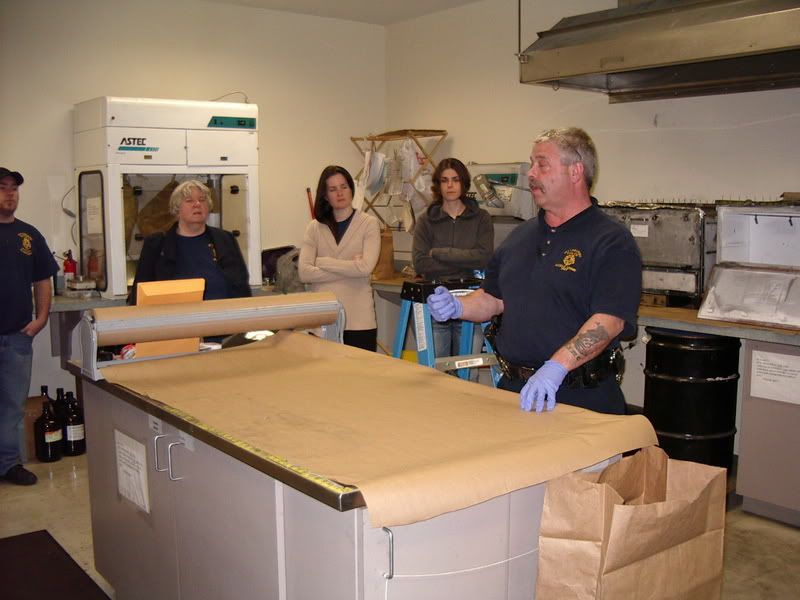
We got a chance to tour the Crime Lab, which isn’t nearly as high-tech and shiny as those on CSI.
We were given a demonstration of Luminol, sprayed on a jug smeared with visible blood and a plastic bottle with nothing visibly evident on it.
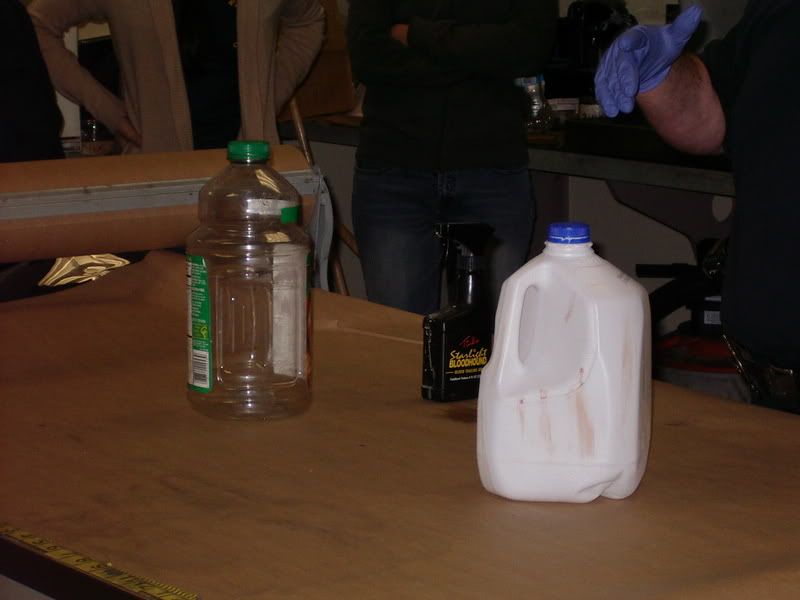
The first attempt failed when nothing happened. Lesson? Luminol has a short shelf life. There are different types of the stuff and the particular kind being used had to mixed and used within hours. A fresh batch revealed luminescence on both jugs when the lights were turned out.
Note: it doesn’t glow very long. It doesn’t have to. Once the presence of blood is revealed, the detectives would simply collect the sample. And Luminol really does show the presence of blood even after attempts to clean up the crime scene.
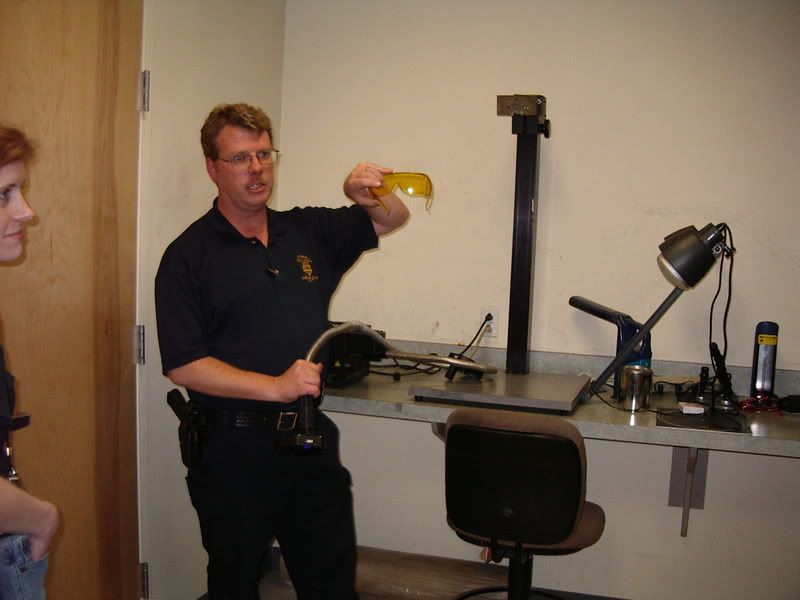
A demonstration of an alternative light source that shows different materials unnoticed by the human eye also proved fascinating. Different colored goggles or camera filters are needed to see different substances.
We wrapped up our visit to Police Headquarters and the Crime Lab with a class photo.
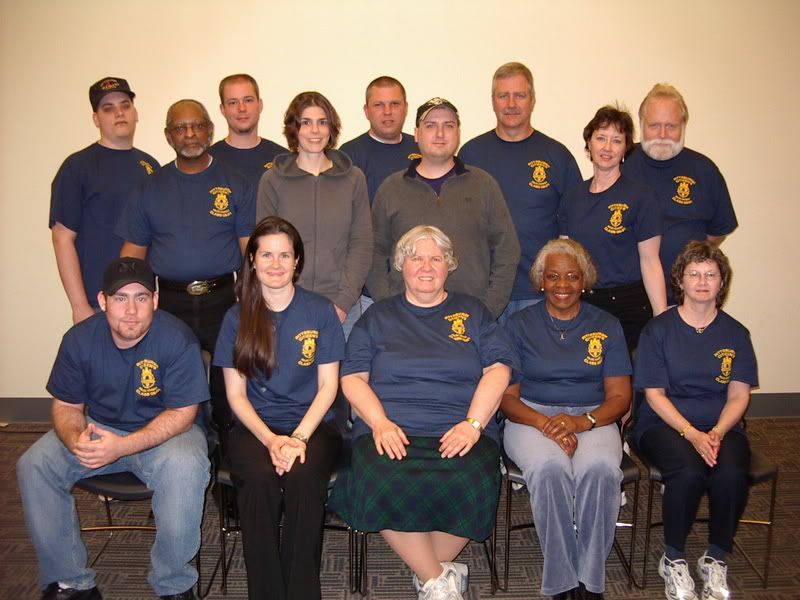
That’s me in the back row, second from the right. Fellow Working Stiff Gina is sitting front and center.
Our stint in Citizens’ Police Academy is winding down. We have off next week (Memorial Day) and only have one more real class before our graduation. I’m feeling a huge sense of regret to see it ending.
What WILL I blog about???

